The start and finish of a real She-trip
Machine translation (AI, Claude) of Balázs’s Hungarian original. Read the original →
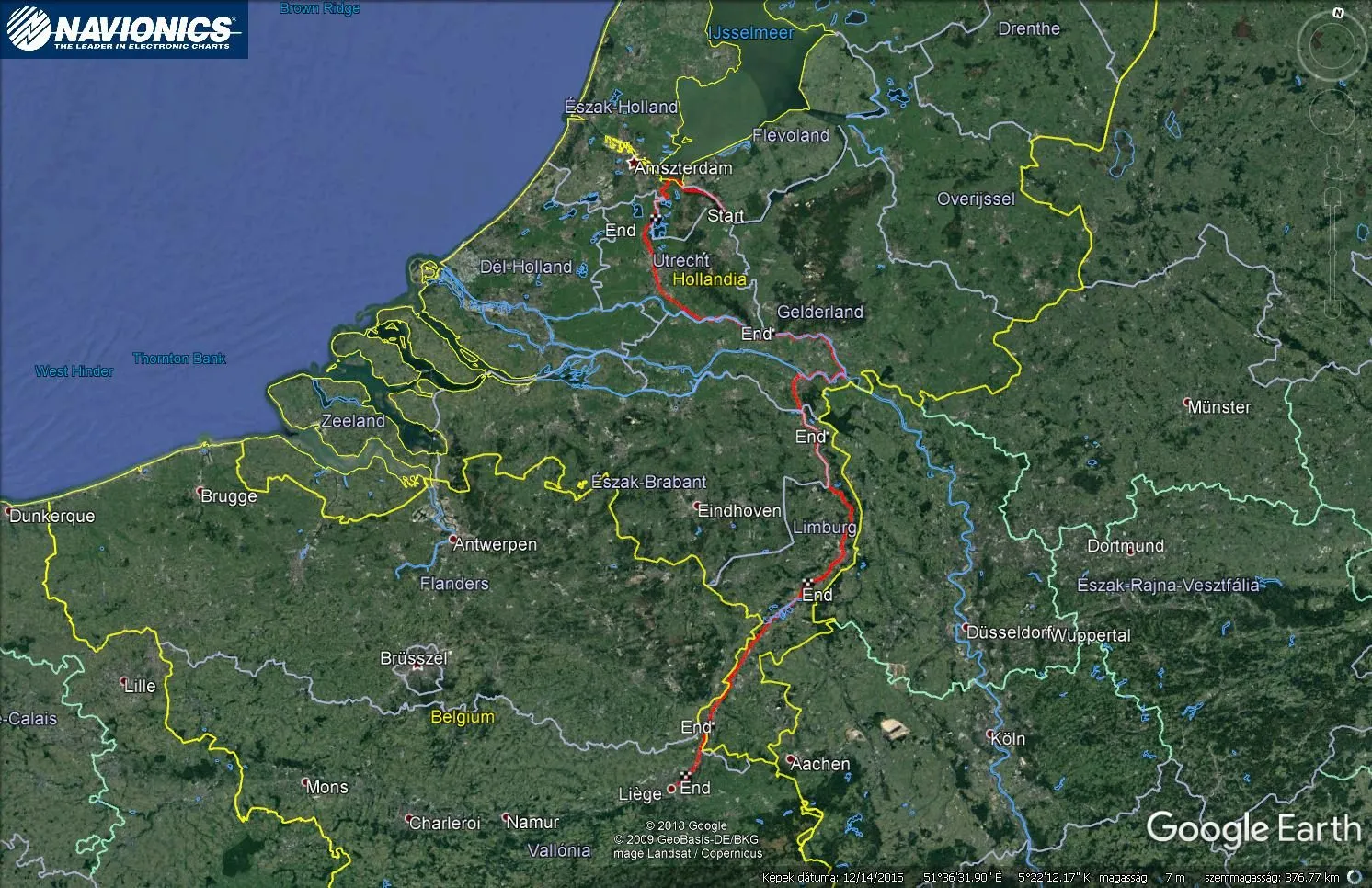
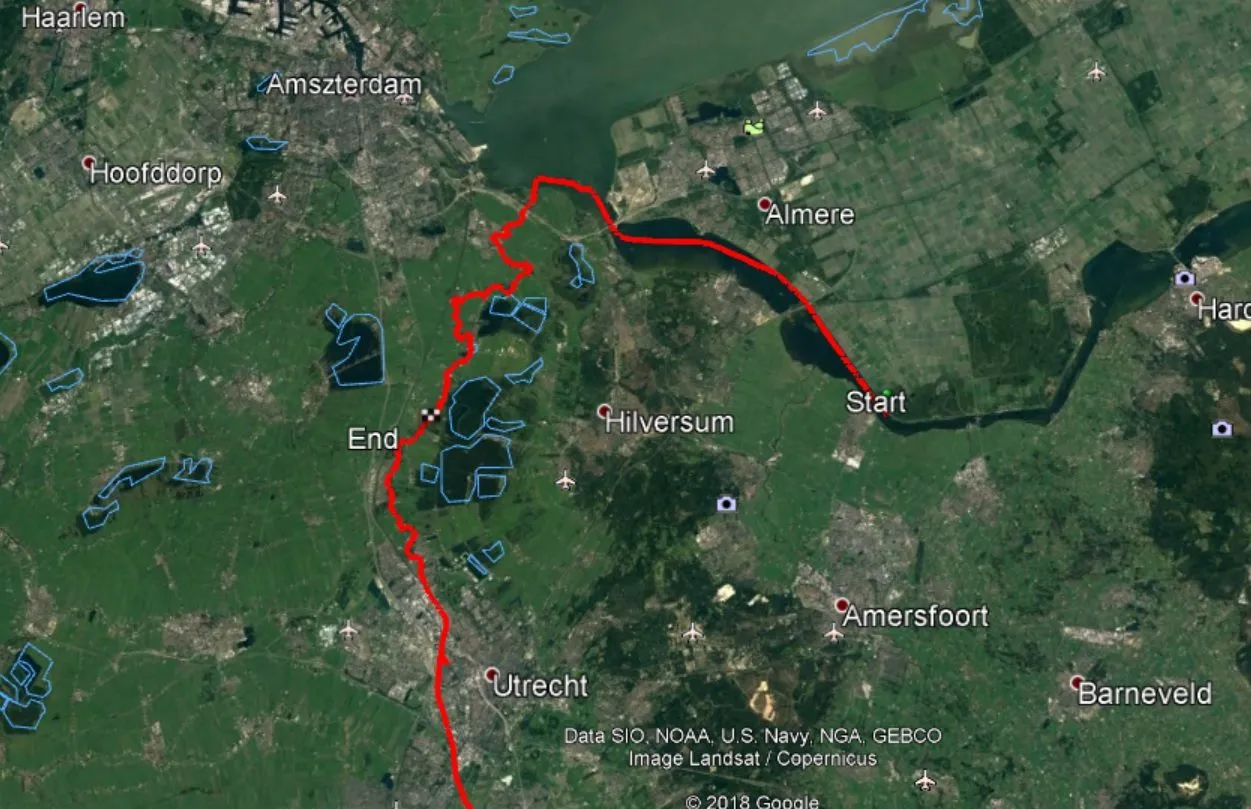
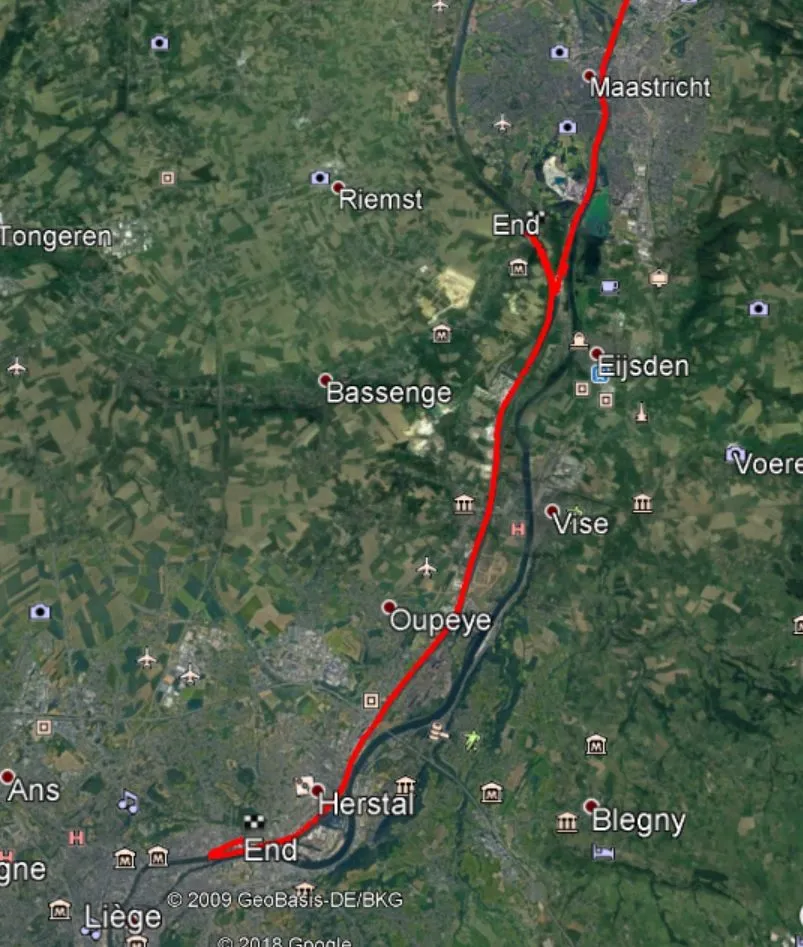
The She's voyage from Eemhof to Liège – source: balajaazoperencian3.blog.hu
Machine translation (AI, Claude) of Balázs’s Hungarian original. Read the original →
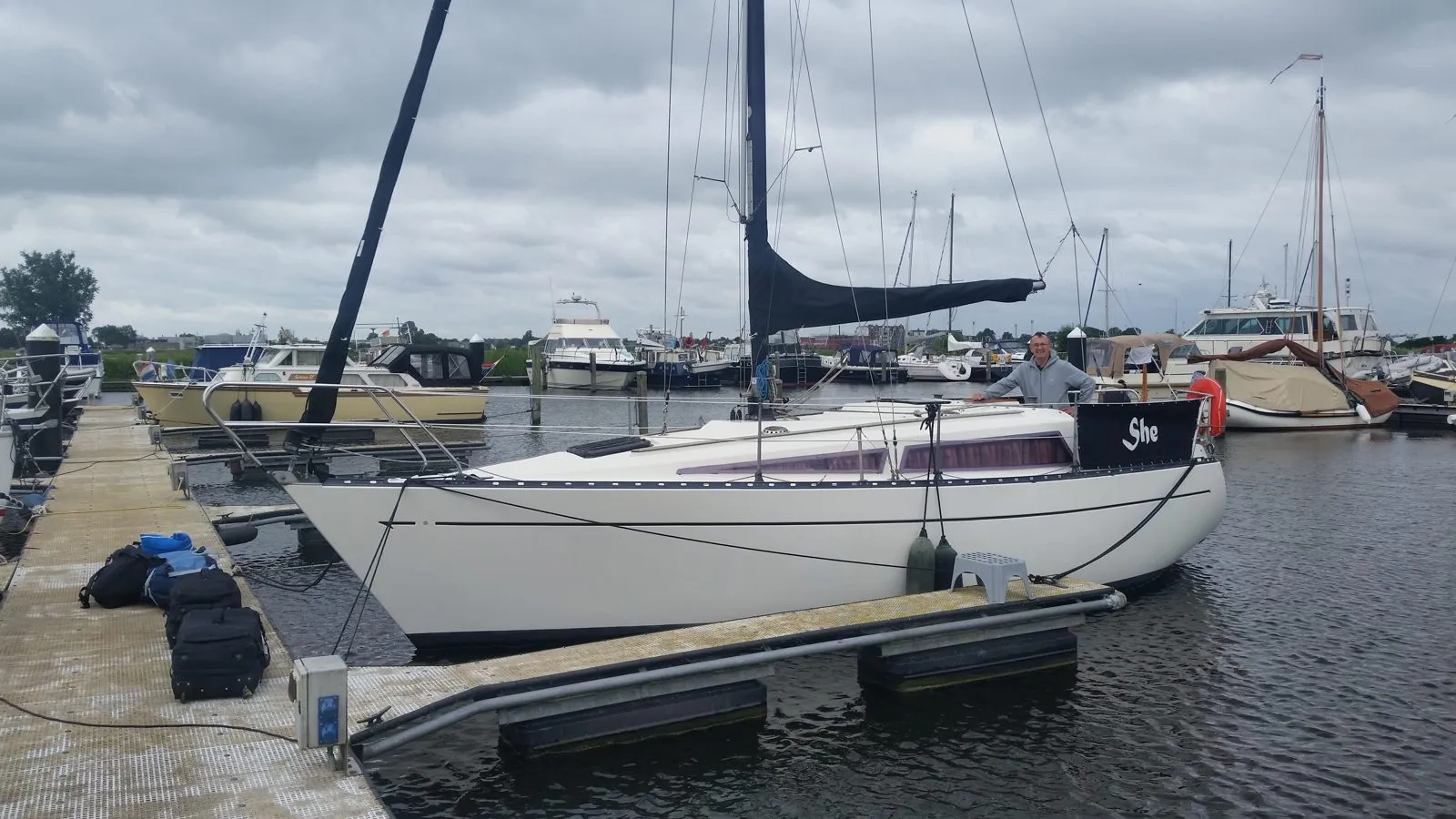
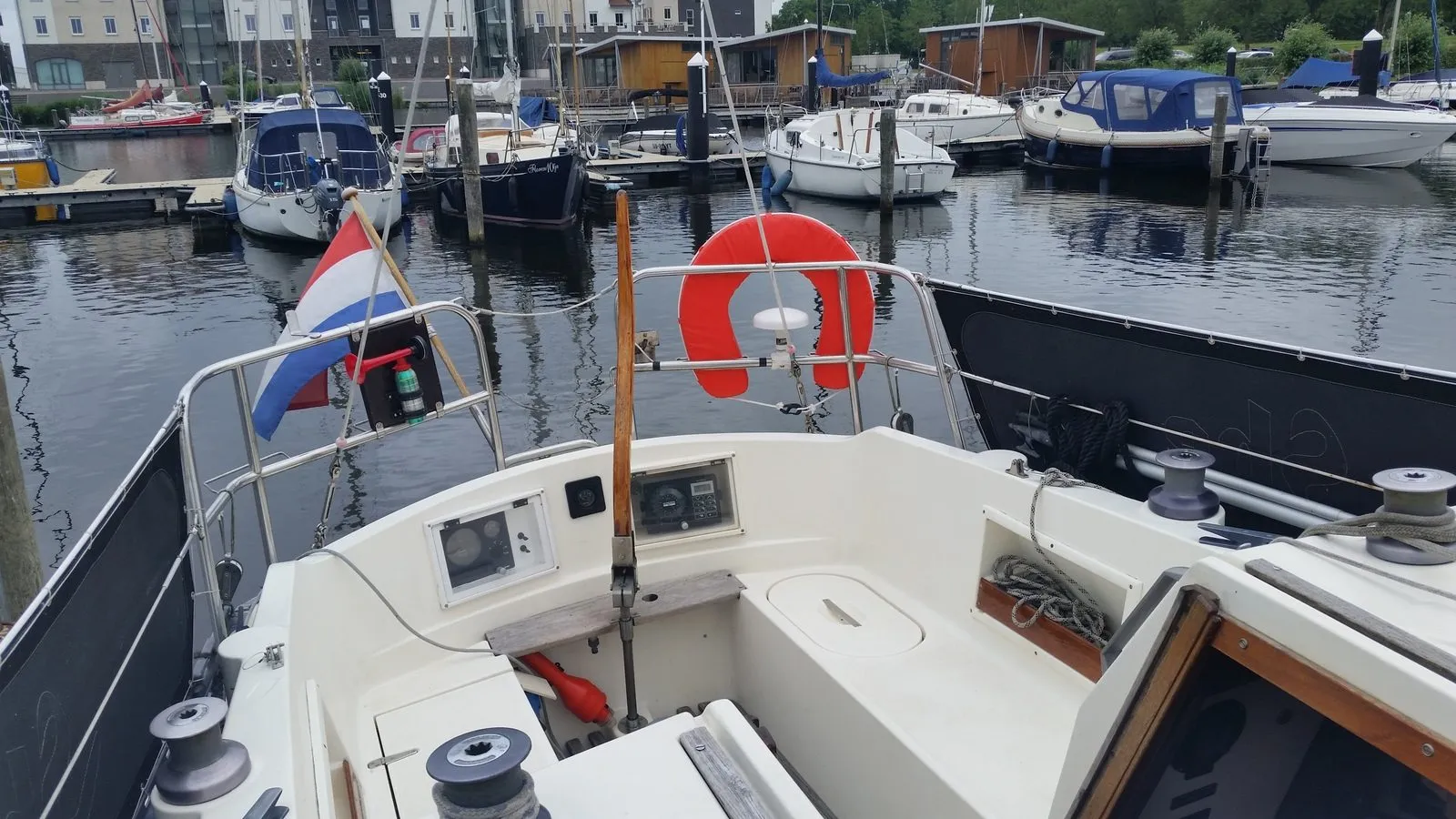
Our boat is an English-built Leisure 27 sailing boat, built in 1979
The owner bought her in 1979, straight from the factory. Draught 1.2 m, twin keel.
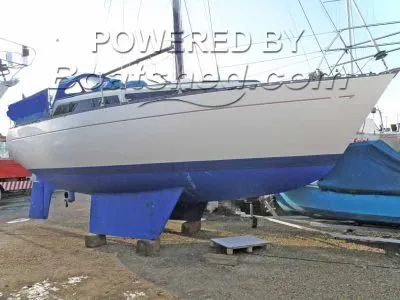
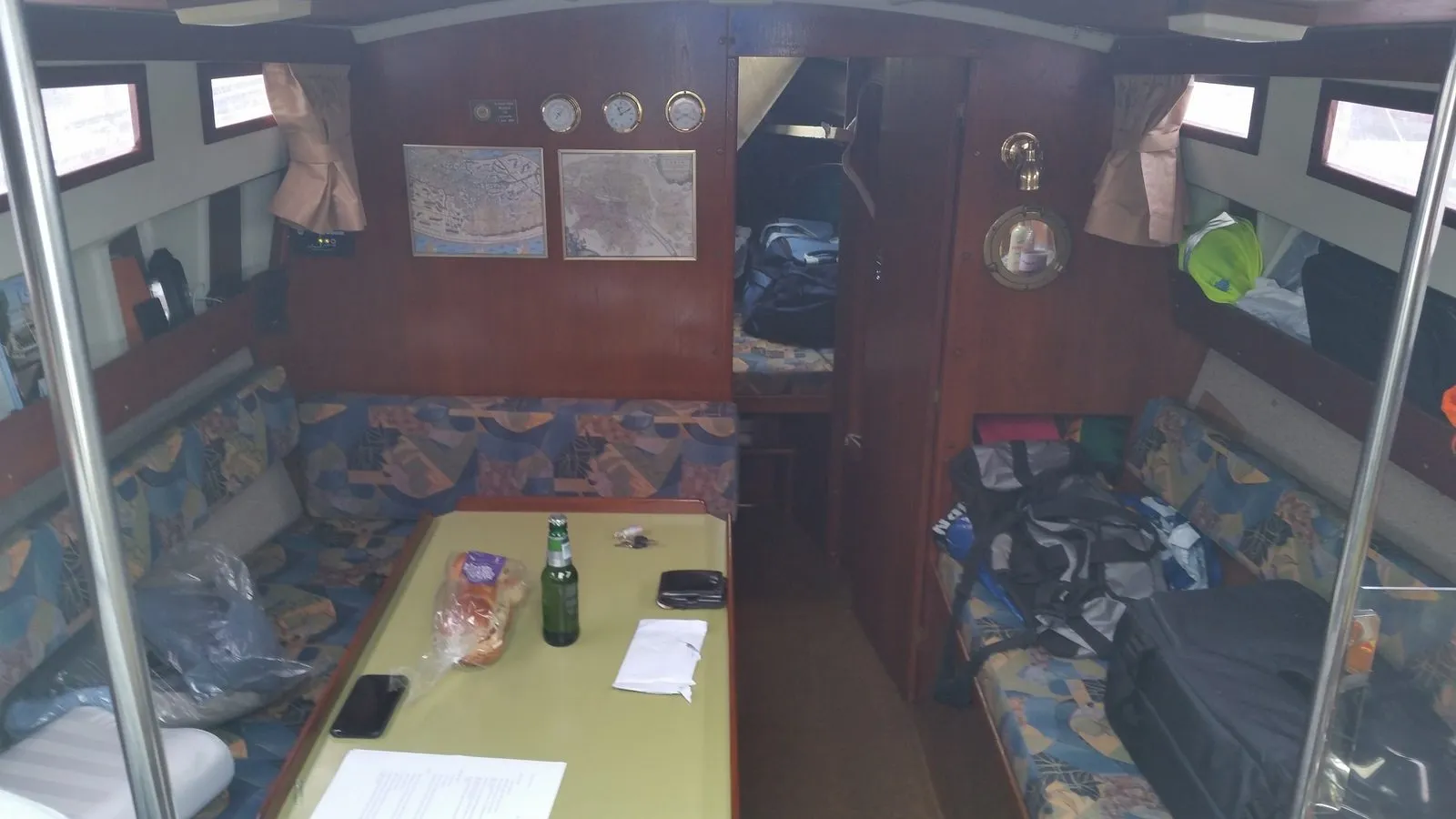
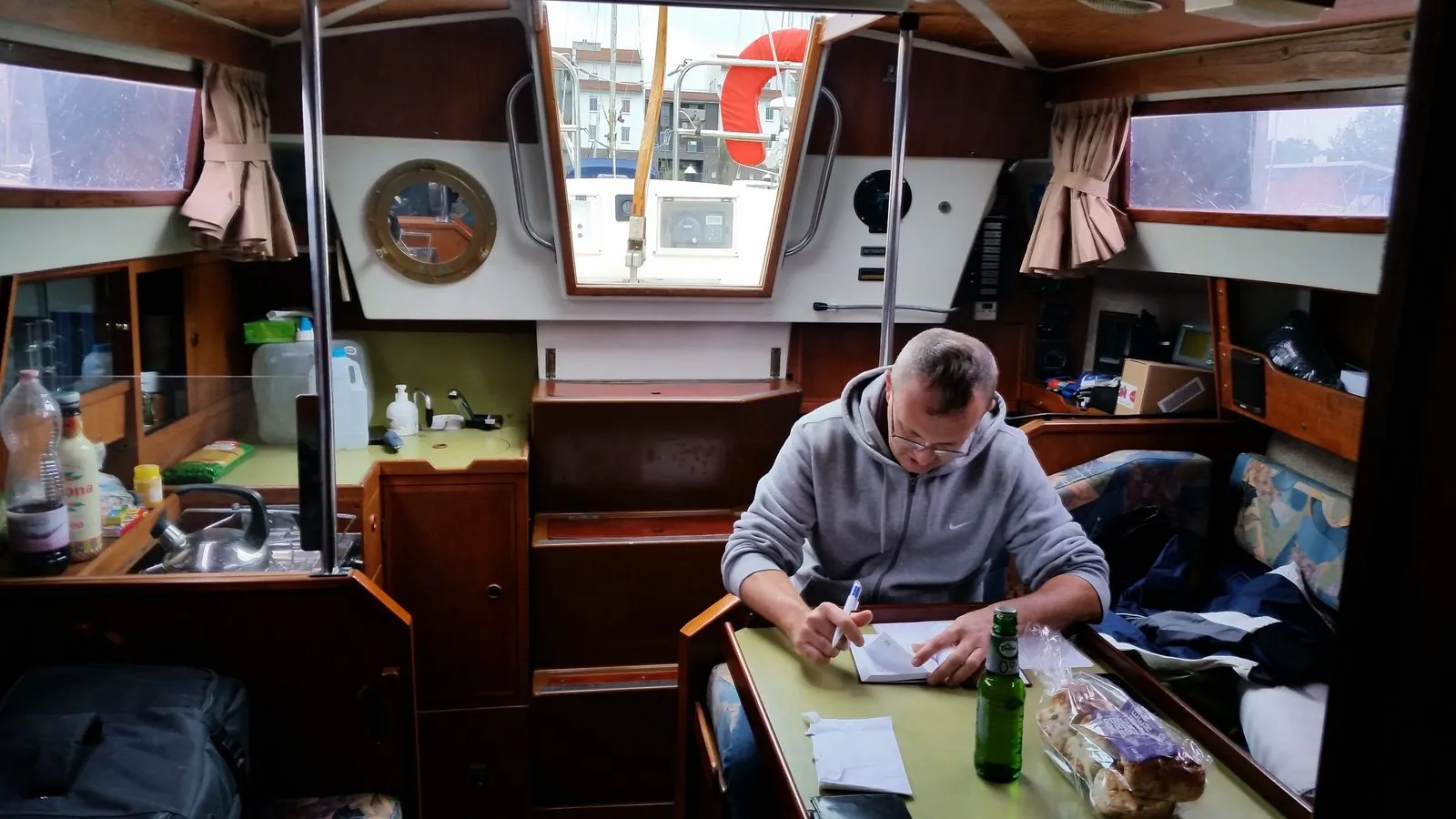
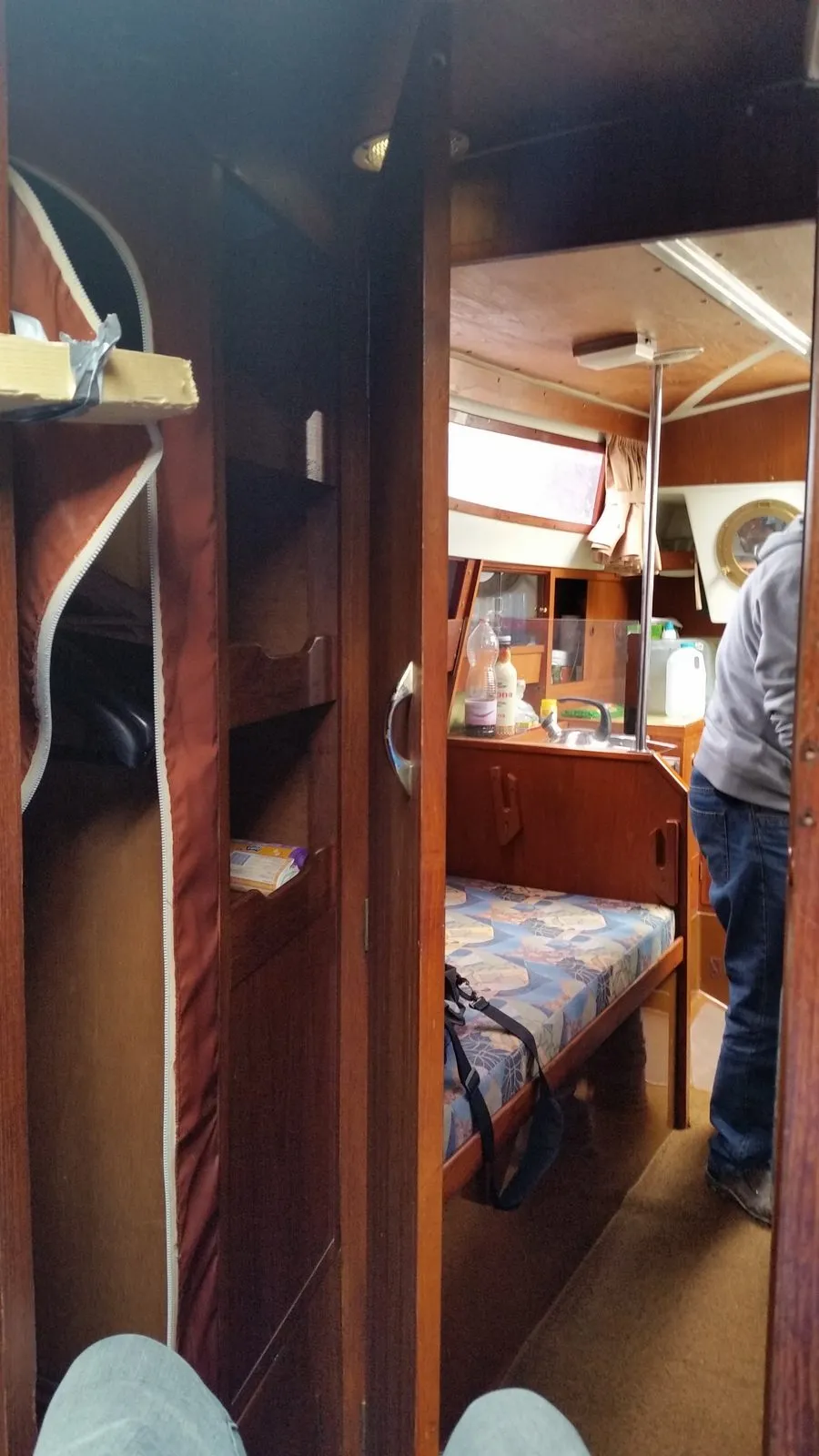
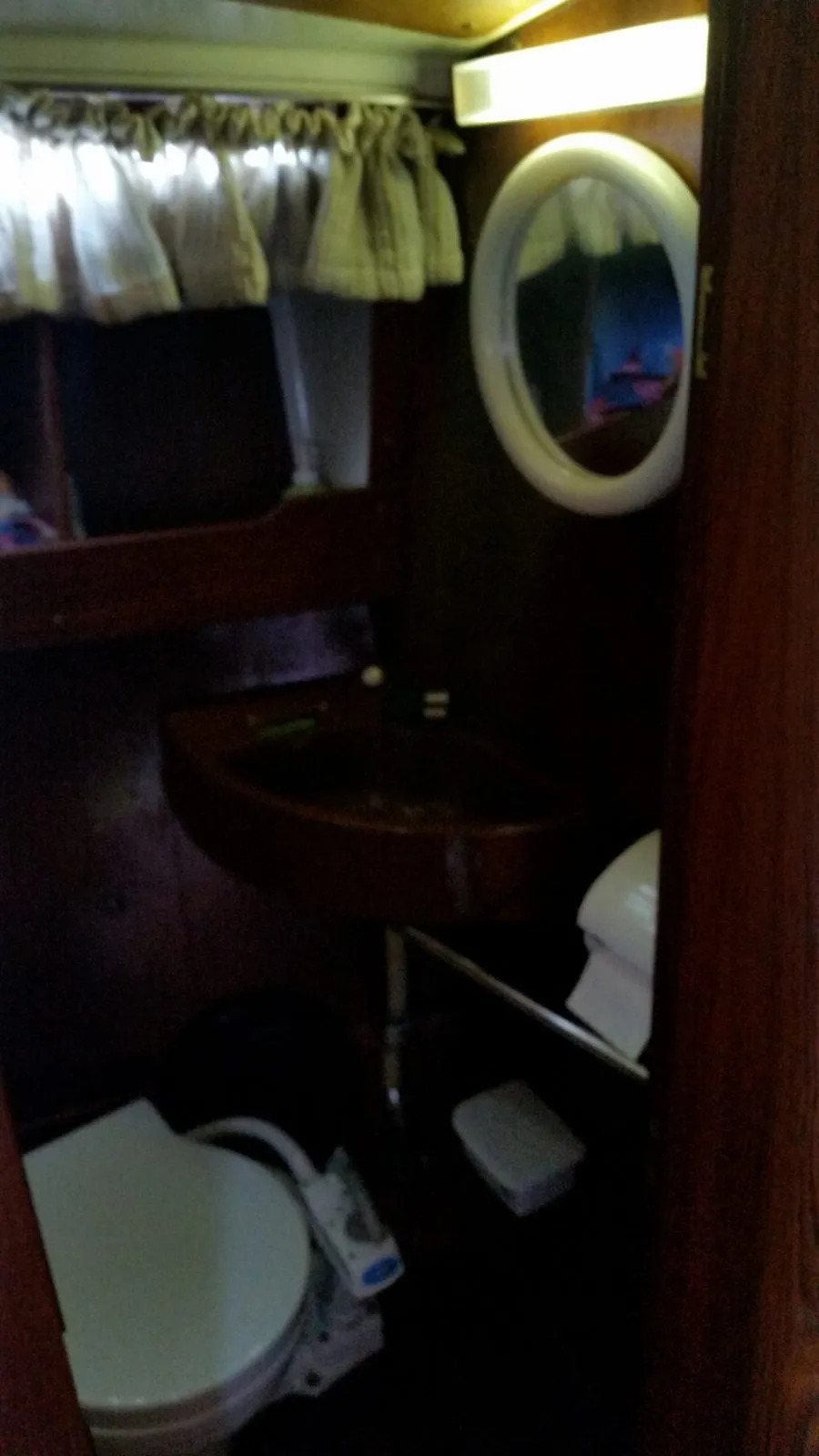
Very well kept for her age, full galley with hot and cold running water. The heads is a traditional manual pump toilet.
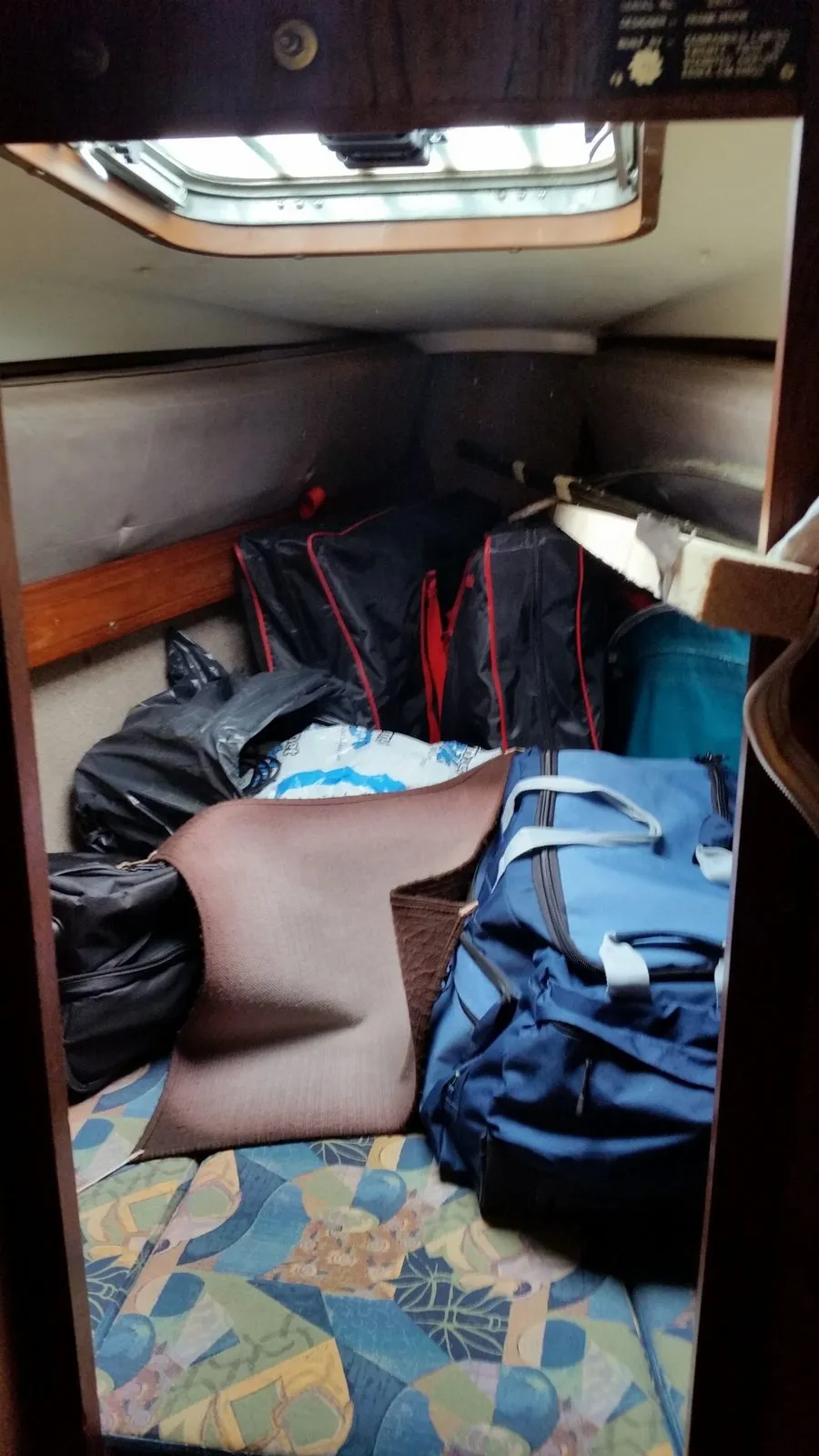
6 berths in total: two in the forecabin, and in the saloon the port berth can be turned into a double by lowering the table. The foot end of the starboard berth reaches in under the forecabin bunk. On the port side there’s a quarter berth (a “Hundekoje” – dog berth – as the Germans say), and above it the pull-out chart table.
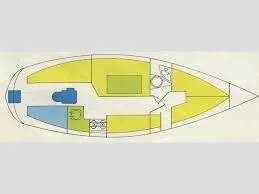
There’s diesel heating too; I hope we won’t need it. You can even shower in the cockpit, and there’s a complete tent for over the cockpit as well.
There’s a compressor fridge compartment at the front of the port-side seat; all in all, a pretty comfortable little boat.
| Length | 8.20m |
|---|---|
| LWL | 6.70m |
| Beam | 2.80m |
| Draft Min | 1.30m |
| Draft Max | 1.30m |
| Displacement | 2,750kg |
| Storage | Ashore |
Machine translation (AI, Claude) of Balázs’s Hungarian original. Read the original →
Preview / itinerary
June 2018. A friend of a friend of a friend of mine – a former shipmate – was looking for travelling companions to bring a 27-foot sailing boat home from the Netherlands by inland waterway. Not in a rush by the shortest route, of course, but with a detour through France, taking two and a half months over it.
A few e-mails were followed by a phone call, and since the last week of June was still free, I signed up.
So we’ve never met the owner, Bazsi, but we’ll have a week to get to know each other.
The itinerary is as follows:
On 22 June we travel out to the boat in the Netherlands, which is in Flevoland, at a place called Eemhof, opposite Spakenburg.
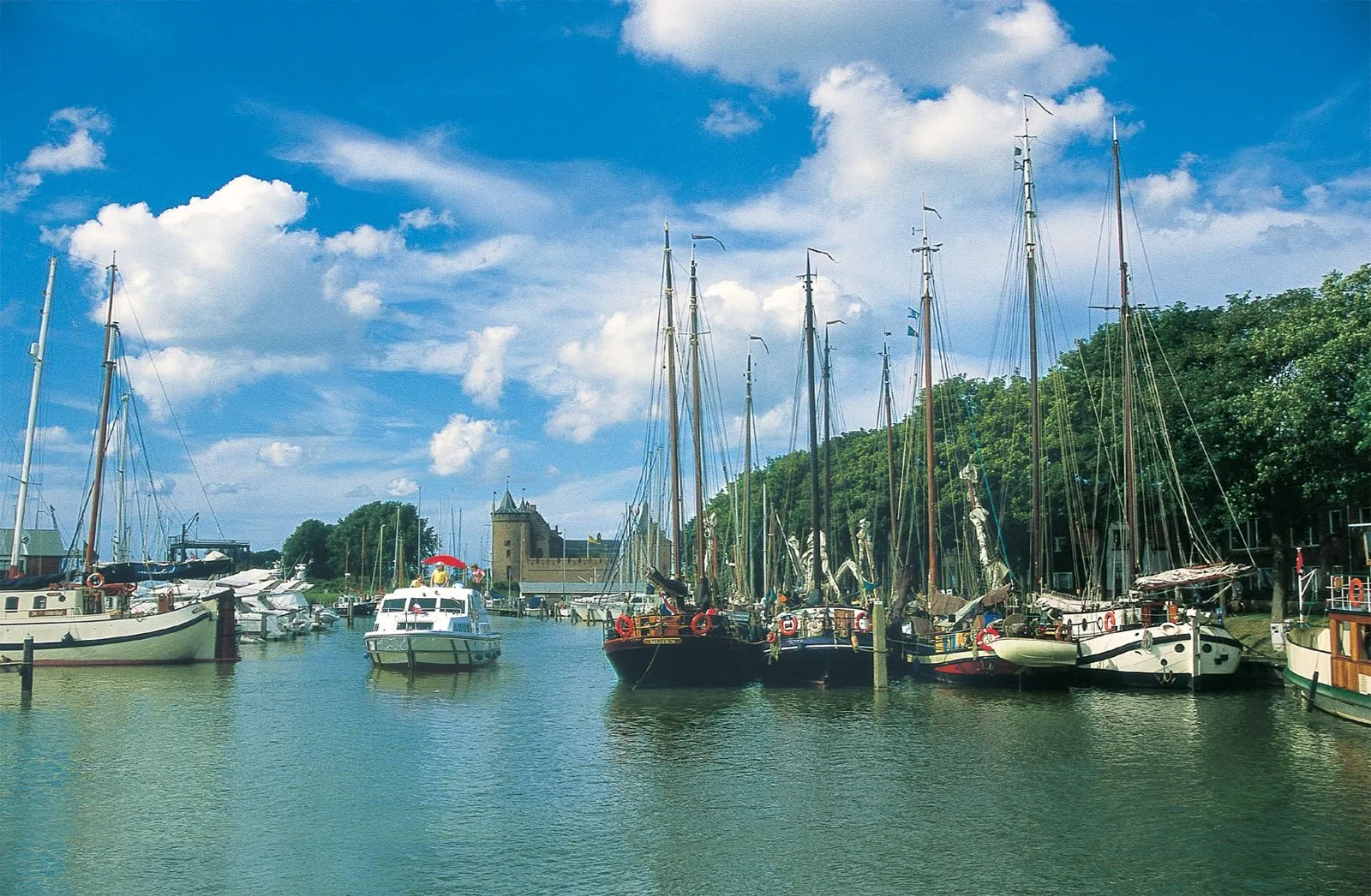
After taking down the mast and getting ready, we set off west towards Muiden, then south on the river Vecht.
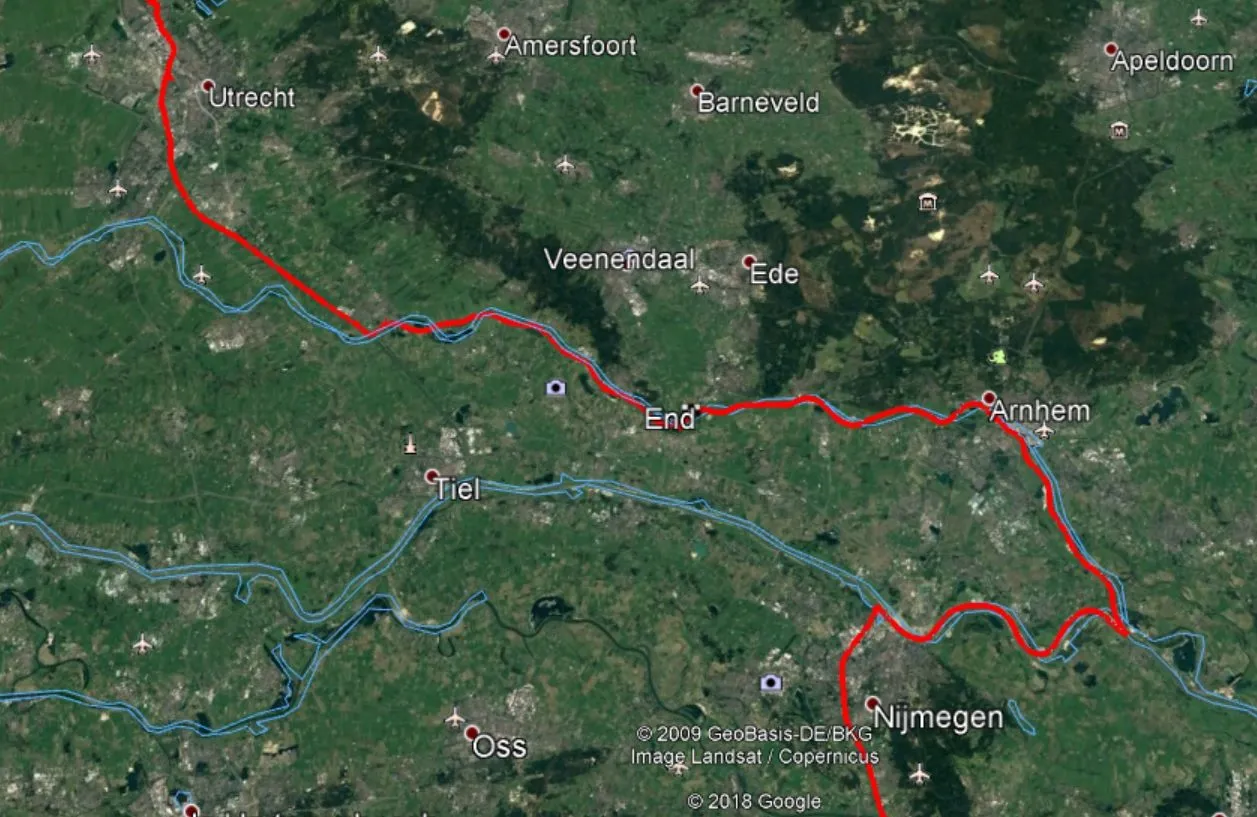
Through Utrecht to Arnhem, then on the Rhine – which by this point is called the Waal – to Nijmegen, then through a canal onto the river Maas. Venlo, Roermond and Maasbracht, and from there on the Julianakanaal to Maastricht.
There I get off (if they don’t throw me off sooner), and hand over my pre-warmed spot to the arriving family members.
Well, that’s the plan; we’ll see how it goes…
I don’t know when I’ll have time to write and upload, but if you follow (and forgive) me, you’ll hear about everything in good time…
Balaja
Saturday, 23 June 2018
Day 0
We set off from Budapest last night. I was the last to get in, and with me the Osz-car was well and truly full. The space left for me was in the middle of the back seat, so all night I had to be careful – unless I was looking for trouble – not to slump onto the shoulder of one of my male neighbours… What can I say, I got a really good rest. At 3 in the morning we were in Frankfurt, where two people got out. We also passed the shop window of a lit-up gym, where one single lad – admittedly with a bit of extra padding – was jogging on a treadmill. At this hour??? Can’t he sleep? I’d only go running at night if someone was chasing me. Since the treadmills behind him were empty, I ruled that possibility out. By 9 in the morning we reached the marina in the Netherlands, fresh as a daisy – well, as a wet dishrag.
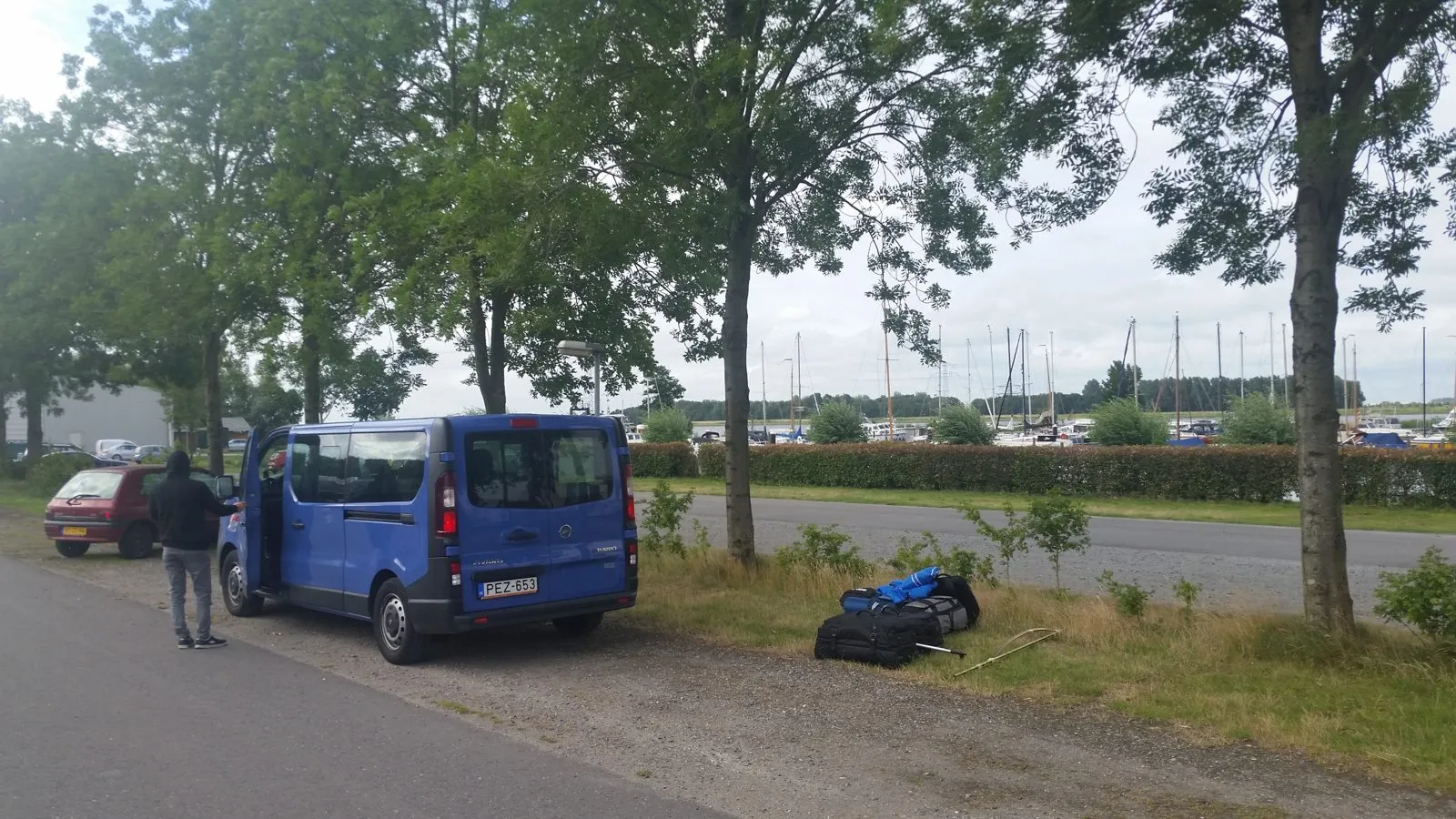
The boat’s seller and his wife soon turned up too, to finally seal the sale. They brought a basket of little raisin buns, documents, and a box from which the lady took out some sort of black portable scanner thing. Only after the balance of the purchase price had been paid did it turn out that the device was actually a UV banknote-checking lamp, which she immediately started using to examine the euro notes Bazsi had brought. Trust is good, but control is better, as the German says in Hungarian…
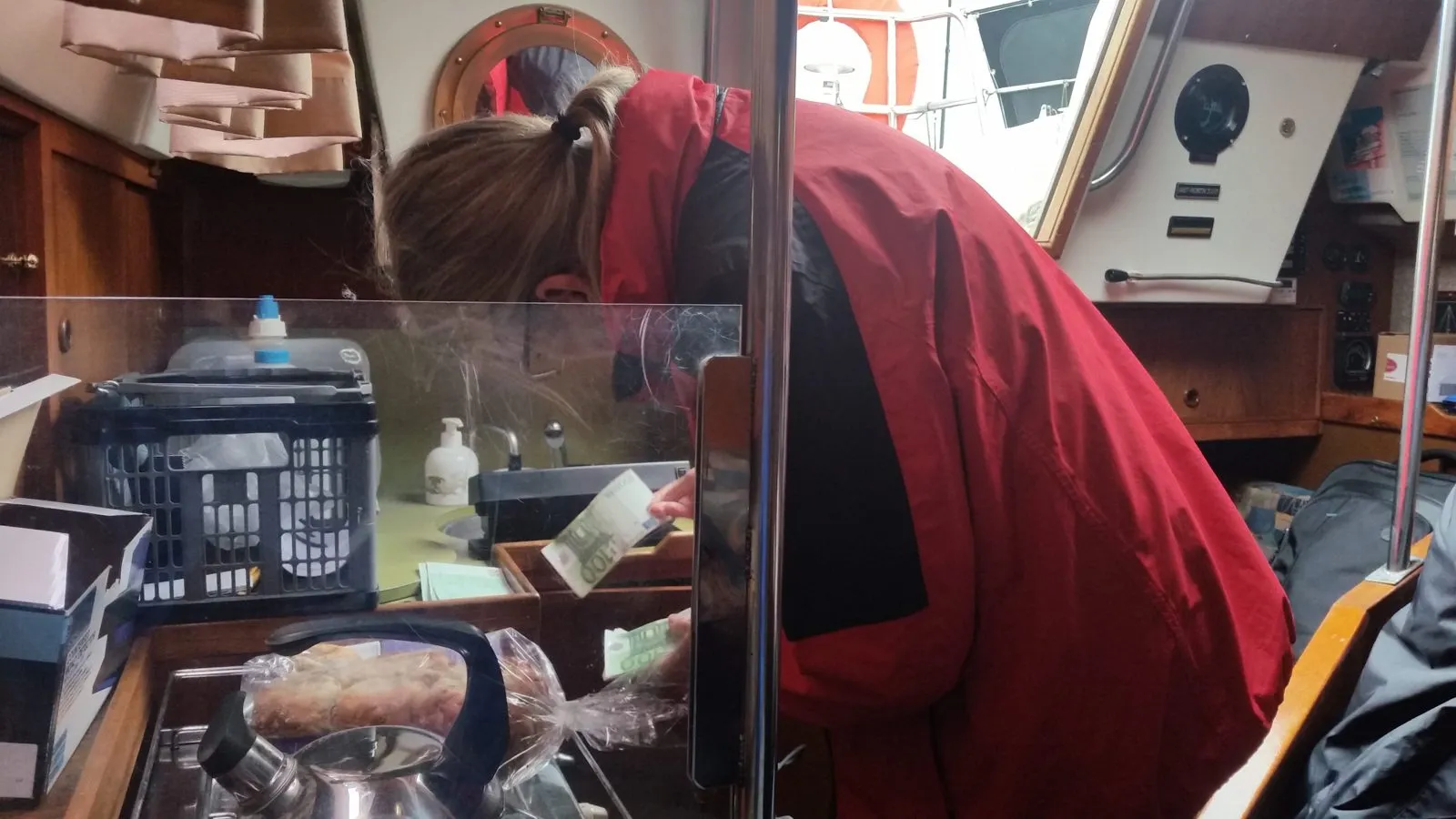
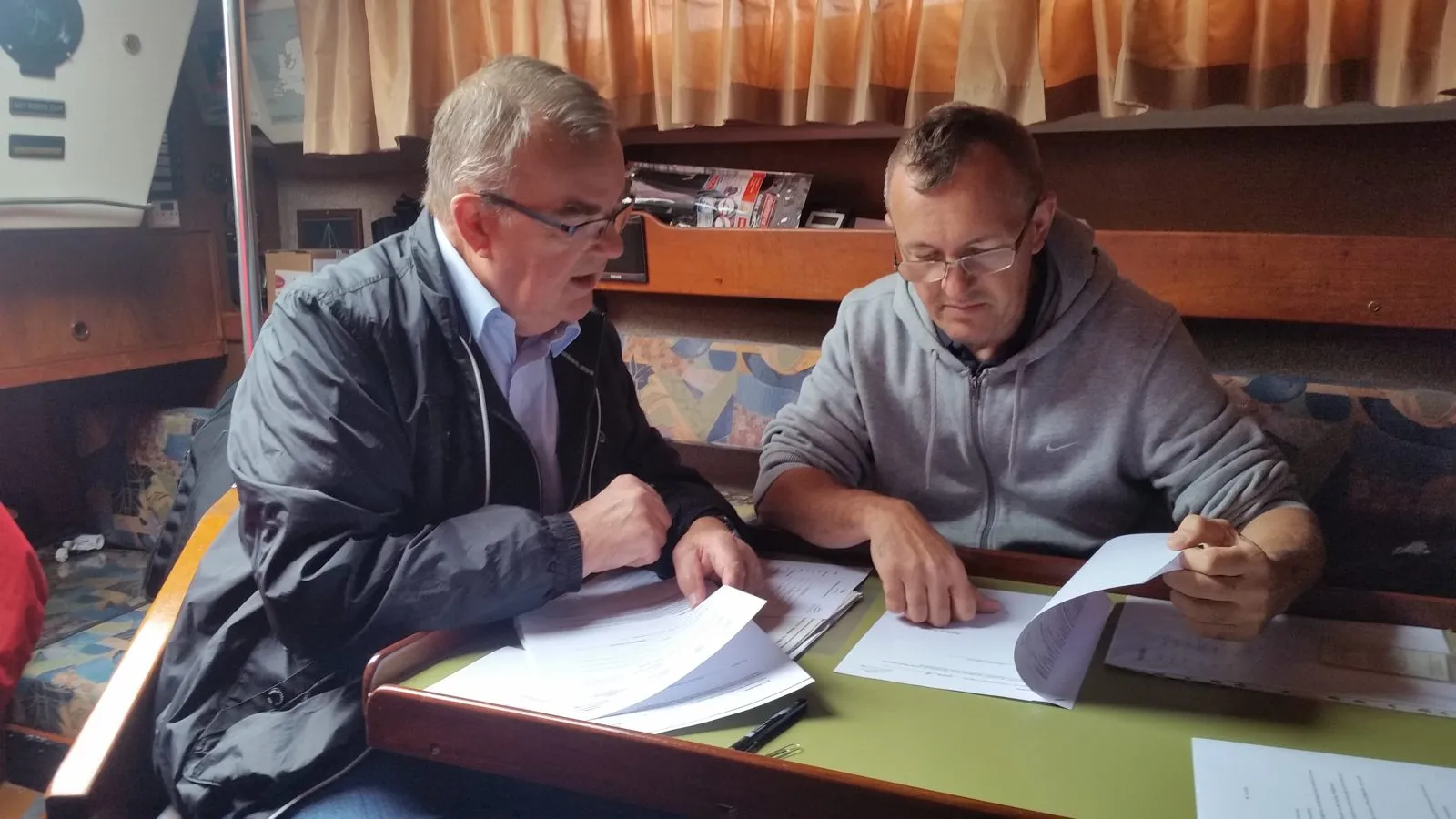
We asked Edward if we could go out for a test sail before we took down the mast.
OK, only first they’re taking the money to the bank… This may just have been healthy caution, but it’s also possible that our Central-Eastern European origins influenced the order of things, even though you only see such an honest, meek face when I look in the mirror…
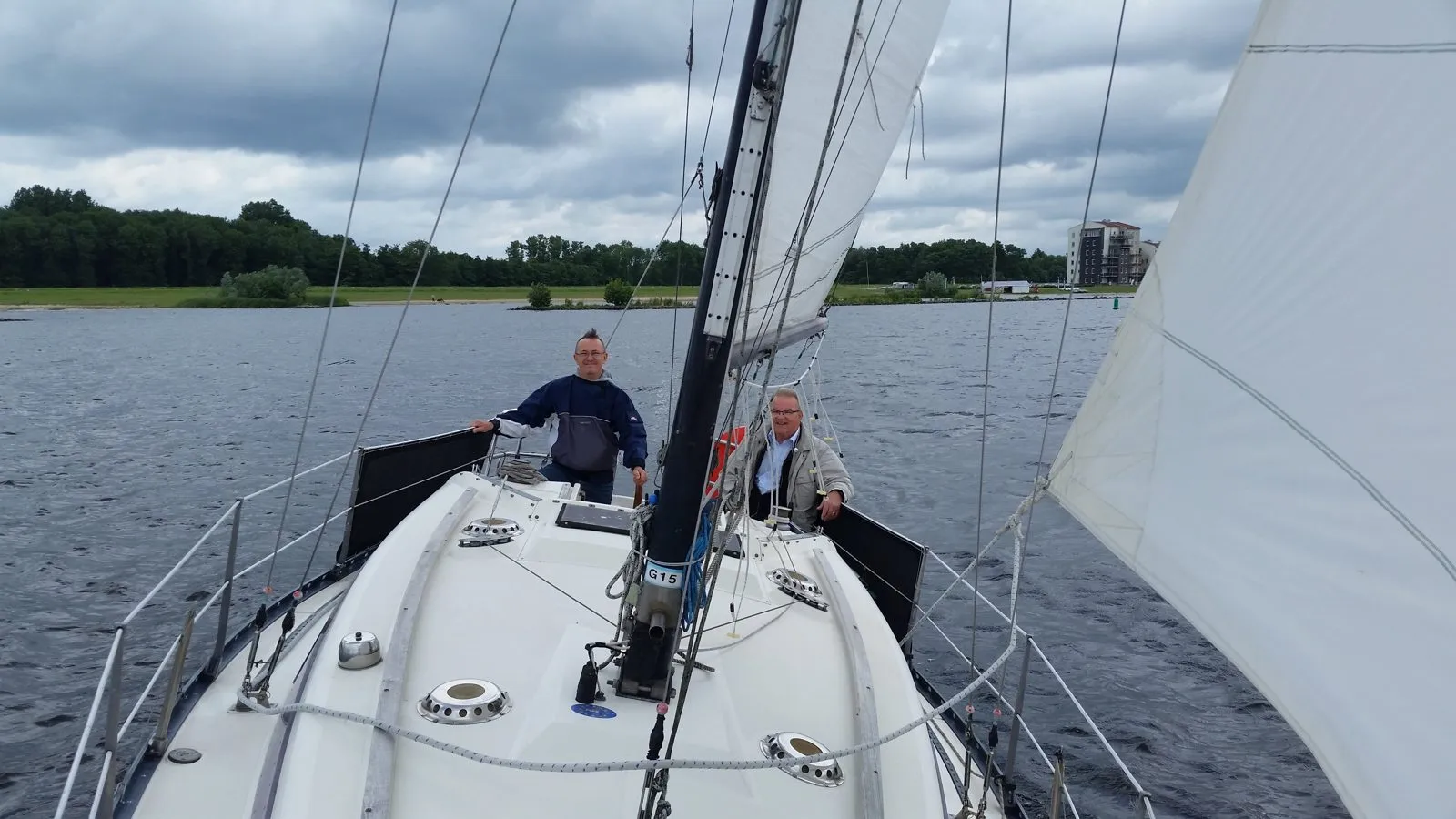
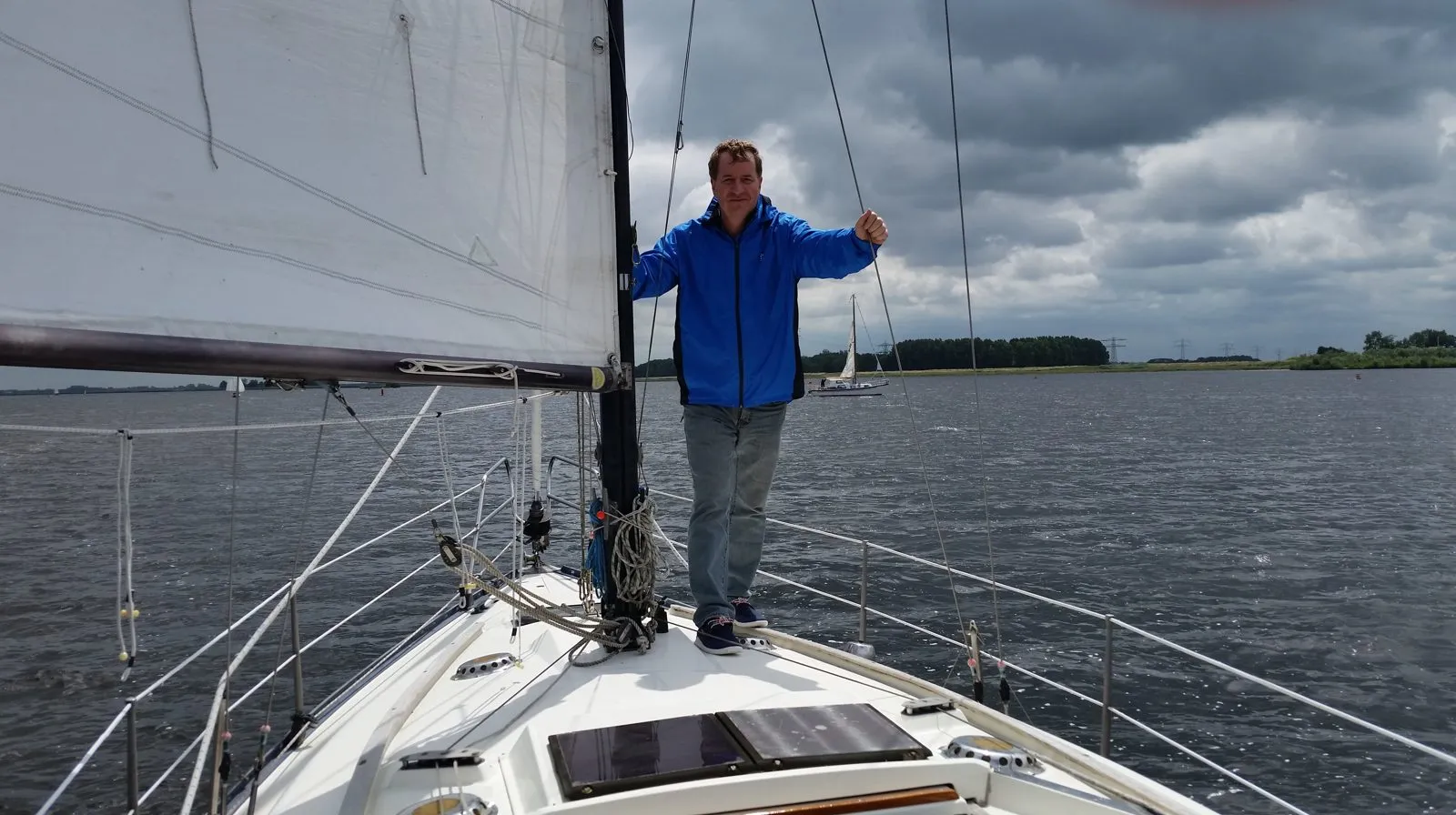
Money gone, Edward back, test sail done, and as we were motoring back into the marina we saw ahead of us a German boat that had seen better days a very long time ago, struggling against the wind with half a headsail; it obviously wanted to get into the marina, but like that it didn’t stand a chance. We towed them in – they were very happy – we’d come along at just the right moment, so the test trip was a success in every respect.
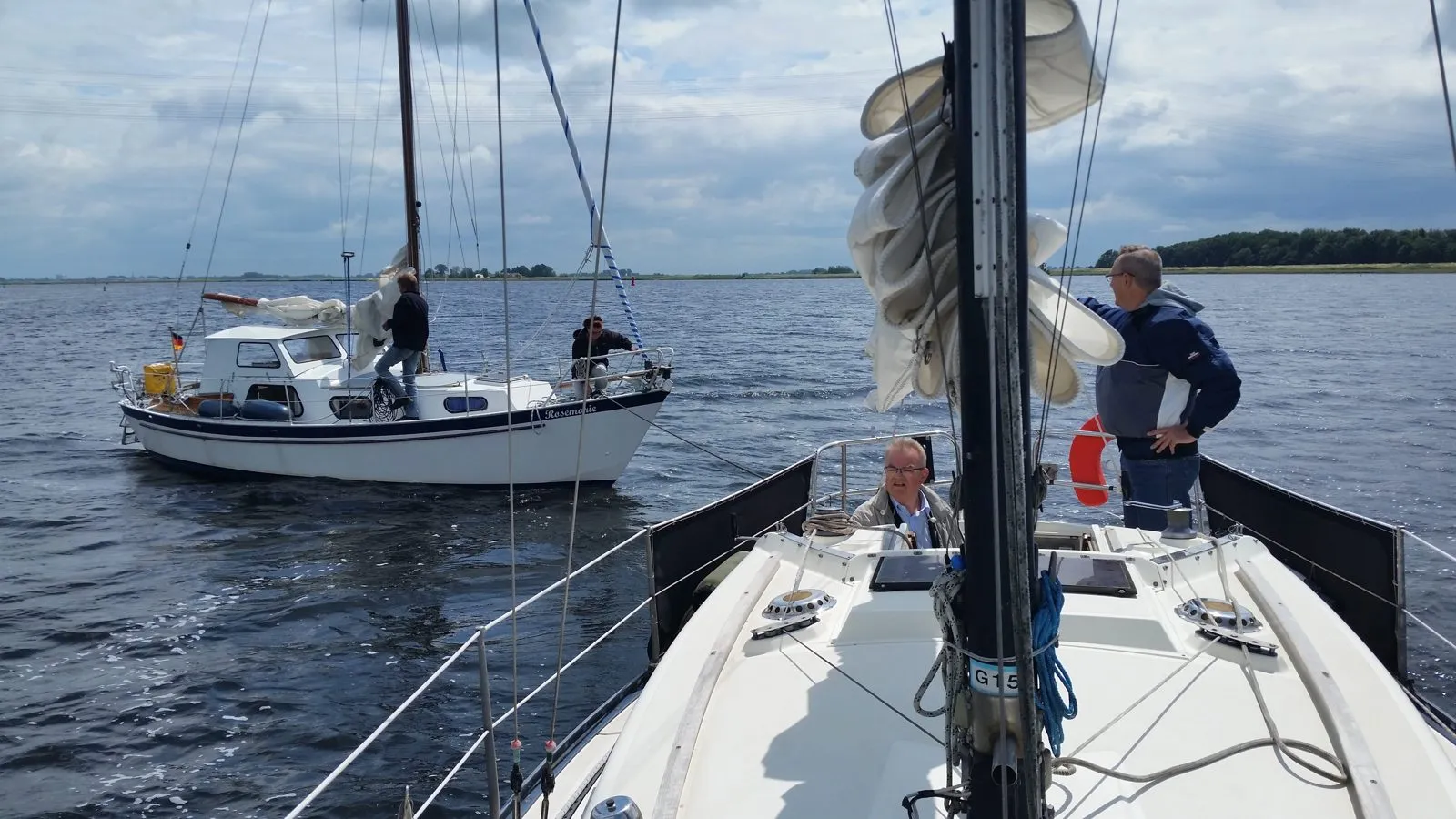
We skipped lunch so as to be sure of finishing taking down the mast. In hindsight this turned out to be a pretty bad decision, because from one o’clock until six in the evening, with Edward’s help, we took down and dismantled the sails and the mast, then lashed every part on deck or stowed it away inside the boat. When I was lowering the mast during the operation, they warned me several times not to stand under it. I immediately moved to the other side of the cockpit, but since my weight came along with me straight away, first the boat heeled over a bit to the other side, and then right after that the mast tipped over above me too, threatening once again to flatten me if it came down. We played this game a few times – the mast faithfully followed me every time – until it began to dawn on me that, if you please, there might be some connection here, and I asked Edward to kindly move that big hulking tube away from above me and keep it at a distance.
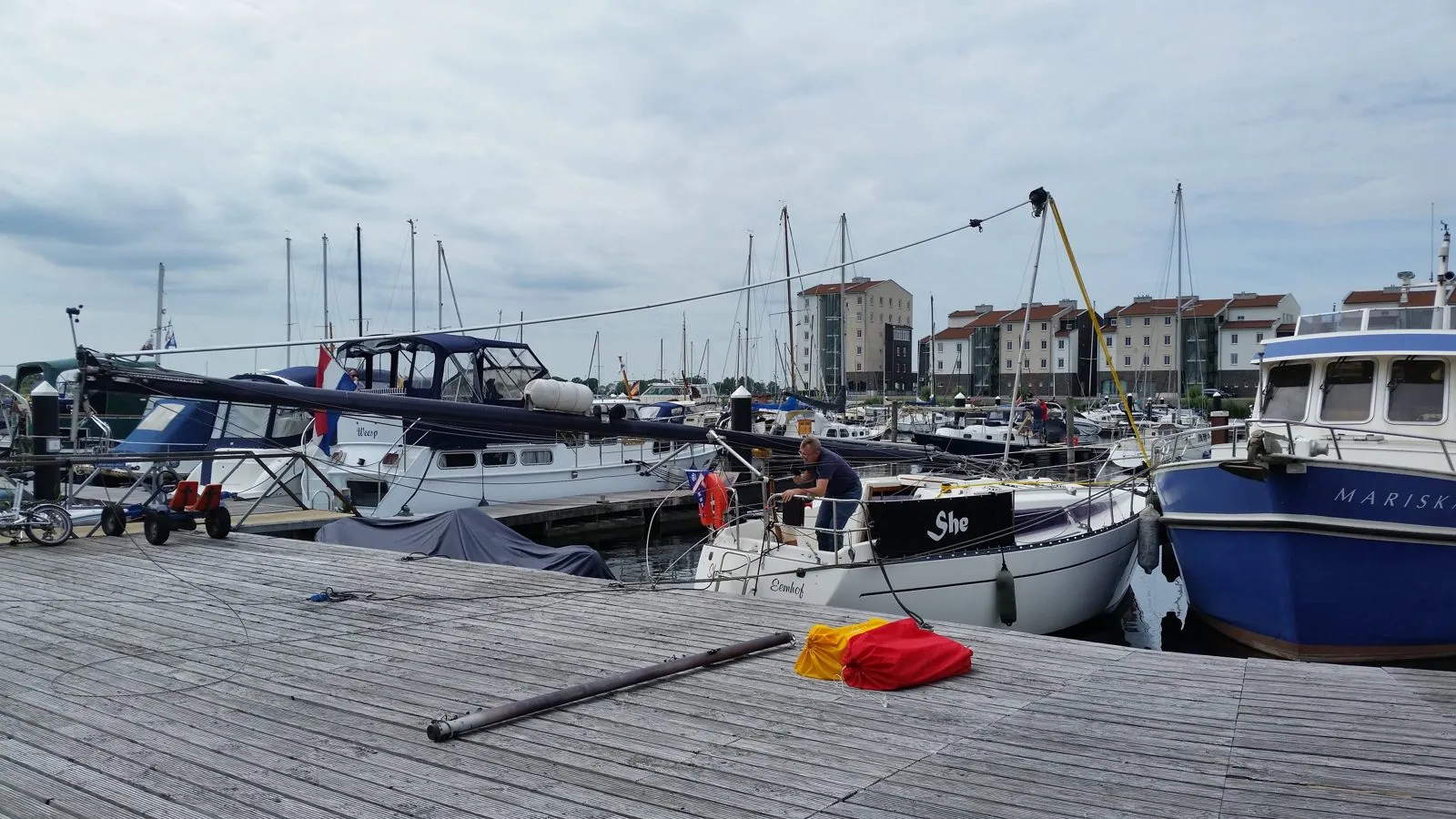
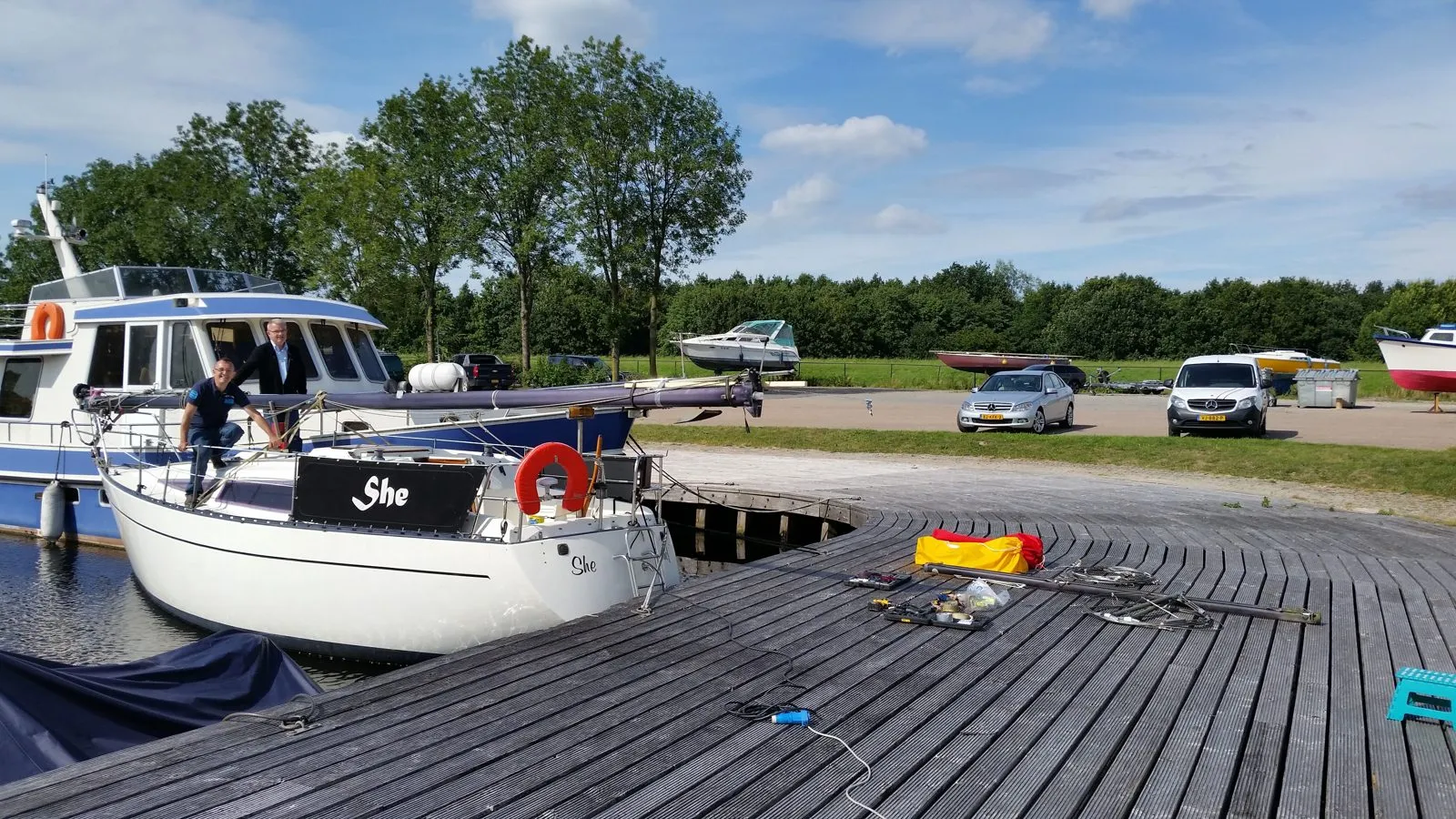
After finishing the job we wolfed down the strawberry-and-vanilla cake Edward had brought as a gift, and washed it down with one bottle each of alcohol-free beer we’d found in the boat’s fridge. Not exactly the combination we’d been longing for, but it saved us from starving to death. After that a quick, thrifty Dutch shower (a push-button on the wall: first very-much-not-warm water comes out, then water just lukewarm enough that you don’t quite enjoy standing under it, and finally, after the 5th push of the button, nothing…), then the hunt for a place with a TV so we could watch the Germany–Sweden match. There wasn’t a scrap of TV in the marina dives, surely because – I thought – the Dutch hadn’t made it to the World Cup. In the end we had to trudge over to the Center Parcs beyond the dyke, where with great difficulty we found the one and only projector screen in the Hamilton bar, and they found the ARD channel on it.
During the match we got thoroughly tanked up on the 3-euro beer, served in a 2-decilitre plastic cup. We’re not in Croatia, but this drink was damn kuna-expensive here too (the kuna being the Croatian currency, and a near-twin of a Hungarian swear word); it beat even the Munich Oktoberfest prices…
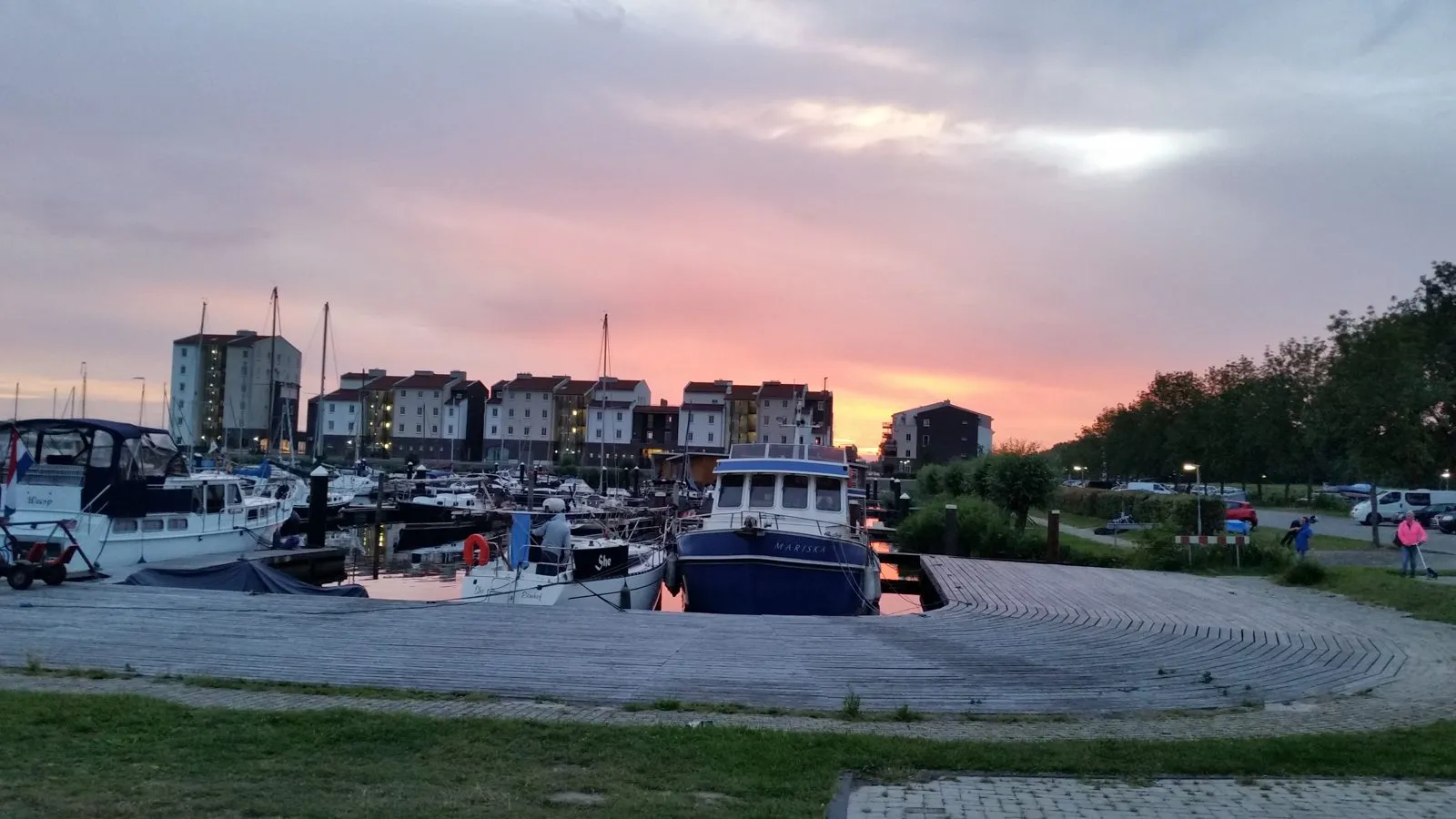
Around 11 p.m., when we went to bed, it was still light, but we didn’t need to hum each other lullabies after all…
Machine translation (AI, Claude) of Balázs’s Hungarian original. Read the original →
Sunday, 24 June 2018
Day 1, 52 km
We woke up stiff and chilly – the mattress was hard and by morning the air had turned cold – and at the crack of dawn, 7.15, we trudged back over to the Center Parcs to buy odds and ends, bread and beer for the trip. Of course nothing opened before 8, so we decided these people weren’t going to get rich off us, and went back to the marina.
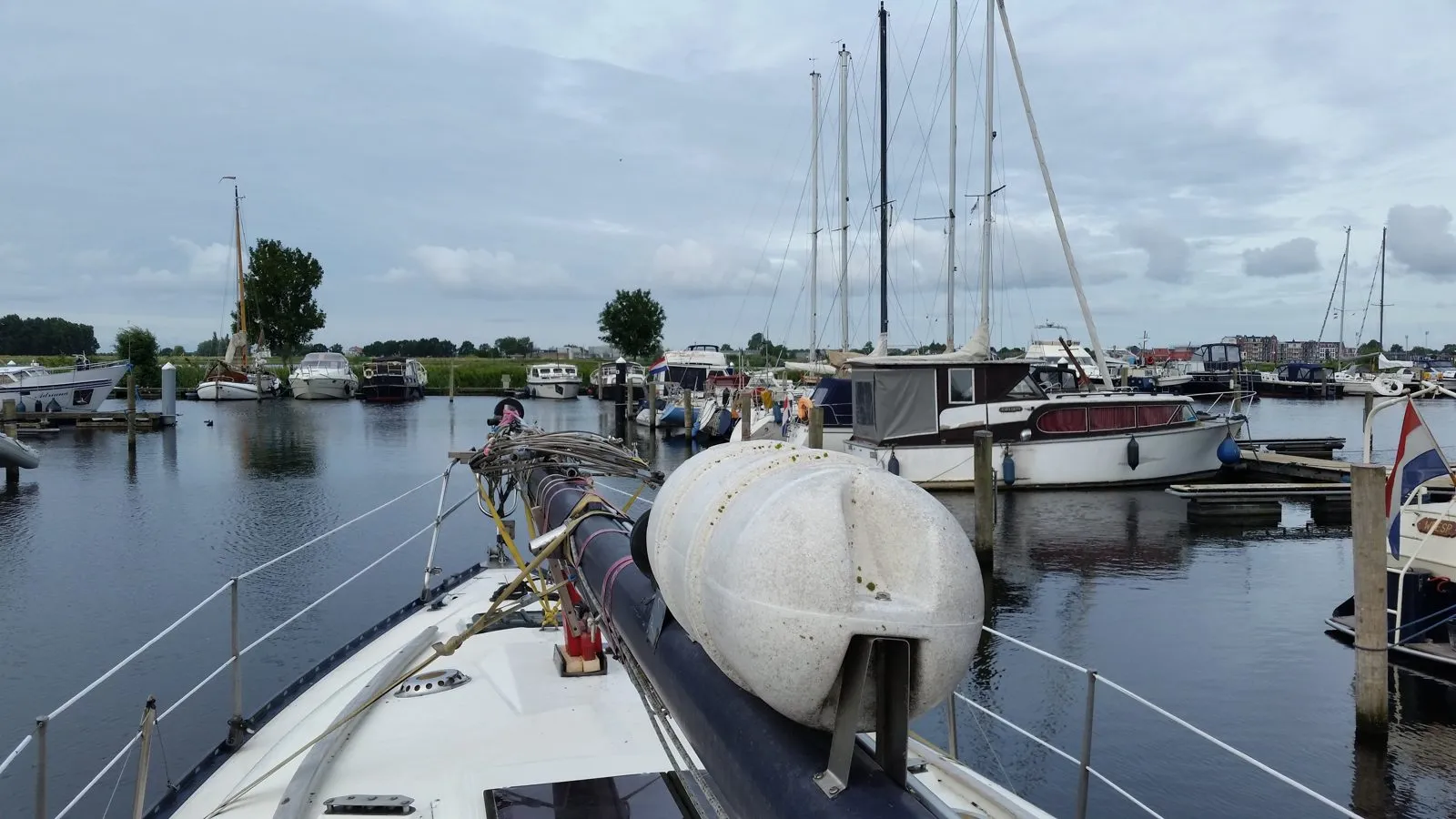
A few minutes after 8 we set off on the big journey, which for me will last only a week, but for Bazsi a good two months – he has 2,500 km ahead of him. He treated himself to this boat, and this trip, for his 50th birthday. Shipping a boat home from the Netherlands by road is rather expensive, so he decided to bring her home to Hungary on his own two feet – well, on the water – see a bit of Europe along the way, and maybe even come out of the whole thing cheaper…
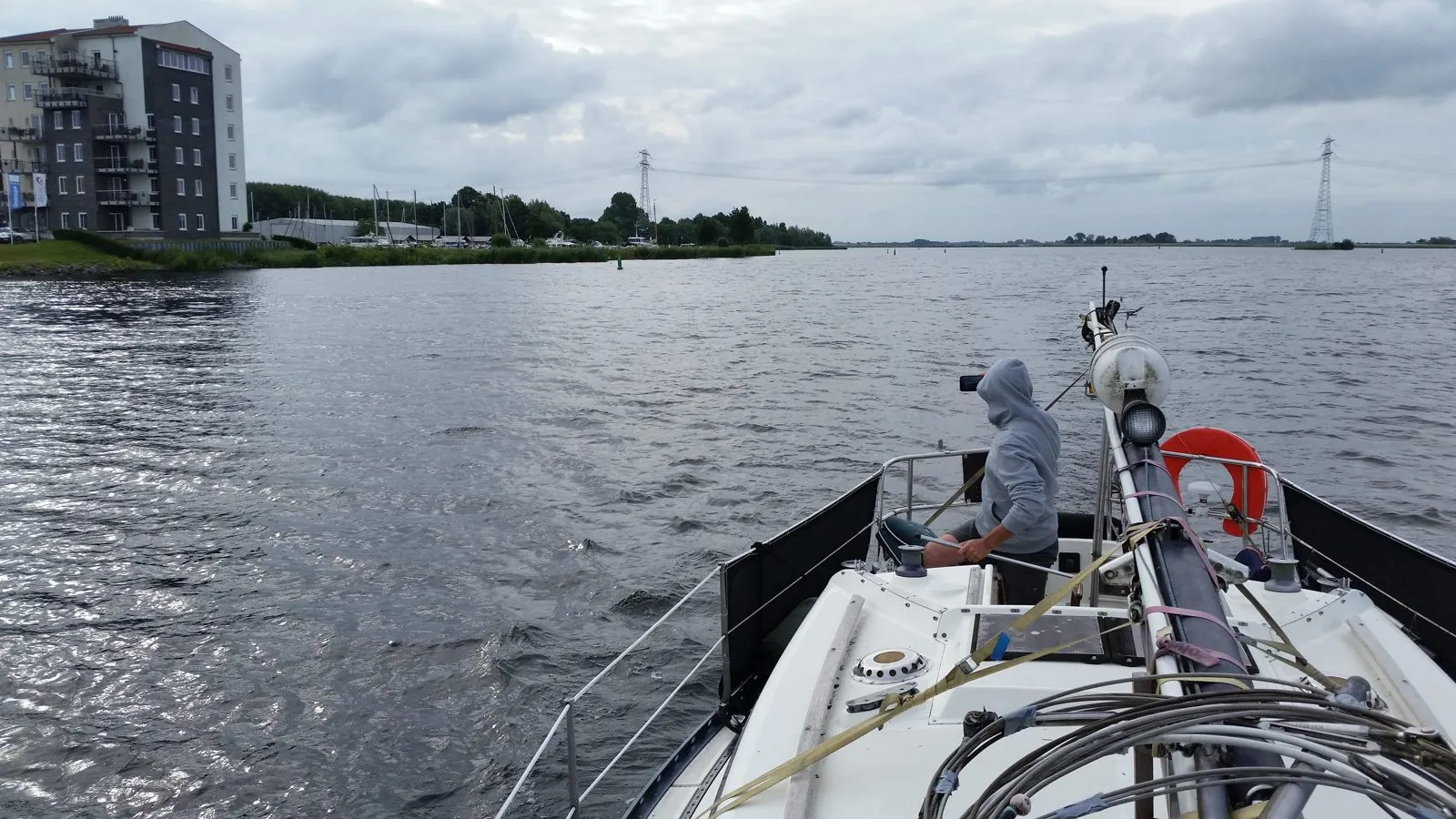
It was cloudy, cool and windy, but we made ourselves comfortable in the cockpit and chugged along towards Muiden at 11 km/h. There we turned onto the river Vecht and looked for a mooring so we could visit the fortress guarding the mouth of the river.
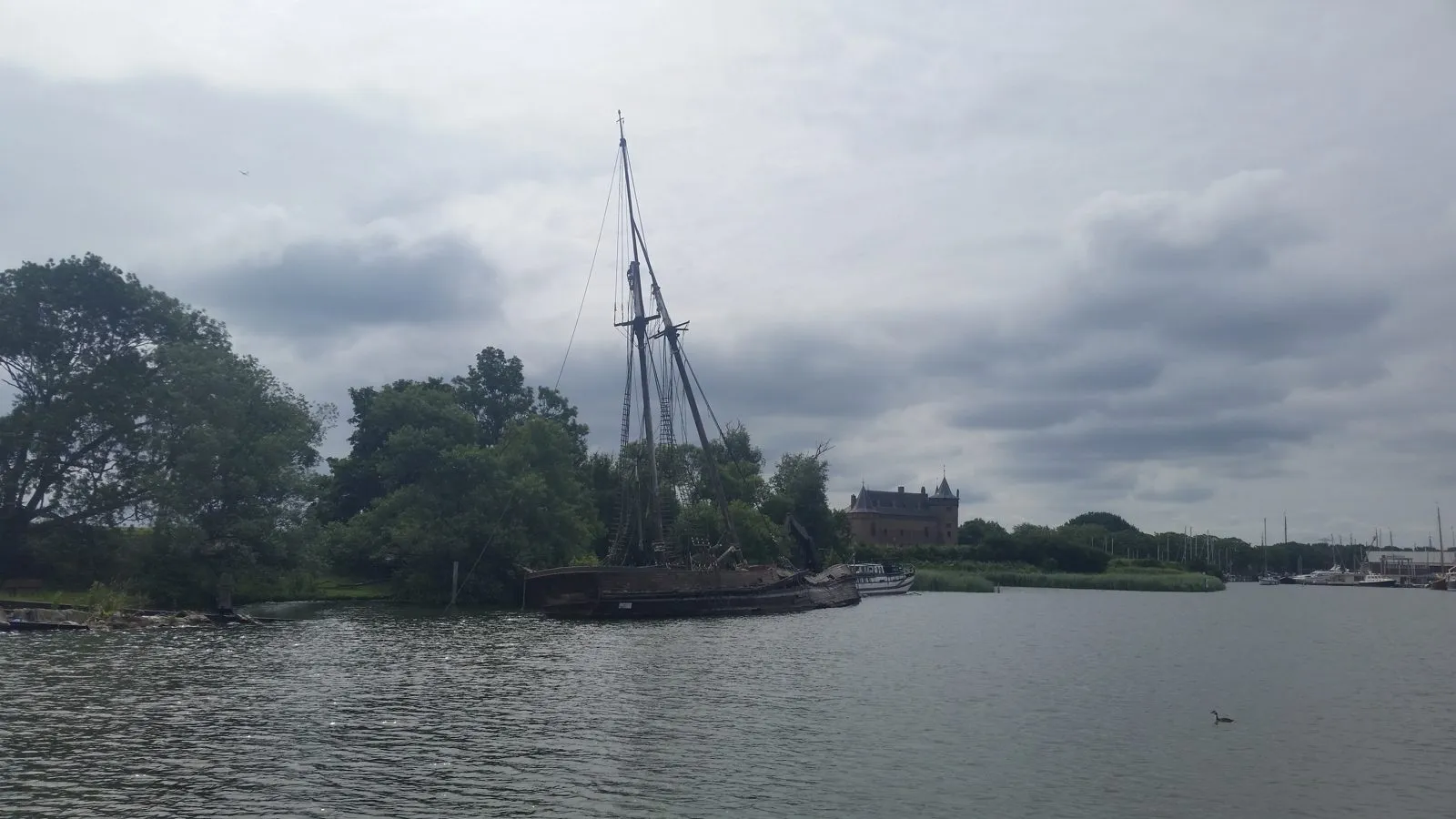
As recommended, we tied up alongside a period sailing barge moored to the bank and set off on a town-and-fortress walk.
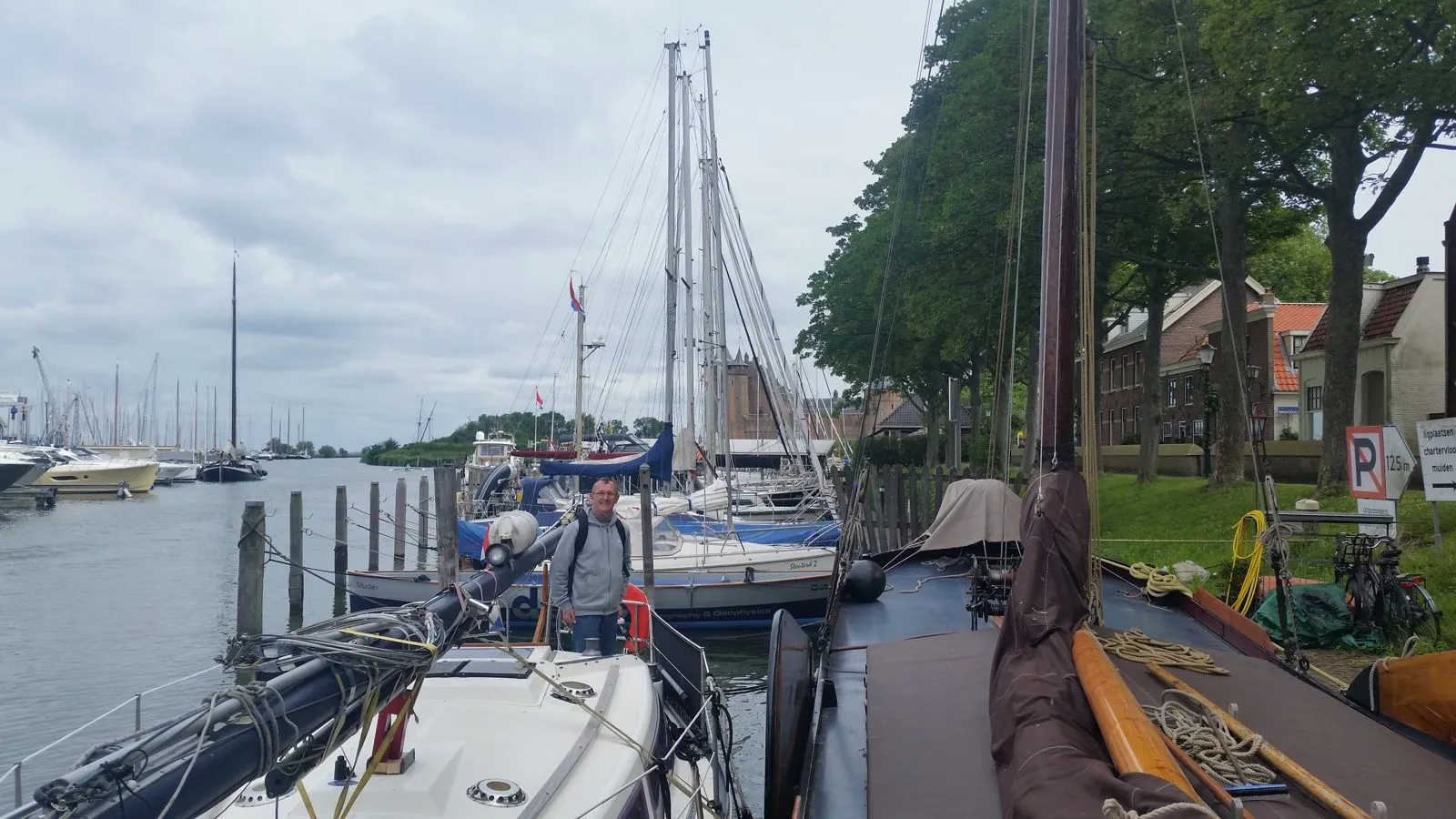
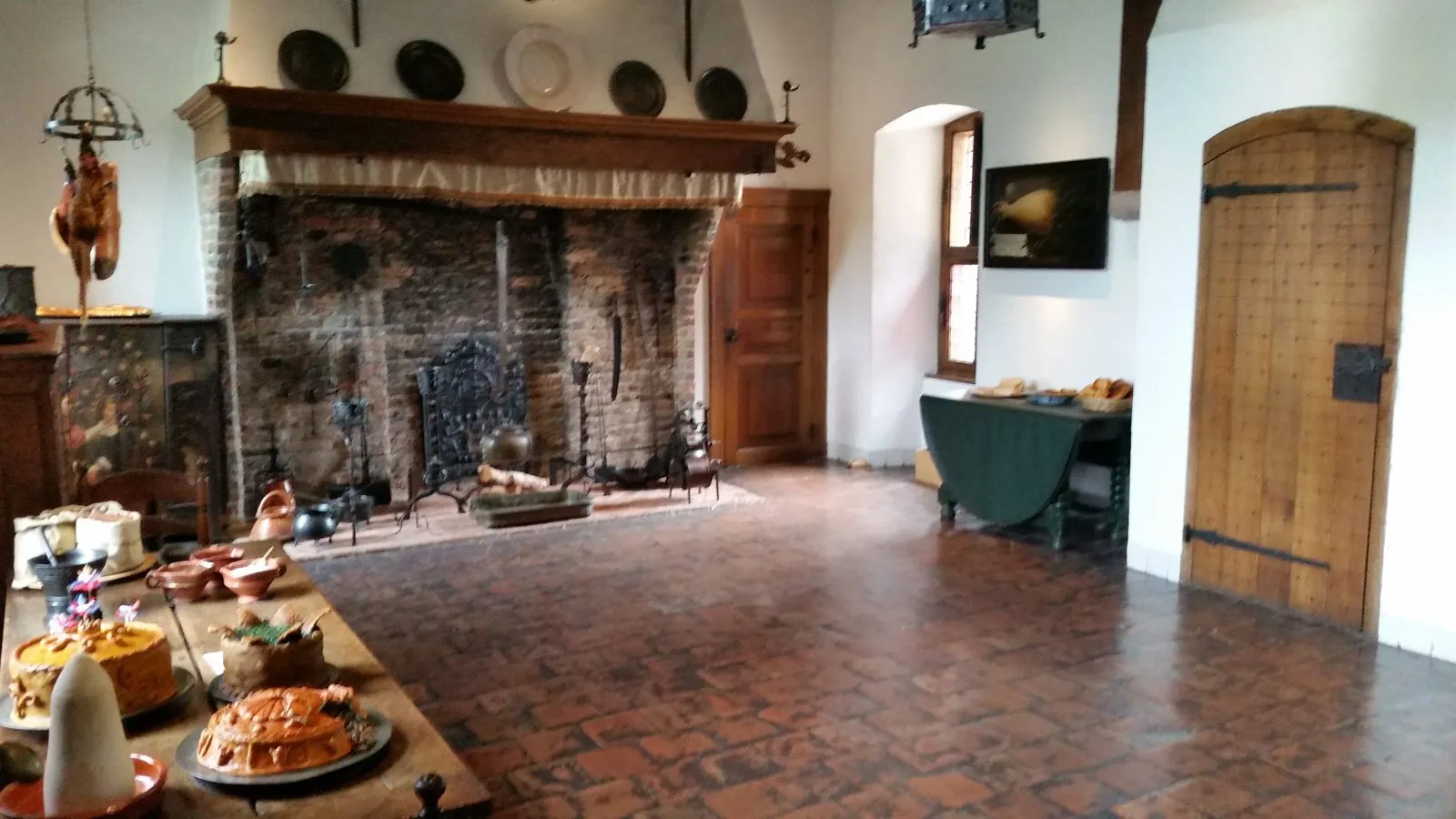
Admission to the castle-fortress was pretty steep, we paid €15.50 a head. On the other hand there was a guided tour in Dutch, from which, with a bit of English and German, you could unravel something.
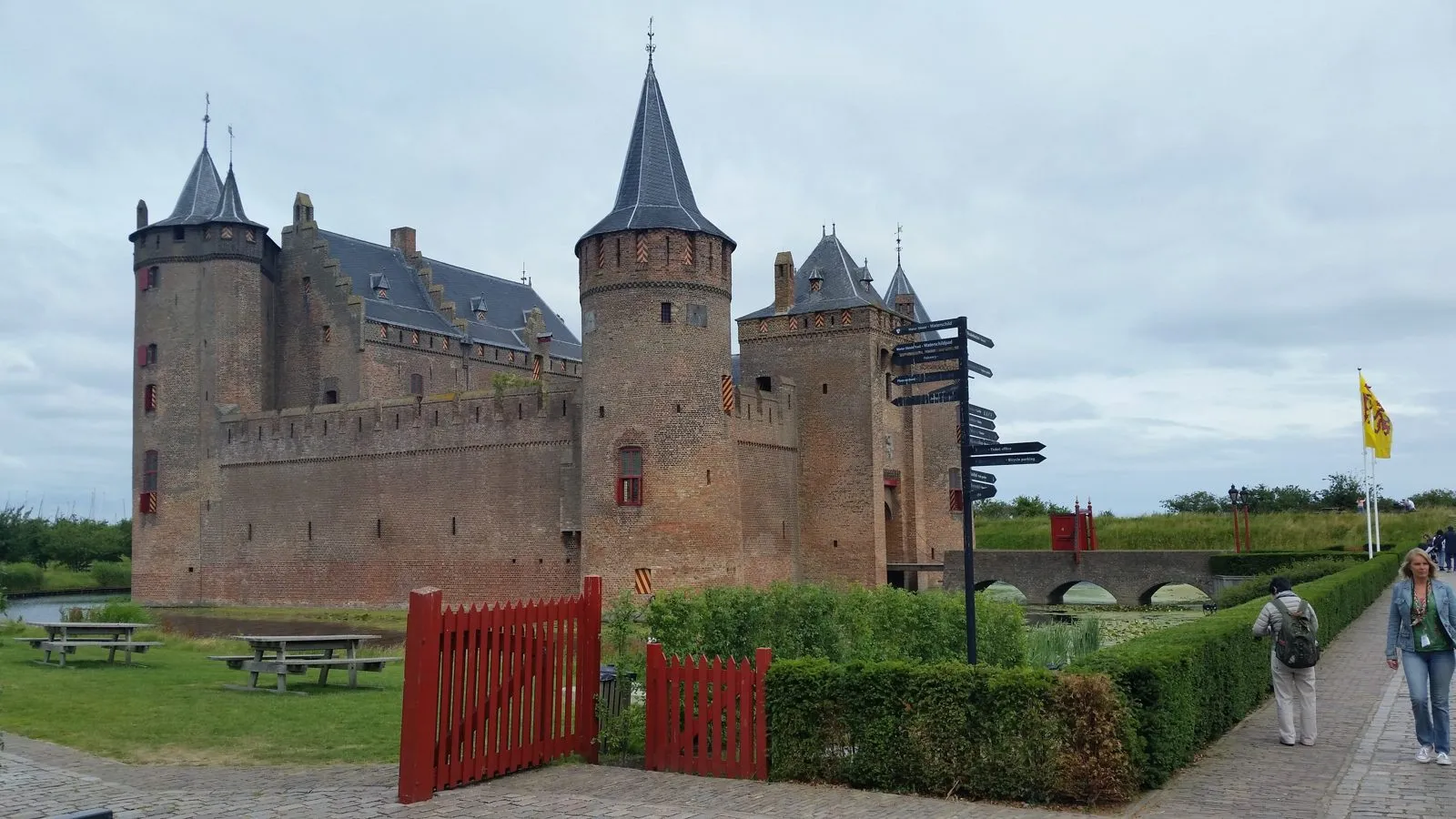
I did pick up the main points: that the children drank beer for breakfast, and that the beer was hauled up by a pulley-operated dumbwaiter – a beer lift, if you will – from the cold cellar straight into the cold dining hall, where the lord of the castle could warm himself by the fire in an armchair with side walls and a roof, a bit like the wicker beach chairs on the Baltic coast.
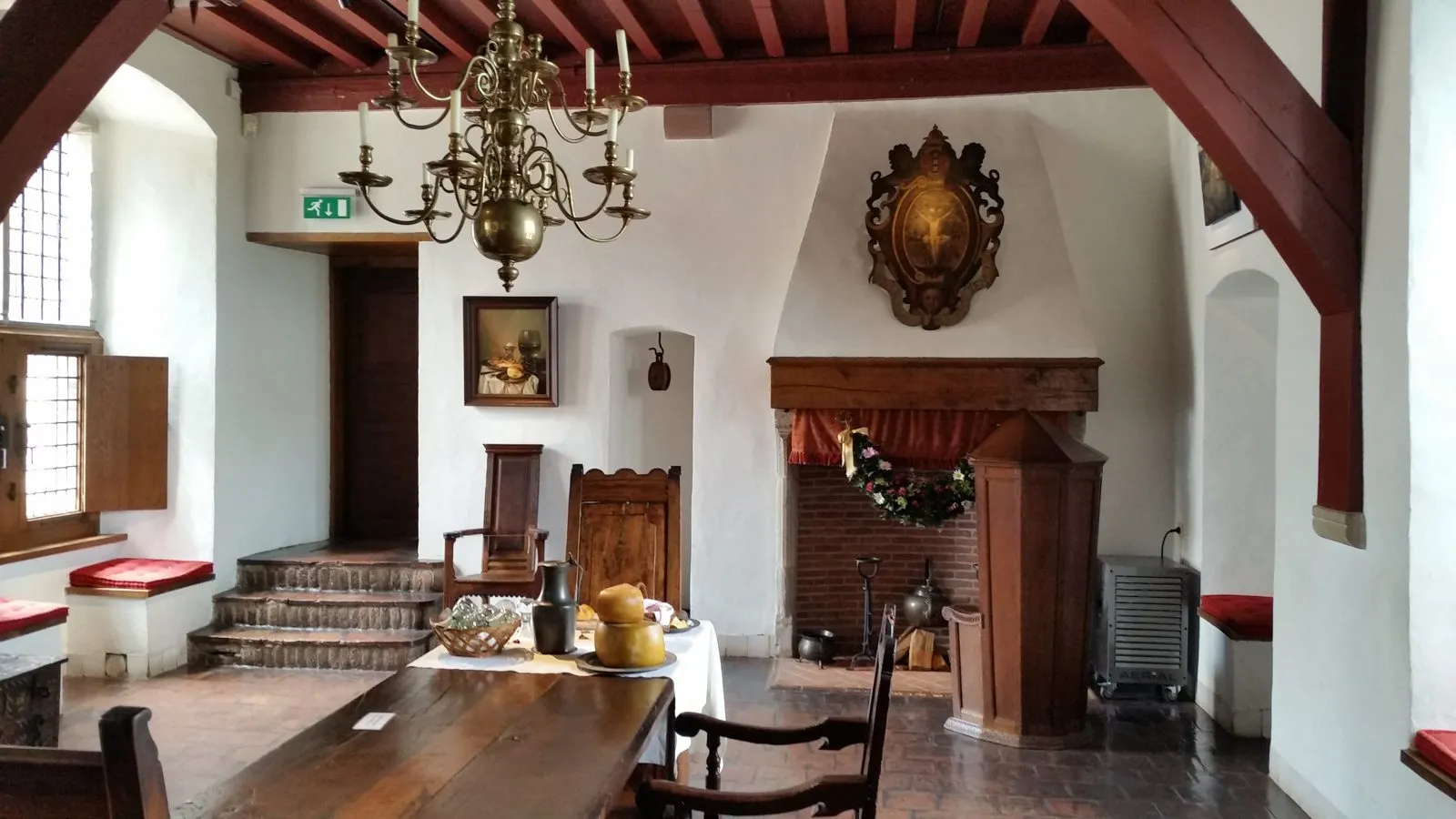
They showed us the dining hall, the kitchen, the bedchamber and the great hall where taxes were paid. Coins were checked by dropping them on a marble table: from the ring you could weed out the fakes, the ones somebody had skimped on the silver in.
We tested a Hungarian 50-forint coin – well, it clanged like a tin can…
I was reassured, though, that these Dutch didn’t trust anyone with money even back then, not even each other – no wonder Edward’s wife put our euros under the UV lamp.
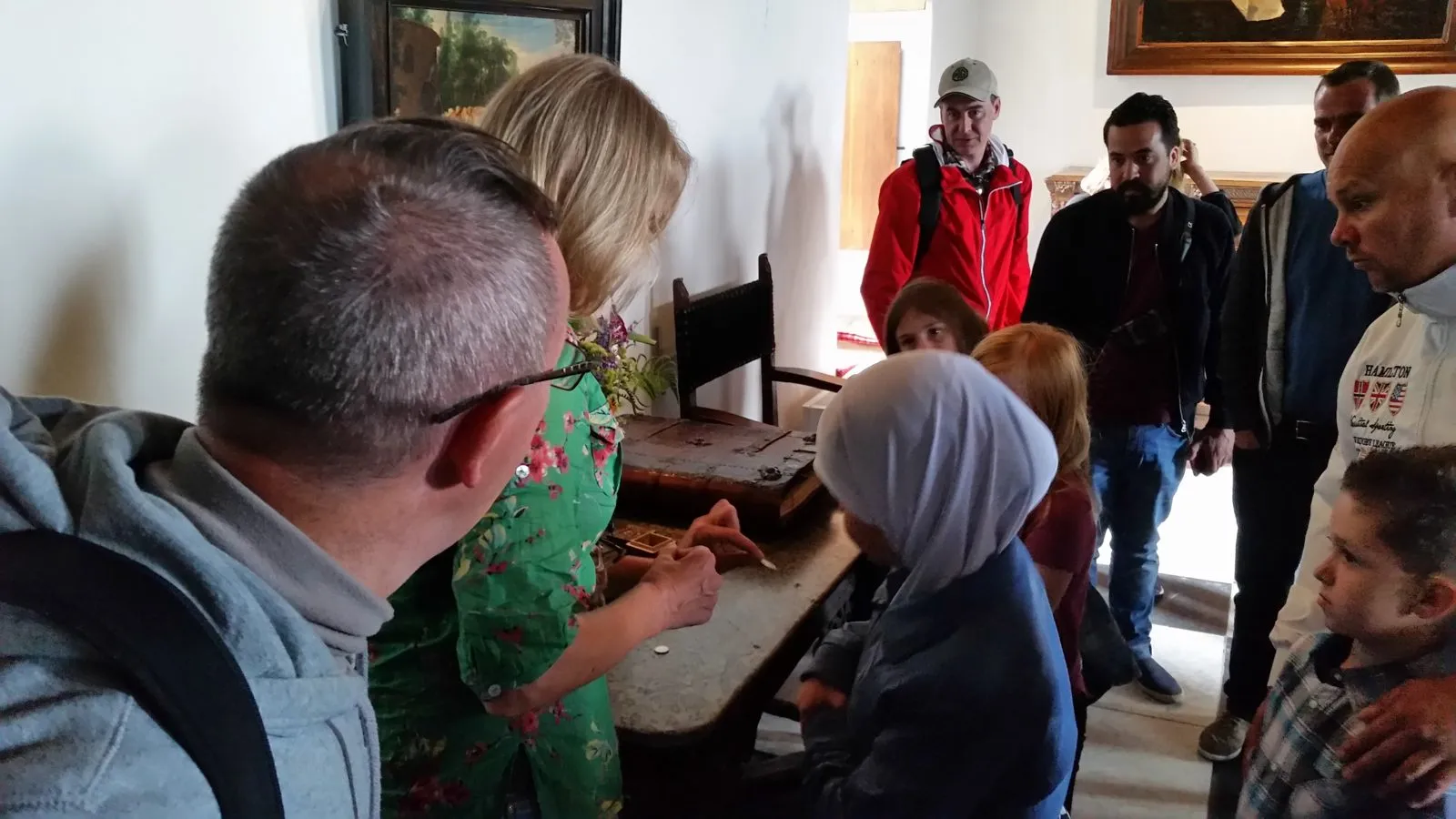
From the kitchen a heavily locked door led into the spice store. We learned that fewer than a third of Dutch sailors and merchants came back alive. But whoever made it could buy a whole house in Amsterdam for the price of one sack of pepper.
Back at our boat, we were surprised to find that we now had to climb back aboard across not one but two old sailing barges.
Either these things reproduce by division and have a half-life of under 2 hours, or something else had happened. The lady sitting on the inner (newly arrived) boat kindly returned our greeting and said “No problem” to our apologies – of course, because she was just a passenger, as it later turned out. The skipper appeared at once and gave us a proper dressing-down for tying up to his other boat by the bank without permission. When they came back with their second barge, they first had to untie our boat and move it aside so he could tie up to his boat by the bank, and then tie ours back on.
That must have been quite a performance, we could just picture it.
We pleaded that the harbour master had told us we could moor here, no problem.
“I am the harbour master,” he replied.
“No, it was another man, over there, 20 metres away on the marina pier.”
“That’s another harbour, it’s not all one, that has nothing to do with this.”
We apologised even more deeply for the inconvenience and, with a clear conscience, promised never to do such a thing again.
We quickly cast off and entered the first lock of our journey (No. 1). True, it only made up a 40 cm difference in water level, but we still very nearly ended up crosswise instead of tied to the side wall: the wind should have pushed our boat onto the lock wall, but that little current, which we hadn’t noticed, was stronger, and I had already made the bow fast, but the stern started drifting off, and Bazsi only just managed to wrestle it back with the boathook. In the end the act came off, the real circus was cancelled, everyone could go home, and we went on…
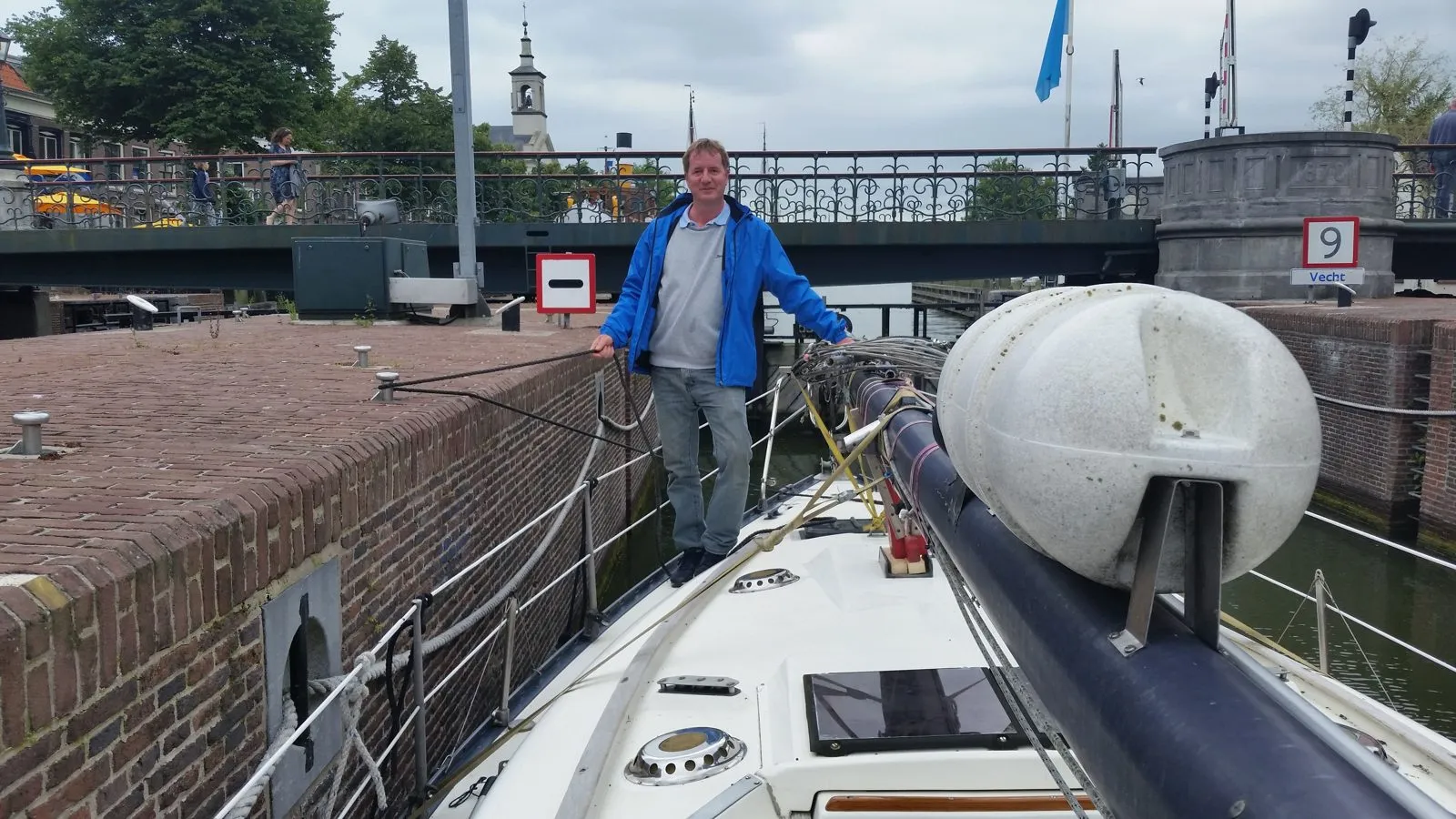
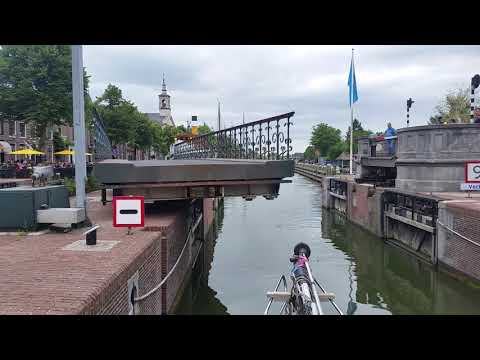
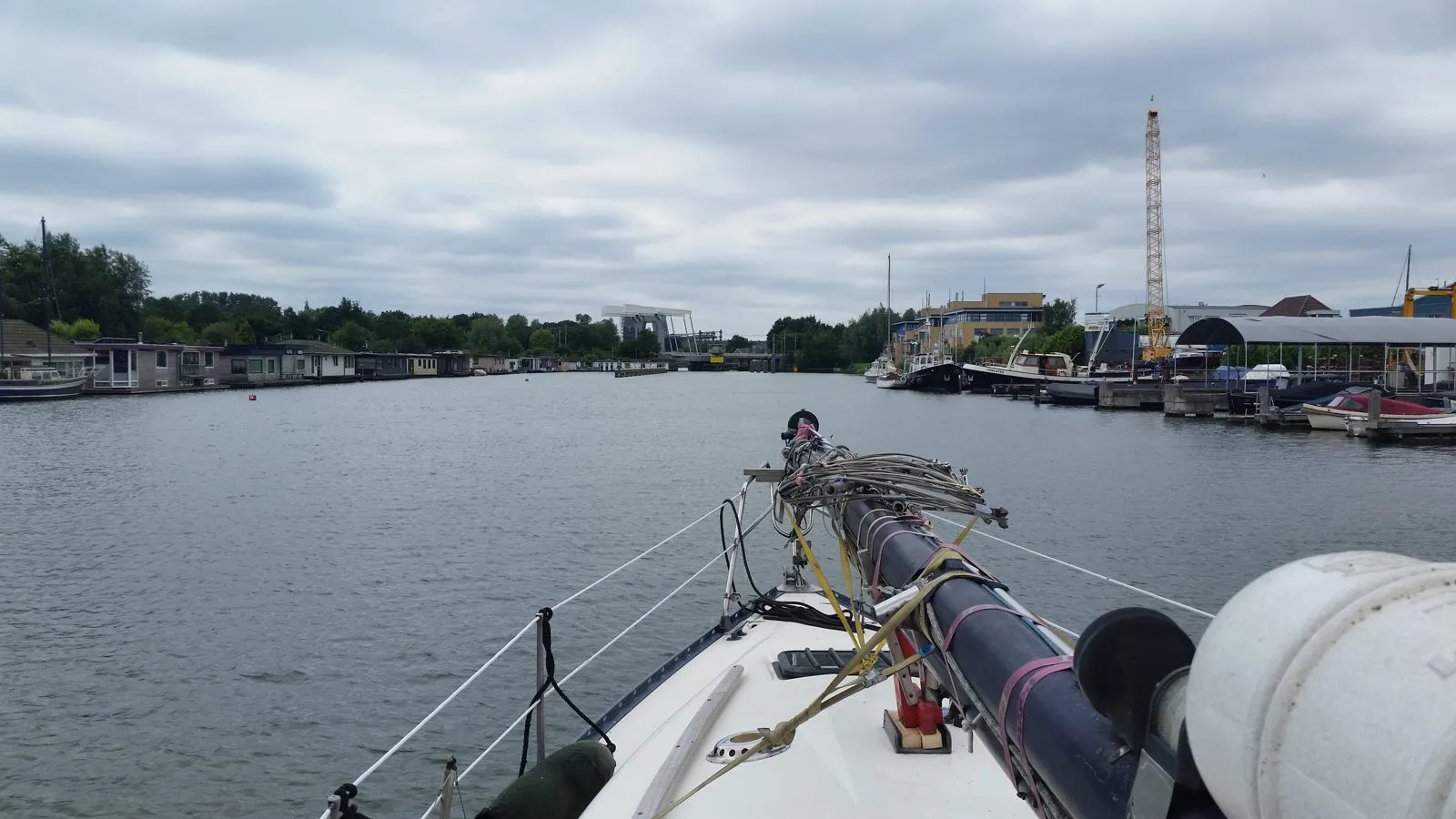
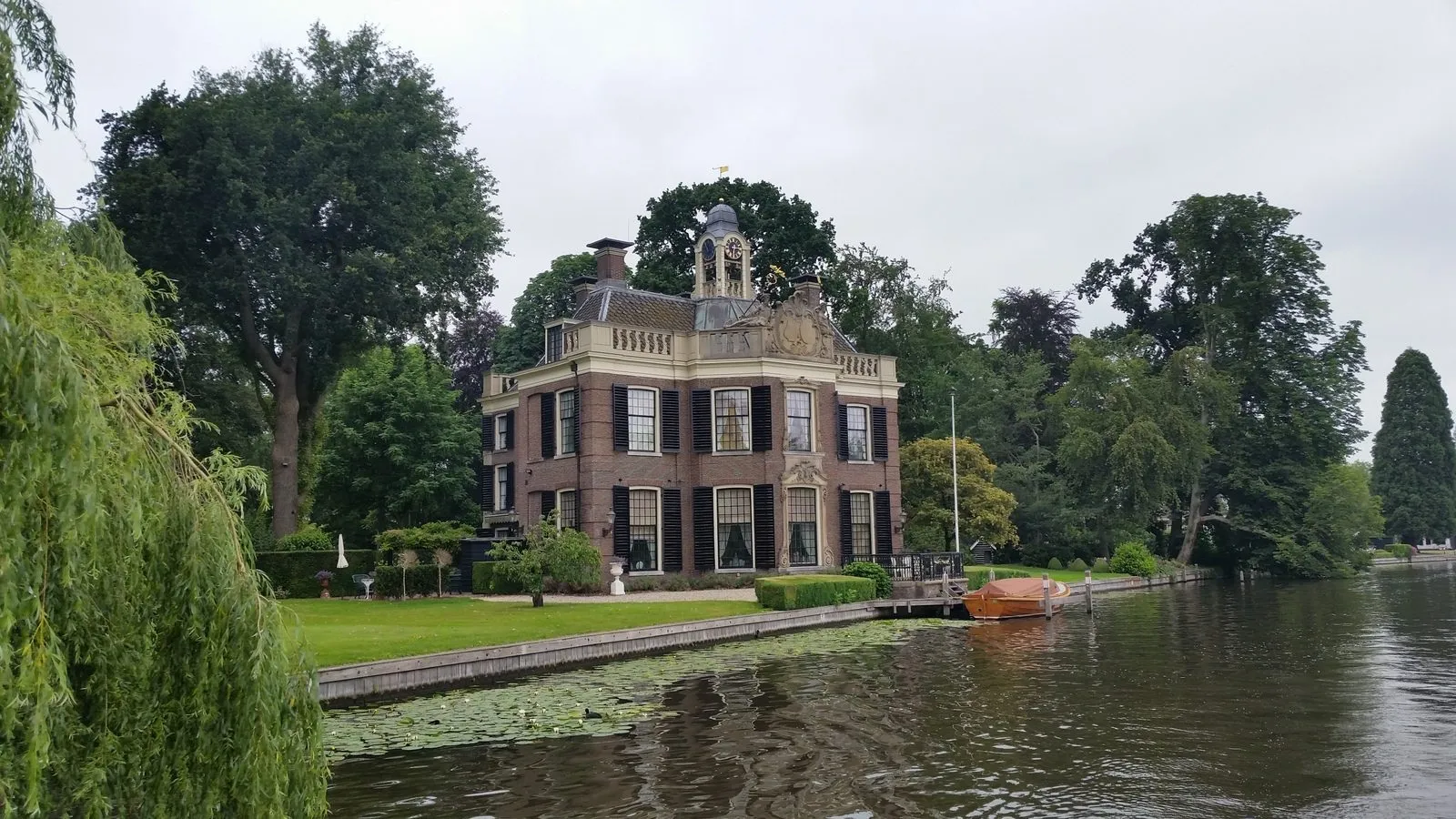
We splashed our way up the Vecht, gawping and gaping at the ever more beautiful floating homes moored along the banks.
We moored in Weesp to do some shopping (lucky the shops are open on Sundays here too), then set off again straight away.
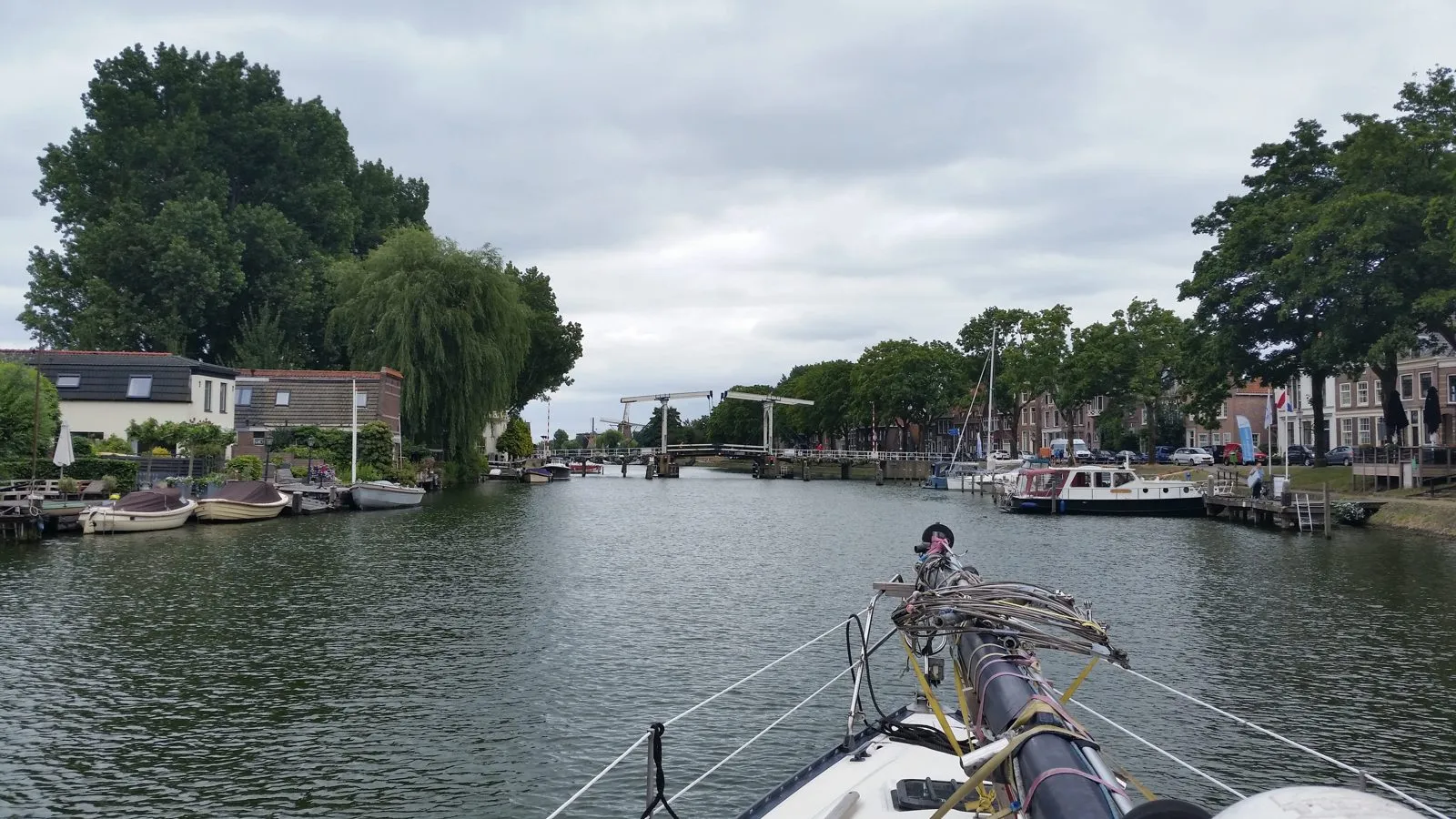
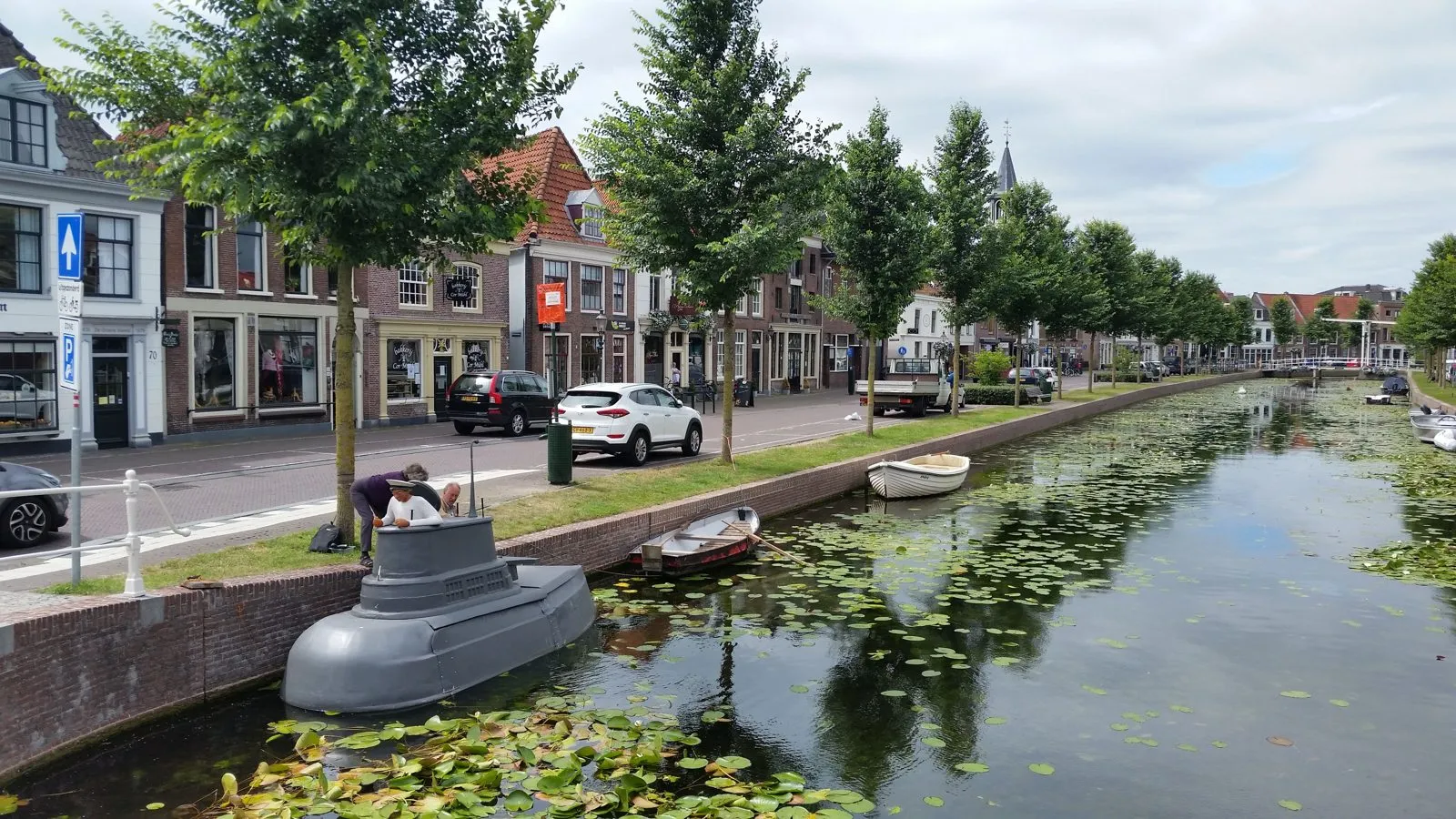
Along the banks of the winding river, for almost half its length, houseboats – or rather modern floating homes – are moored one after another. Now and then they alternate with sweet gardens and little houses, with a motorboat or a sailing boat tied up at the bottom of the garden.
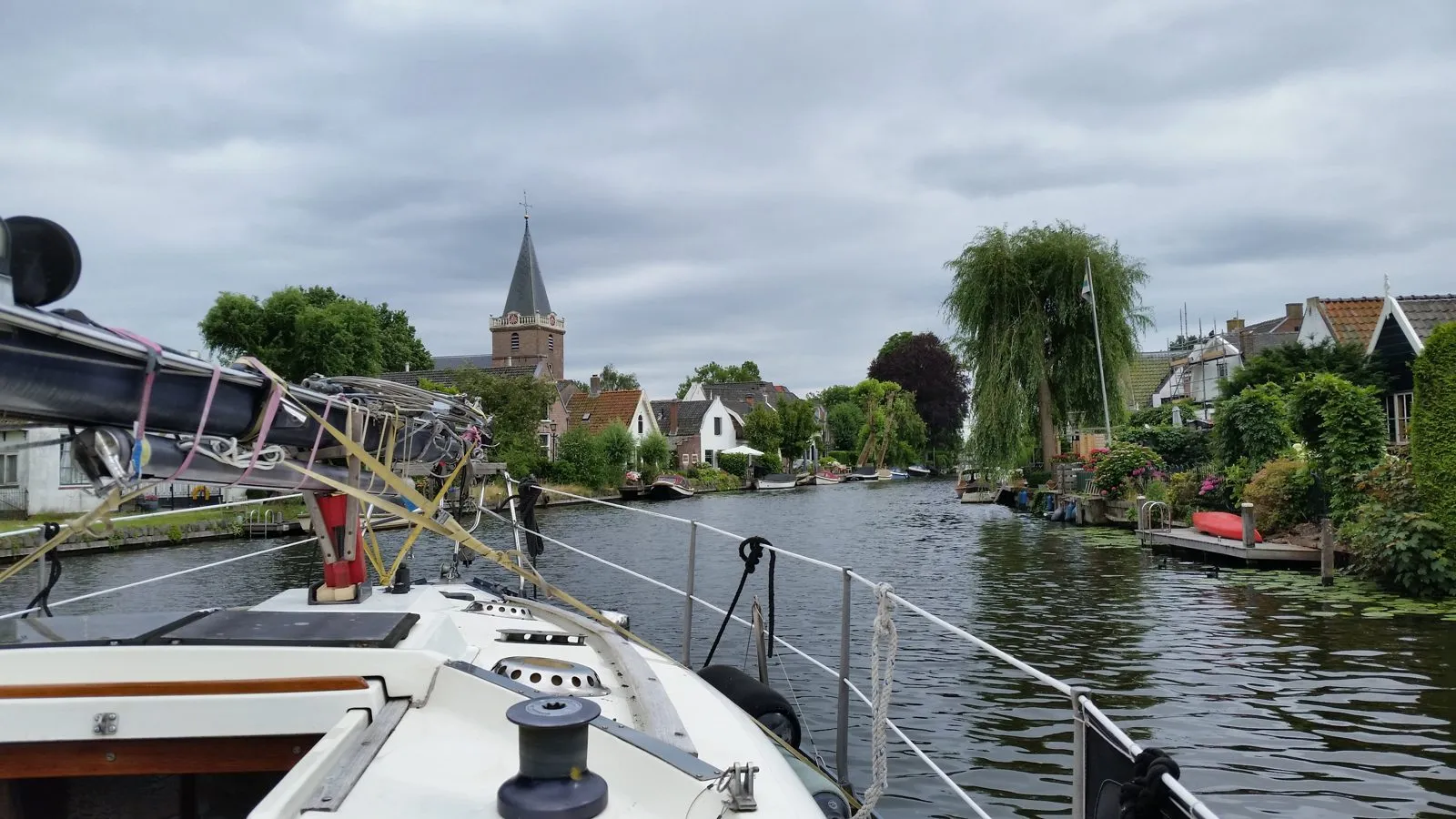
On the way quite a few rental houseboats came towards us; they must have started their week’s holiday yesterday.
The bridges were pretty low, between 1.50 and 2.10 m (with the mast lowered we’re 2.37 m tall), but they open. Sometimes a bridge keeper lowered the barriers and opened the bridge for us, sometimes you had to call a given number and the procedure was run from a control centre, watching on cameras.
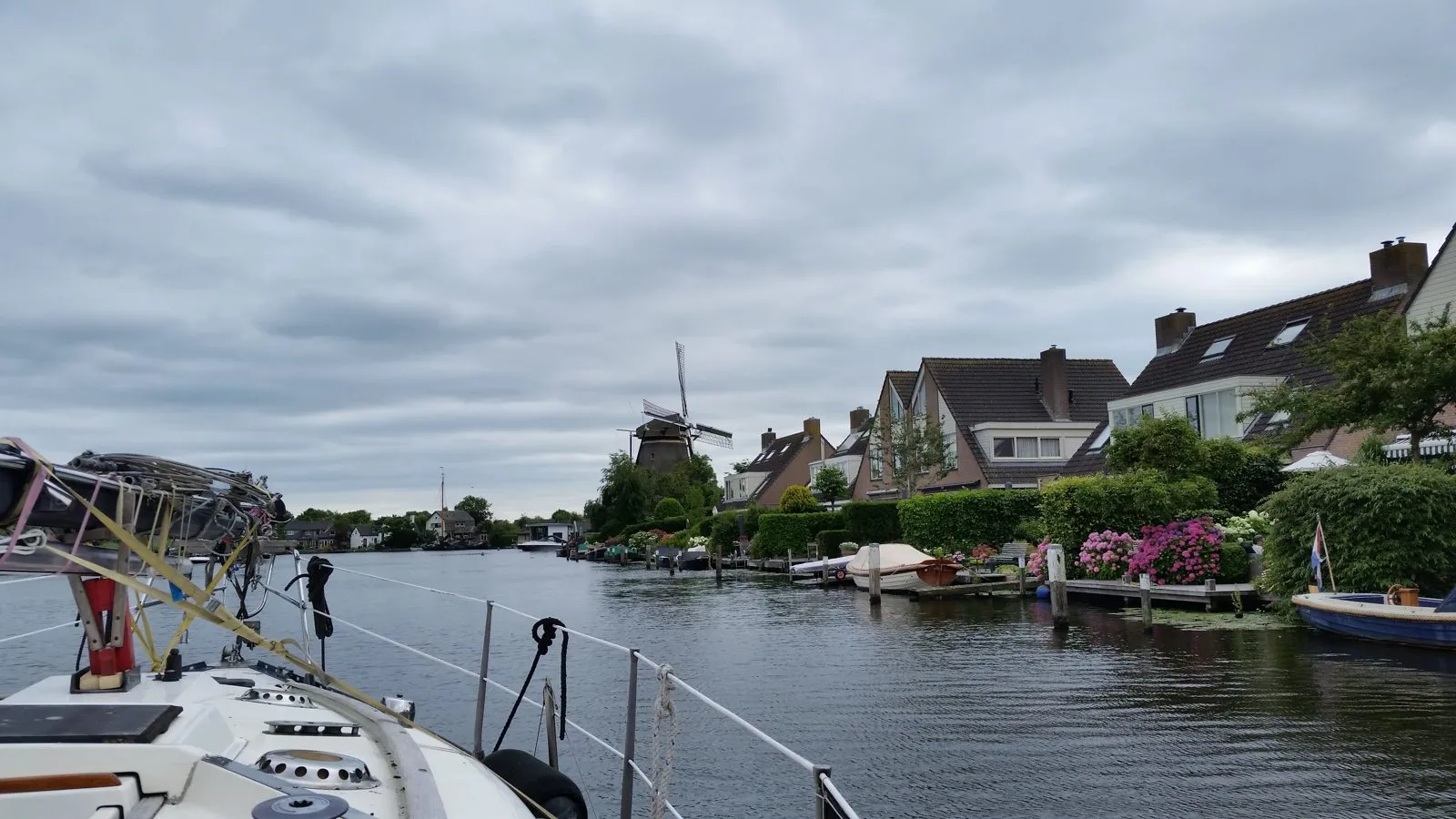
Before the last bridge a motorboat full of veiled harem ladies came towards us; they didn’t look at us, but immediately turned round and came after us. The boat was driven by a grim, bald bloke – whether he was a eunuch, we never found out.
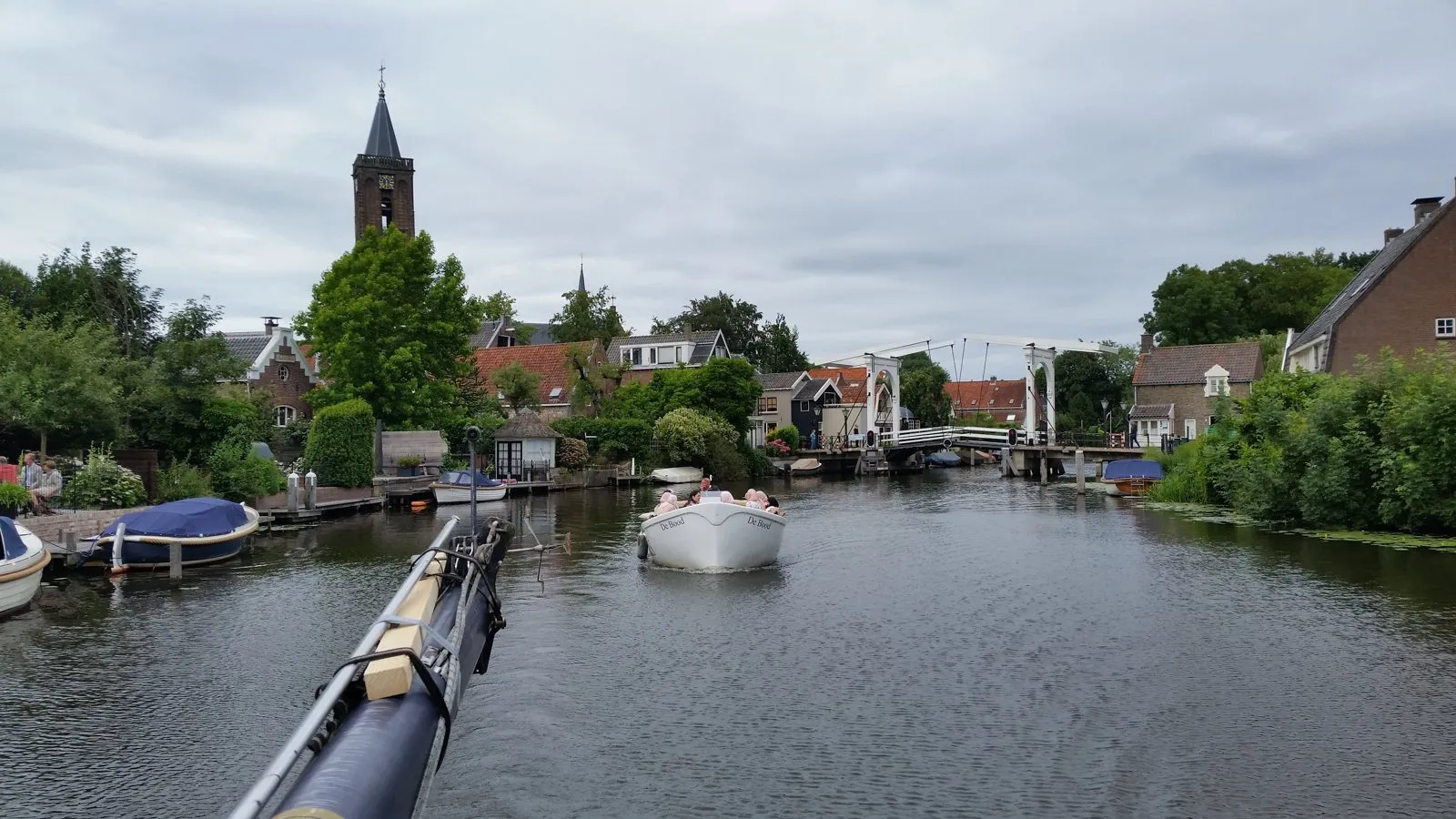
We quickly moored at a suitable spot on the bank past a little town called Loenen, but they just chirped away and drove past us without so much as a glance.
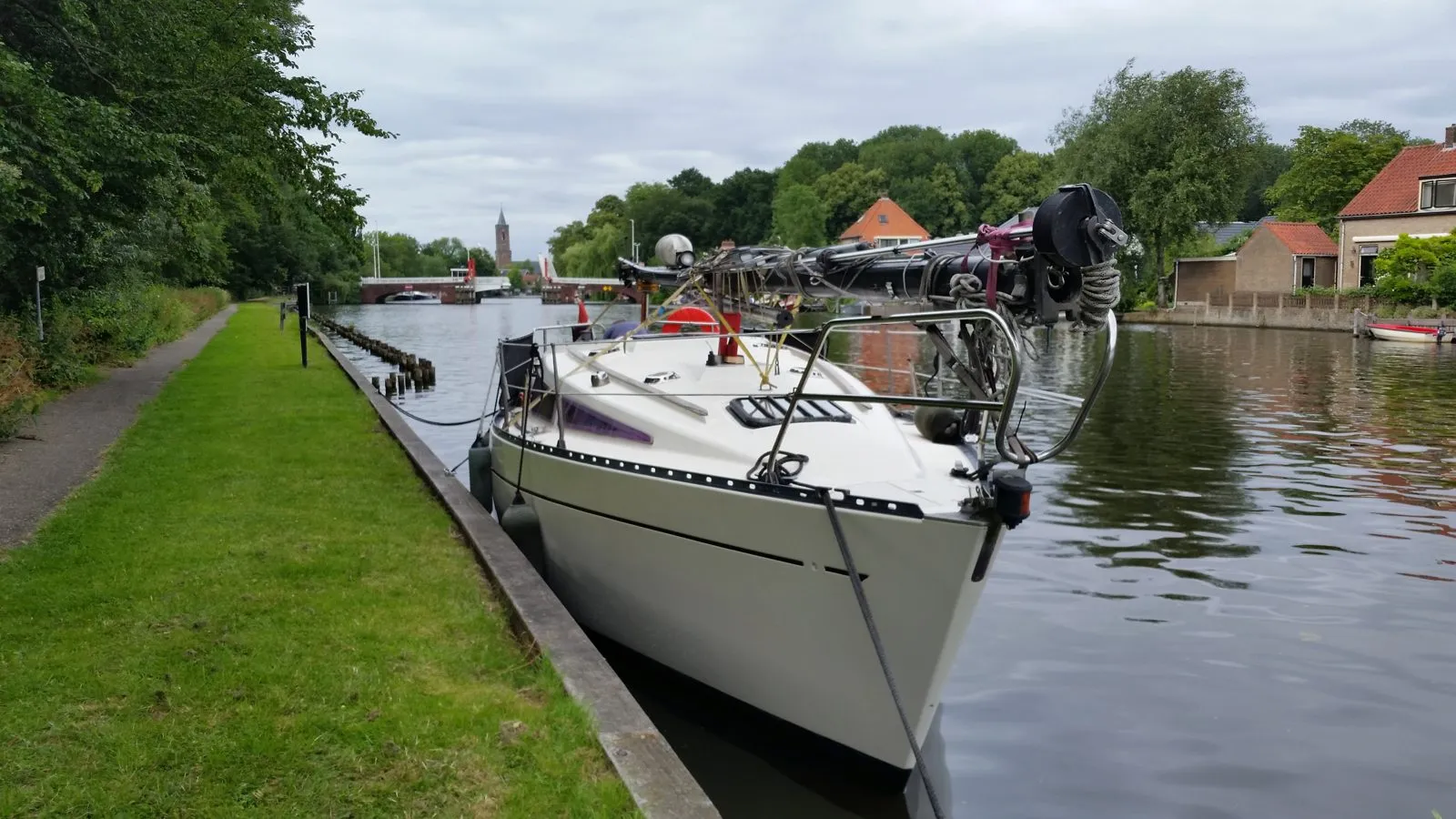
At 20.00 an old gentleman arrived and collected €10 for our overnight stay. The service consisted of one rubbish bin, so value-for-money-wise I can’t recommend the place. Even if it was pretty.
Machine translation (AI, Claude) of Balázs’s Hungarian original. Read the original →
Monday, 25 June 2018
Day 2, 65 km (117 km)
We set off after 9 in the morning – there was no point going earlier – because they’re only willing to start opening the bridges after 9.
Right after the first bridge we moored at the next little town, Breukelen, and walked to the roadside petrol station 100 metres away. We bought two 10-litre jerrycans and diesel to go in them at €1.39/l. We didn’t pour it in yet, just stowed it and carried on. We tucked in behind a German pensioners’ motorboat (a retired couple’s motor cruiser) – let them go first and get the bridges opened for themselves (and for us).
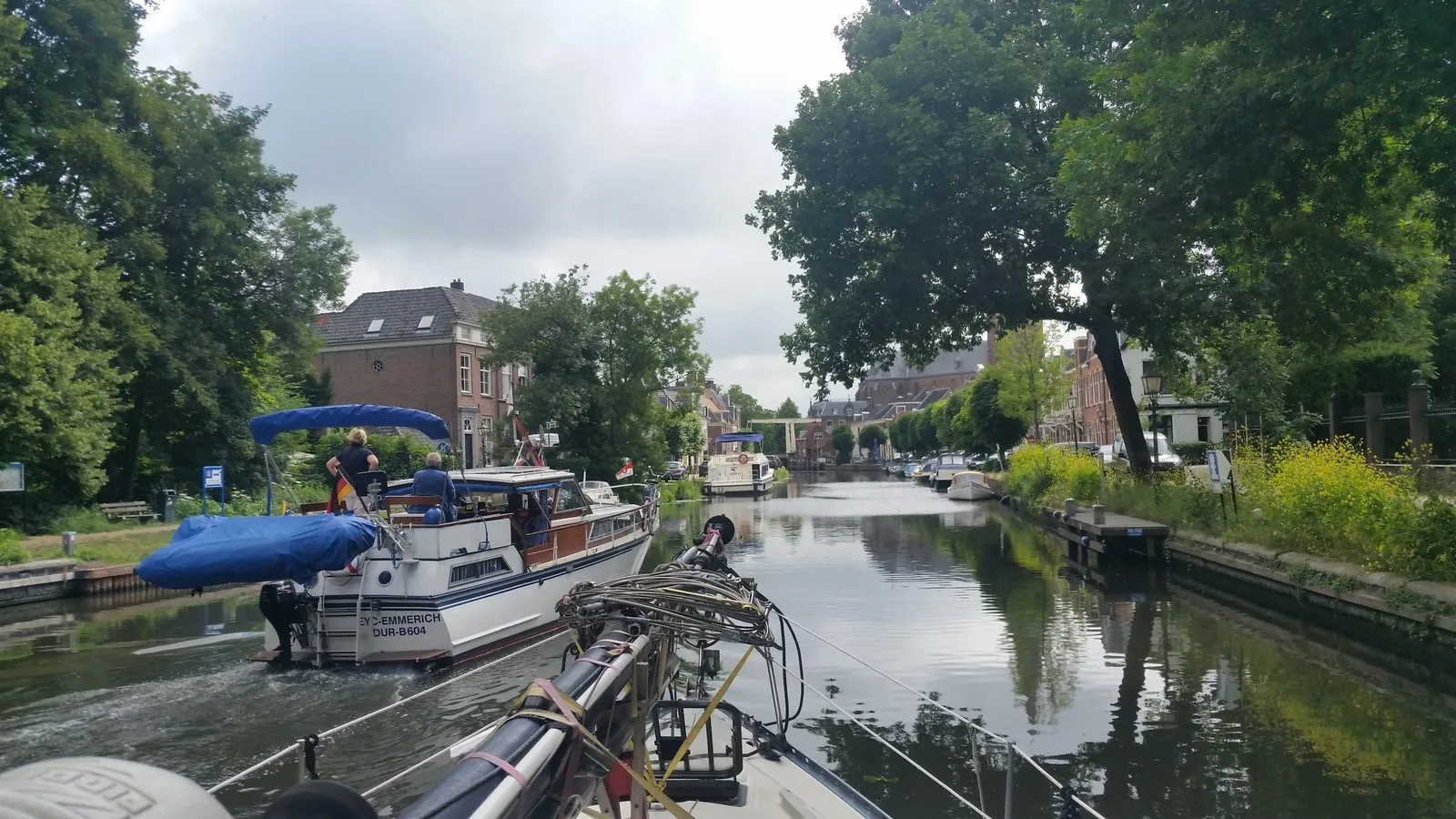
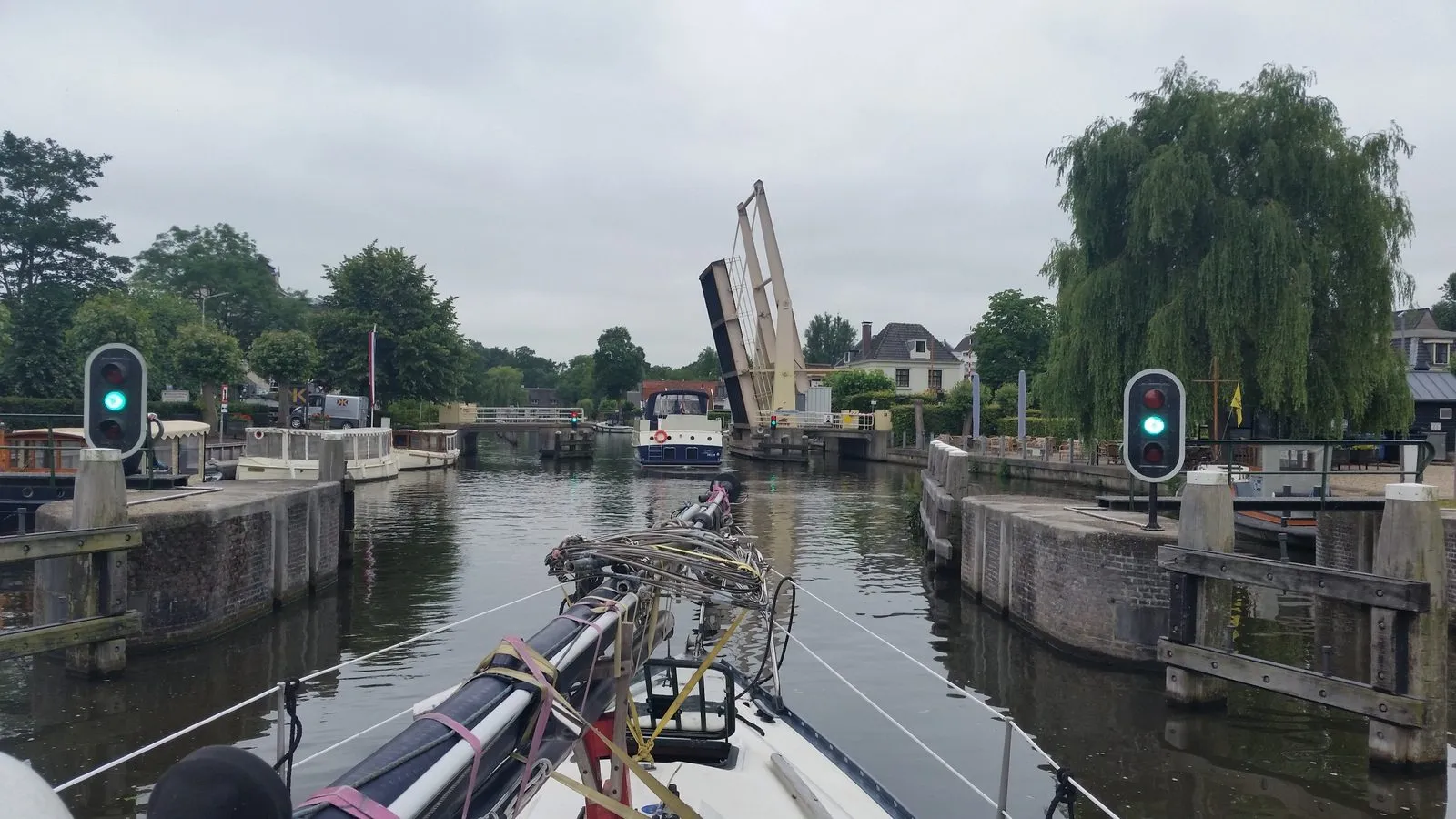
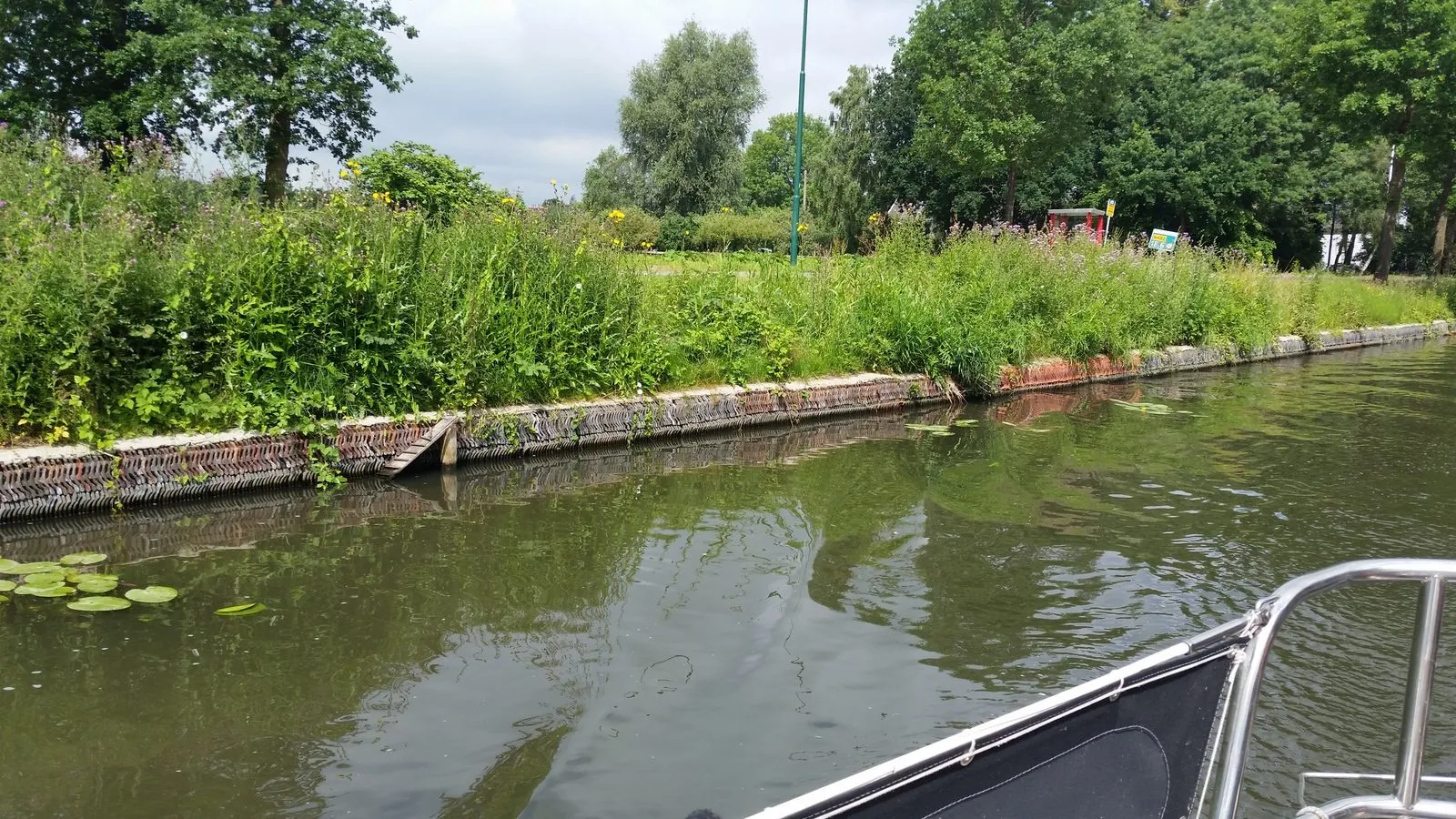
Before Utrecht we crossed from the Vecht to the Amsterdam-Rhine Canal through a narrow little link canal, because we’d have lost far too much time sailing through Utrecht on the Vecht and getting those 20–30 bridges opened one by one. The Amsterdam-Rhine Canal is as wide as the Danube, with enormous traffic, the barges coming and going one after another.
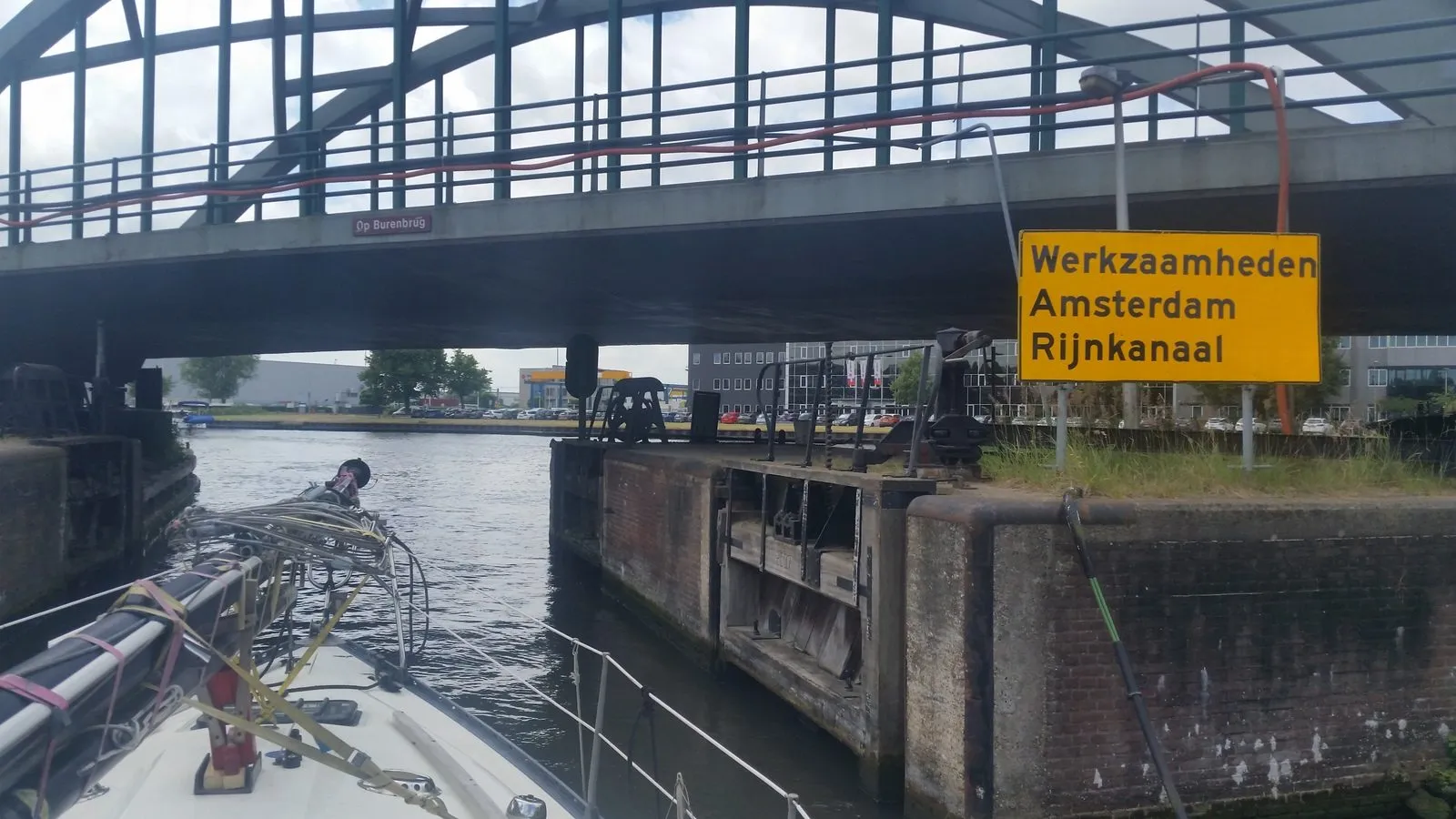

About 5 km later, at Utrecht, we turned off at a junction to get closer to the old town, but a big hulking lock blocked our way, so we turned back instead – we’ll come here some other time…
On the side of an old barge we spotted a fuel station, pulled up alongside, tied on and filled our tank. You had to pay in the chandlery-cum-everything-shop set up in the barge’s hold, to the old man, and then off we went again.
Somewhere on the long, dead-straight stretch of the Amsterdam-Rhine Canal, the munchies hit us. We sadly noted that our bread had run out at breakfast and we’d forgotten to buy more in Breukelen. Given our limited options, lunch was put together from the following menu: Globus canned luncheon meat with onion crisps, followed by bananas with a Balaton chocolate bar (a Hungarian classic)… Weeell, I’ve had better.
But we didn’t have much time left to chew on it, because we’d reached our first big lock (No. 2). We agreed with the dispatcher that we had to wait for the big container ship and could go in after it. Meanwhile we moored up and watched it arrive and slow down. It was certainly much smaller than ocean-going container ships, but we were still dwarfed next to it.

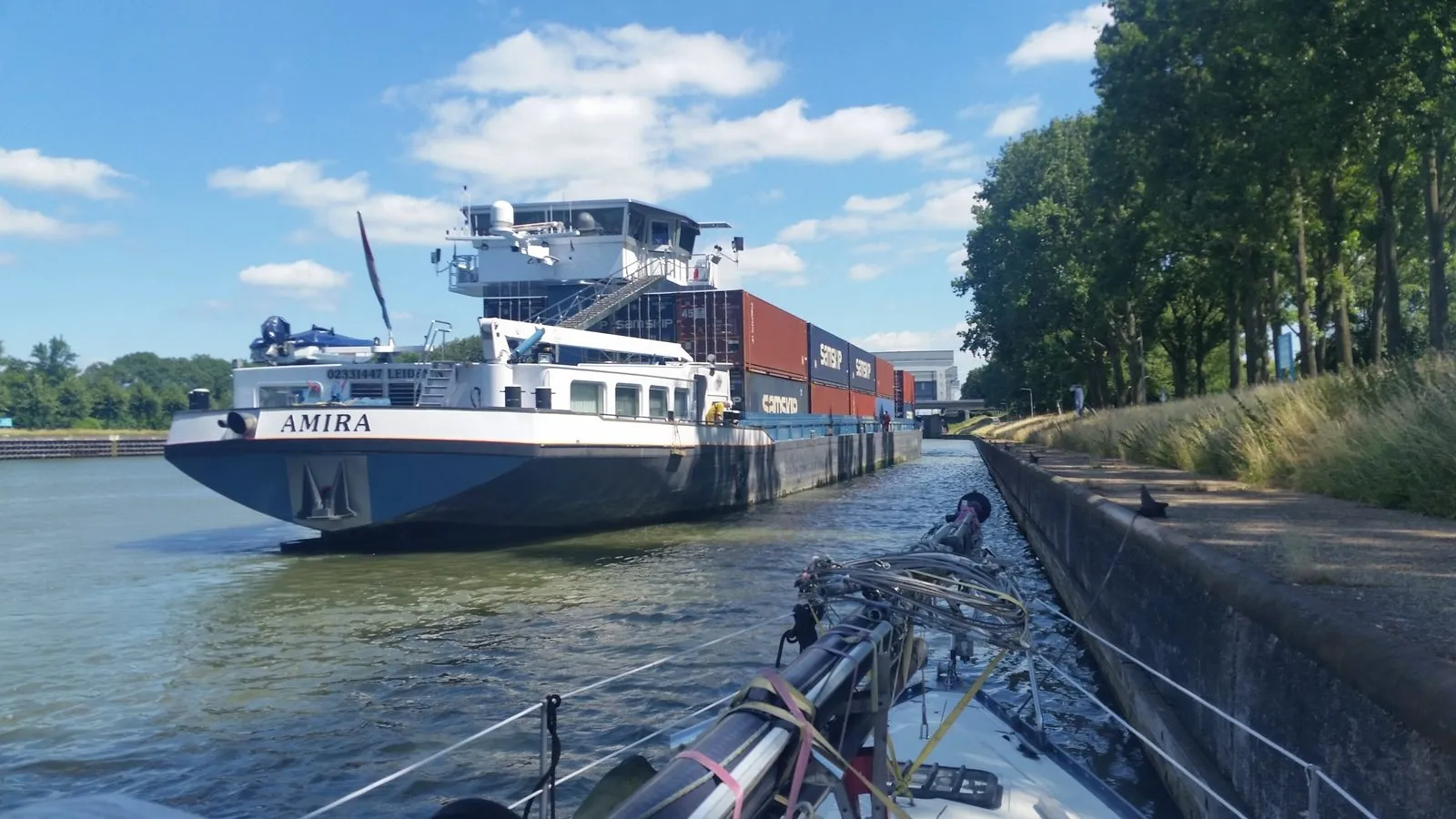
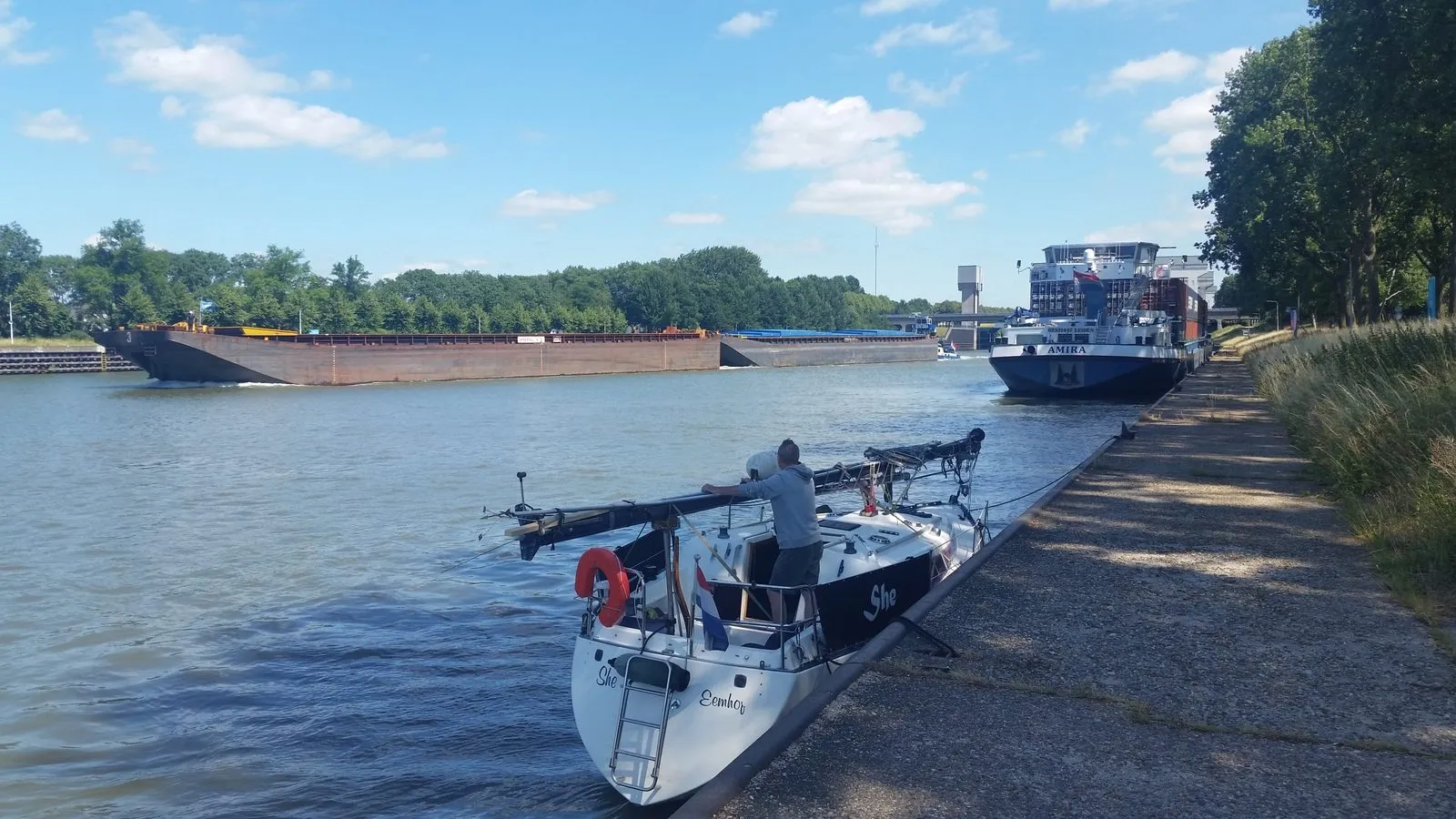
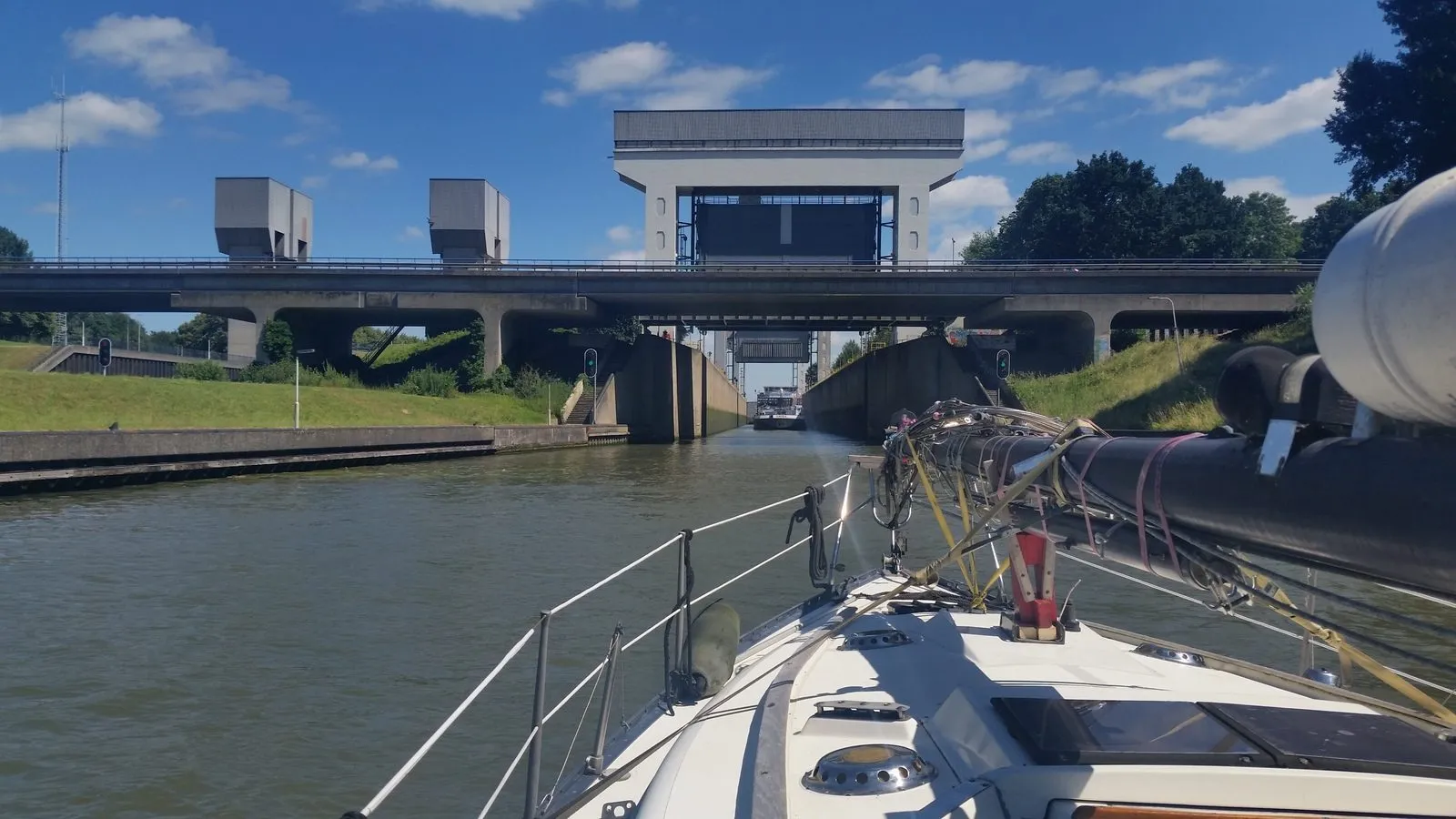
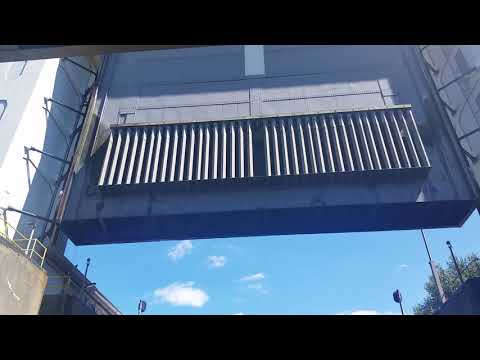
After the lock, at a proper four-way river-and-canal crossroads, we swung left in a wide arc onto the Lower Rhine, a river the size of the Tisza. It’s blonde too – Hungarians call the Tisza “the blonde Tisza” – but a Dutch kind of blonde.
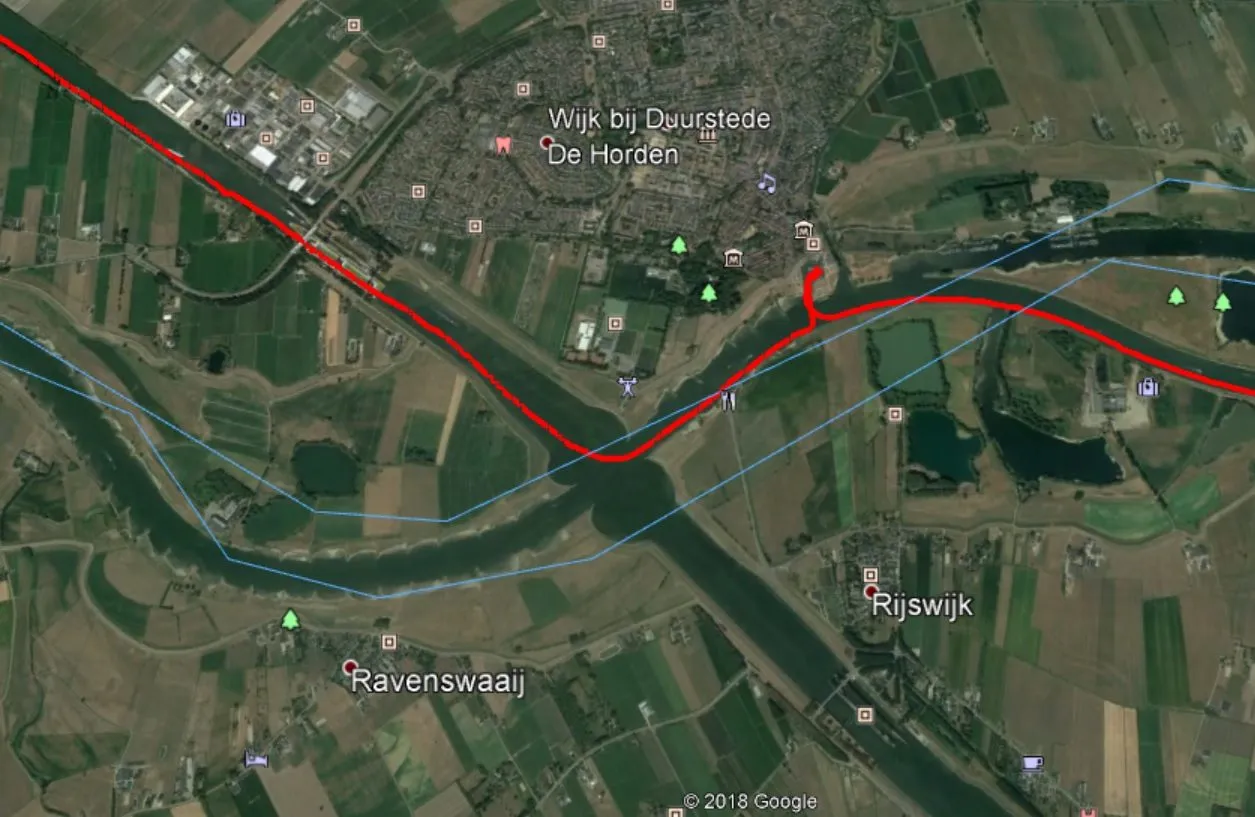
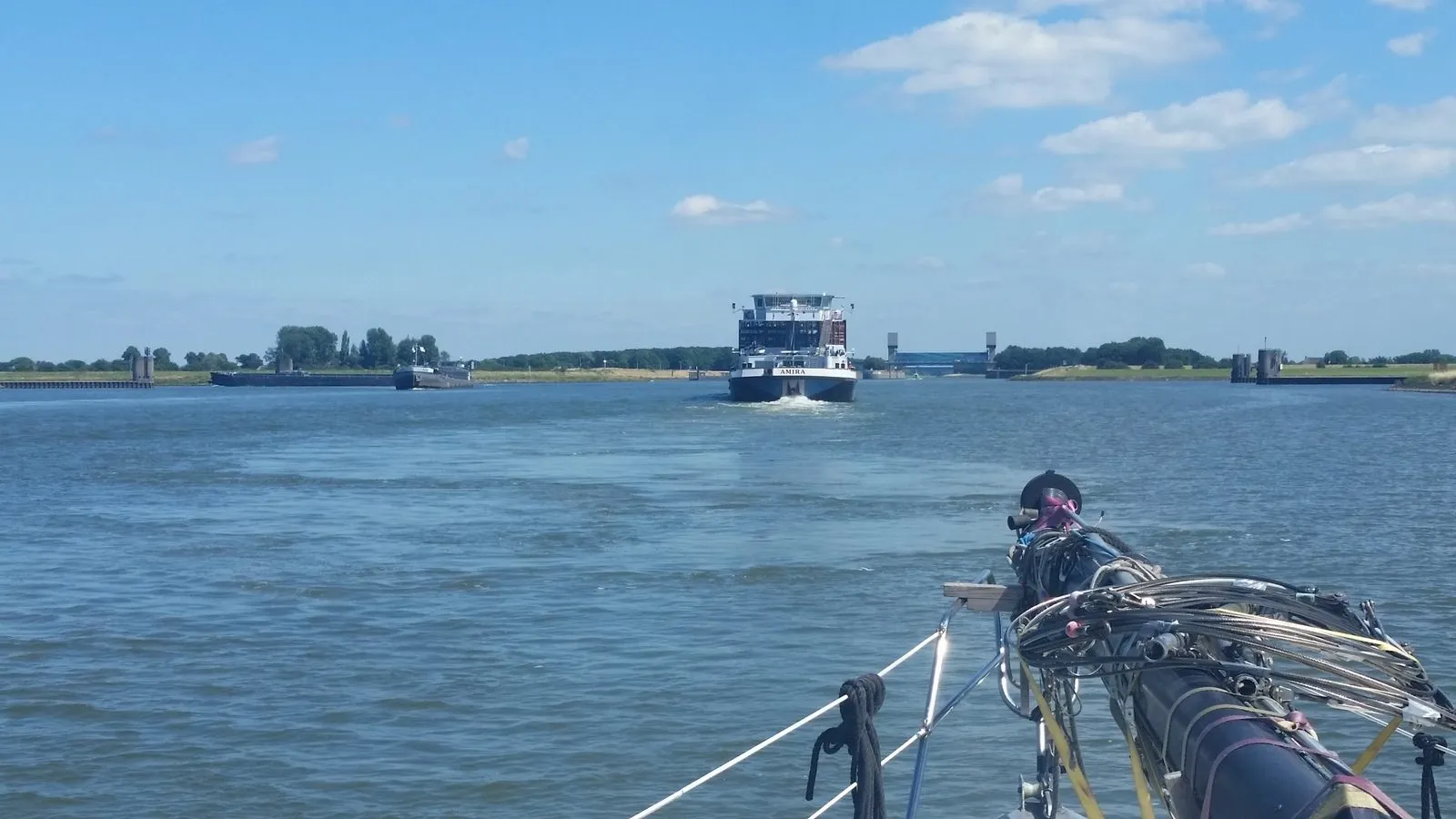

Straight after, we stopped for a good hour in the harbour of a little town called Wijk bij Duurstede, a.k.a. don’t-even-try-to-pronounce-it. We bought bread, and for Bazsi a herringbone Surda cap, because he’d left his on the bus in Pest and his noggin was really starting to boil in the blazing sun.
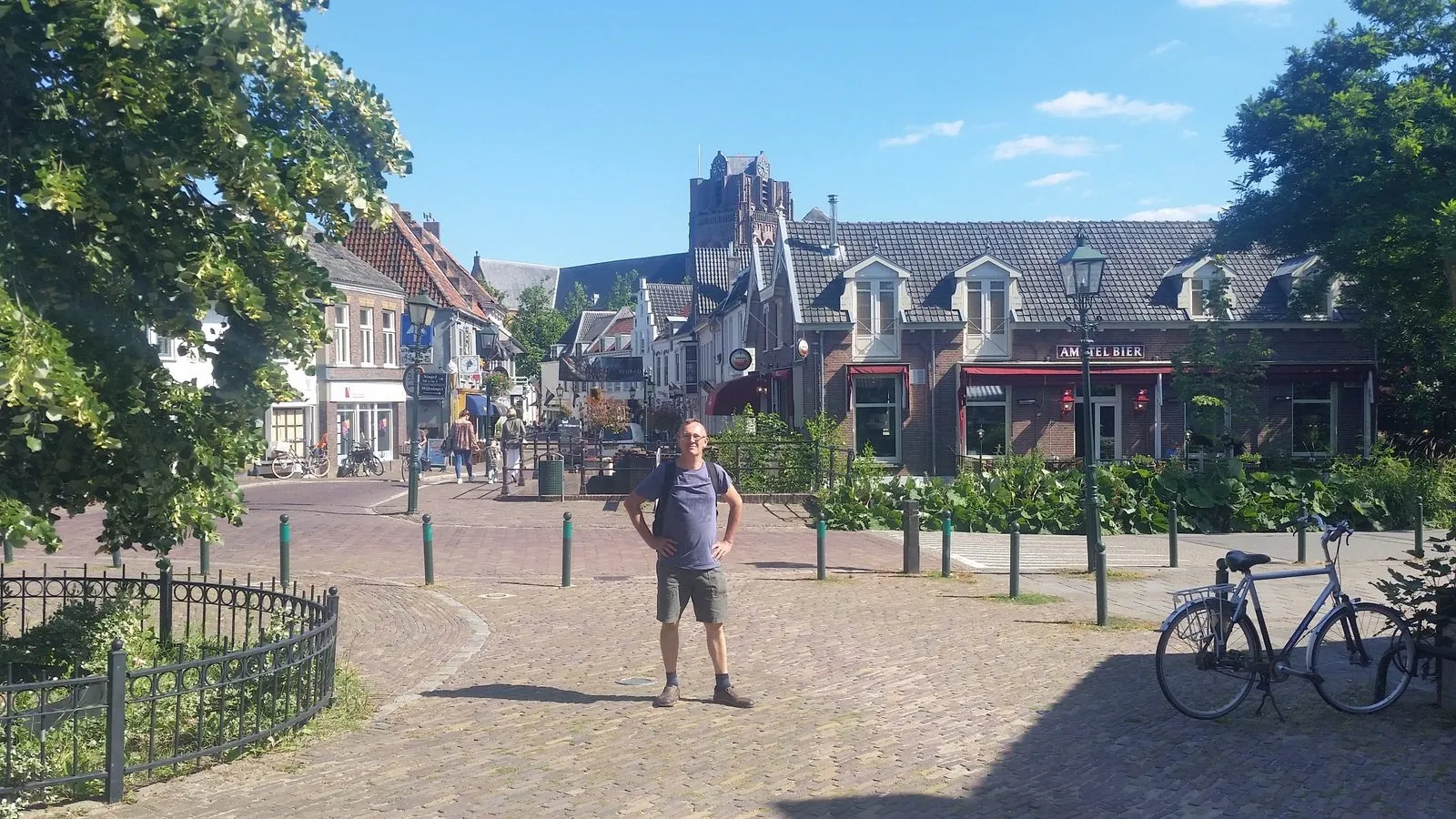
And I looked for a pub where I could upload the first day’s stories and pictures over the wifi.
Our second lock of the day (No. 3) closed right under our nose just as we got there; we had to wait for 3 boats and could only go in after them. We arranged this with the lock keeper by phone. On a little app (Vaarkaart Nederland) Bazsi has all the Dutch locks, lifting bridges and waterworks with their specs and the keepers’ phone numbers. A very handy little thing.
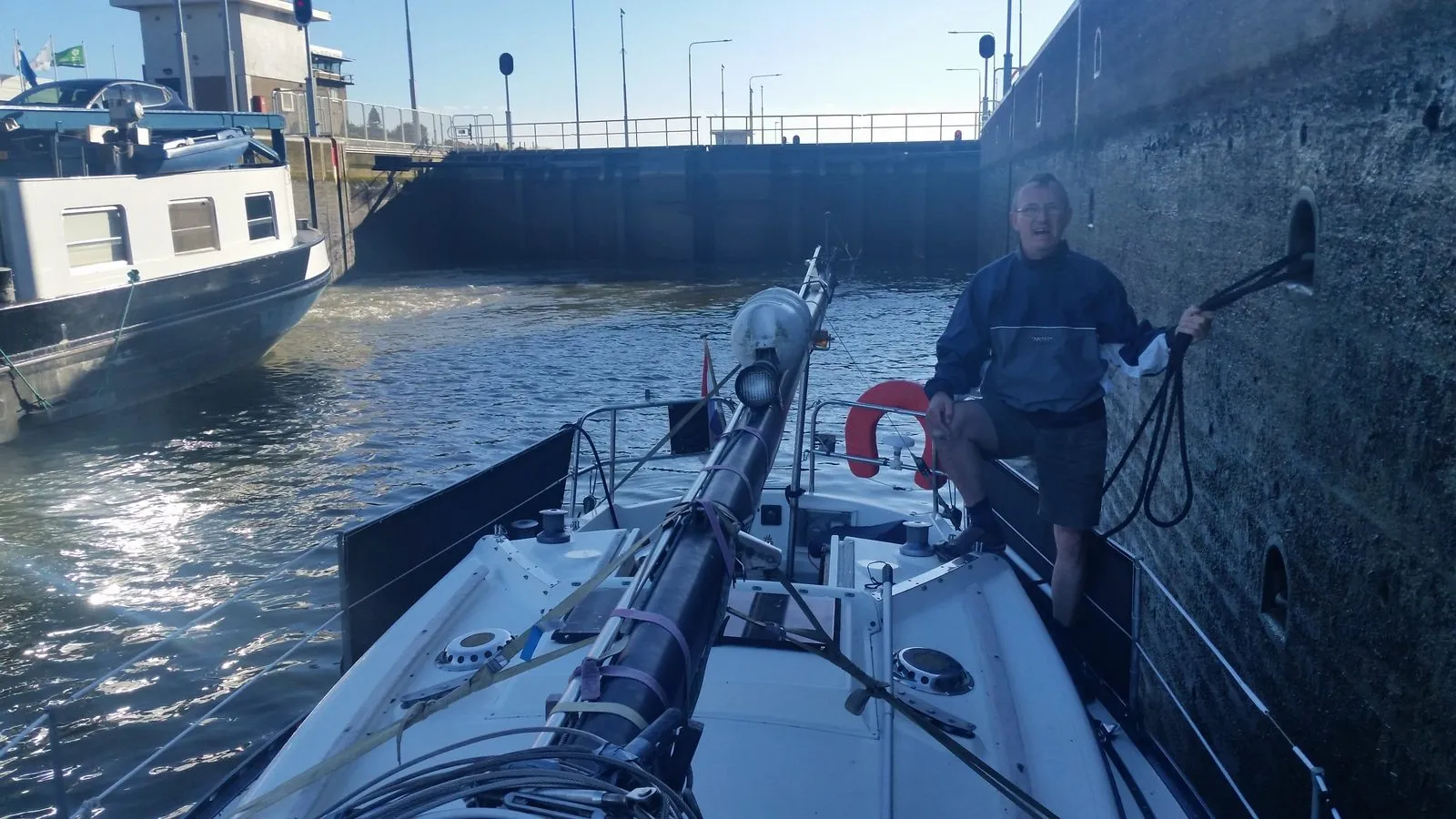
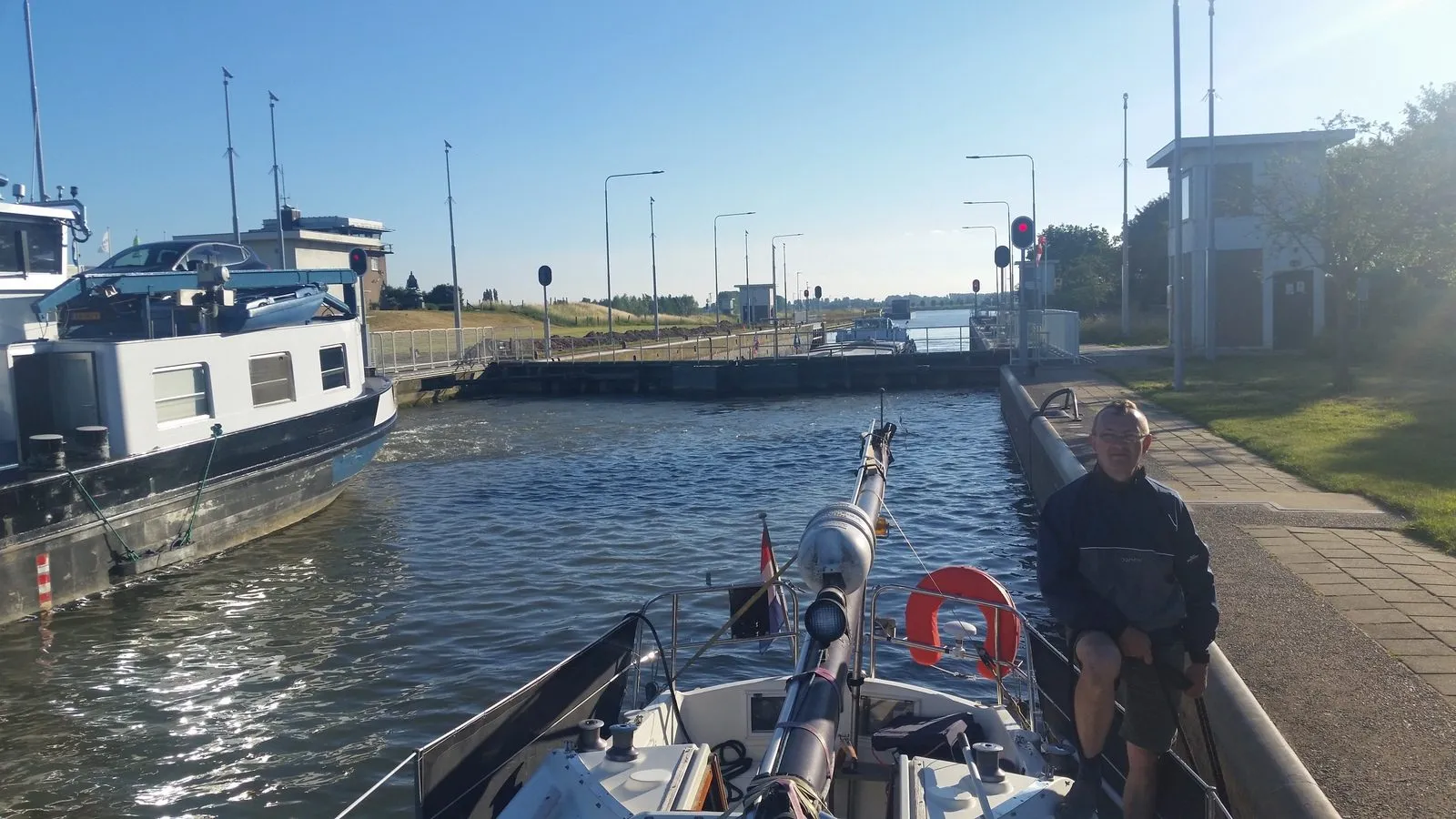

After locking through we motored on for a good 2 hours more and finally, at 21.45, dropped anchor in the middle of a small artificial lake branching off the river.
Arnhem would be another 20 km or so – A BRIDGE TOO FAR. If there are still any British paratroopers there, they can wait for us one more day…
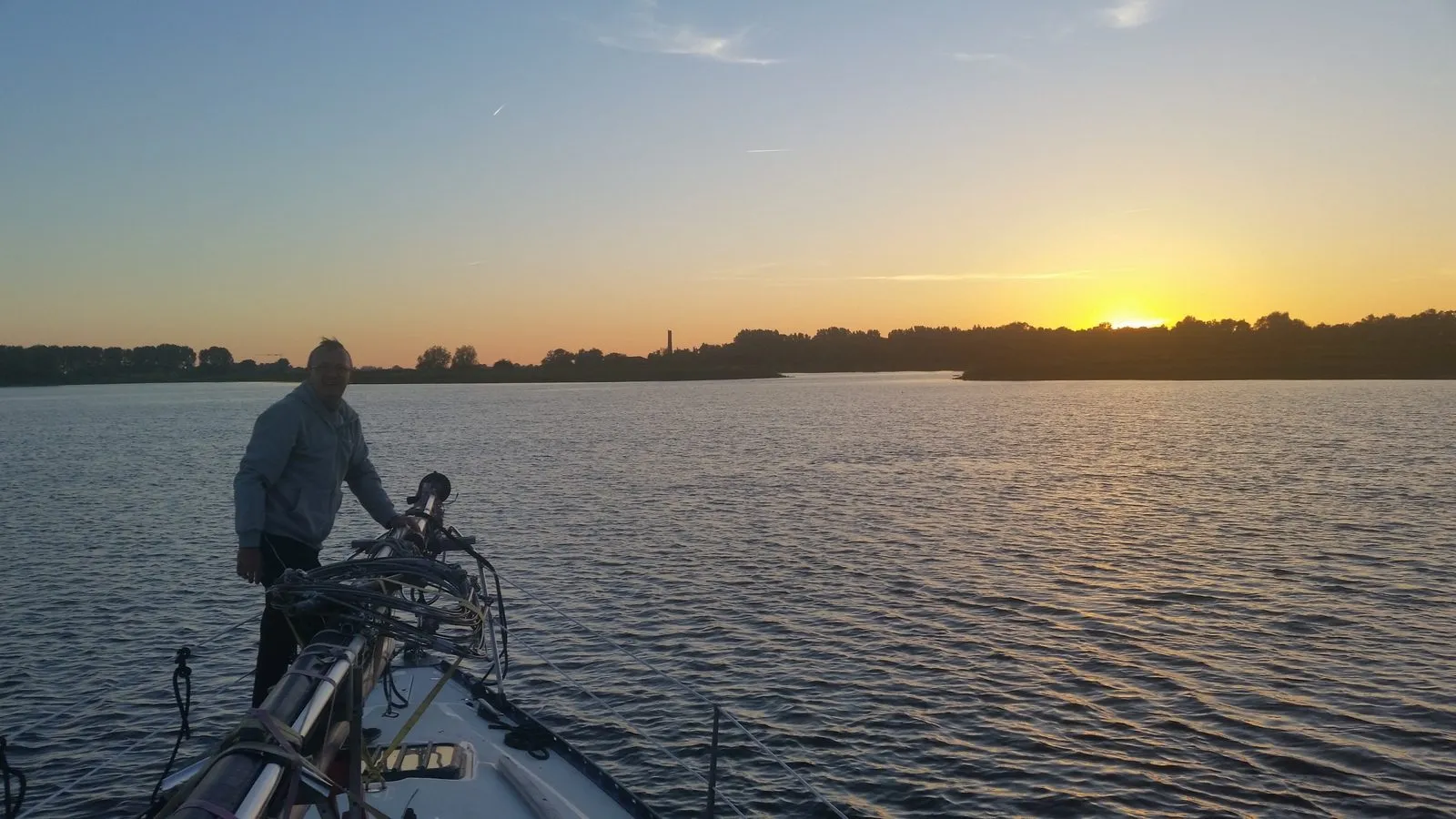
Before turning in, Bazsi quickly rigged up an anchor light running off the cigarette-lighter socket, so the jet-skiers wouldn’t plough into us in the night…
His fear is not entirely unfounded – even though it’s almost a full moon – because after ten, when we’d already retreated into the cabin, we heard an engine approaching. Surely they’re not coming to collect money again? At this hour? But no: when we peeked out, we saw two grinning-from-ear-to-ear Dutch whippersnappers circling round us a few times.
My evening wasn’t over yet: by the light of the oil lamp I committed the day’s events to papyrus, but it was a struggle, because the tip of my quill kept breaking off and I nearly spilled the ink on the sleeping Bazsi. Finally, when the sunscreen was really stinging my eyes, I too retired for the night. Before that, in the half-dark, I went to brush my teeth (such a well-behaved Dutch traveller is a rare thing), but something wasn’t right. The toothpaste had such a strange taste – how shall I put it – barely anything like mint, and it foamed less and less. Had it gone off? I scrubbed my teeth a bit more, spitting more and more often, when it dawned on me that, blimey, in the dark I must have mixed up the toothpaste tube with the Voltaren gel… There was a lot of sputtering and spitting…, although it wasn’t even that bad… Not good either, mind. But now I know that Voltaren can also be used – in moderation – semi-externally for toothache…
Machine translation (AI, Claude) of Balázs’s Hungarian original. Read the original →
Tuesday, 26 June 2018
Day 3, 85 km (202 km)
This bed still hasn’t softened up, it’s really hard… that’s what I woke up to at half past 7. That, and Bazsi starting the engine. He’d been pottering about and having breakfast next to me on tiptoe for 2 hours already, but now he’d decided on immediate departure. We freed the anchor we’d set and dug in so well last night and headed for the middle of the exit. Coming in last night I’d watched the depth, it was between 3 and 5 metres. Now, though, I noticed a few stones – ahead to starboard, about 5 metres away – just barely poking out of the water. While I was glancing at the depth sounder, the boat was already nodding forward: we’d hit a sandbank. Lucky we were going quite slowly, because by throwing her straight into reverse we got off without any trouble. Good thing we didn’t run onto it last night…
Before Arnhem we ticked off our 4th lock as well, and here, for the first time on our trip, a few hills started sprouting out of the Dutch flatland.
In front of the Arnhem bridge we moored against the town quay wall, where the only way up onto the embankment, 4 m above us, was a ladder. Of course this isn’t the paying yacht harbour, but it’s right next to the town centre.
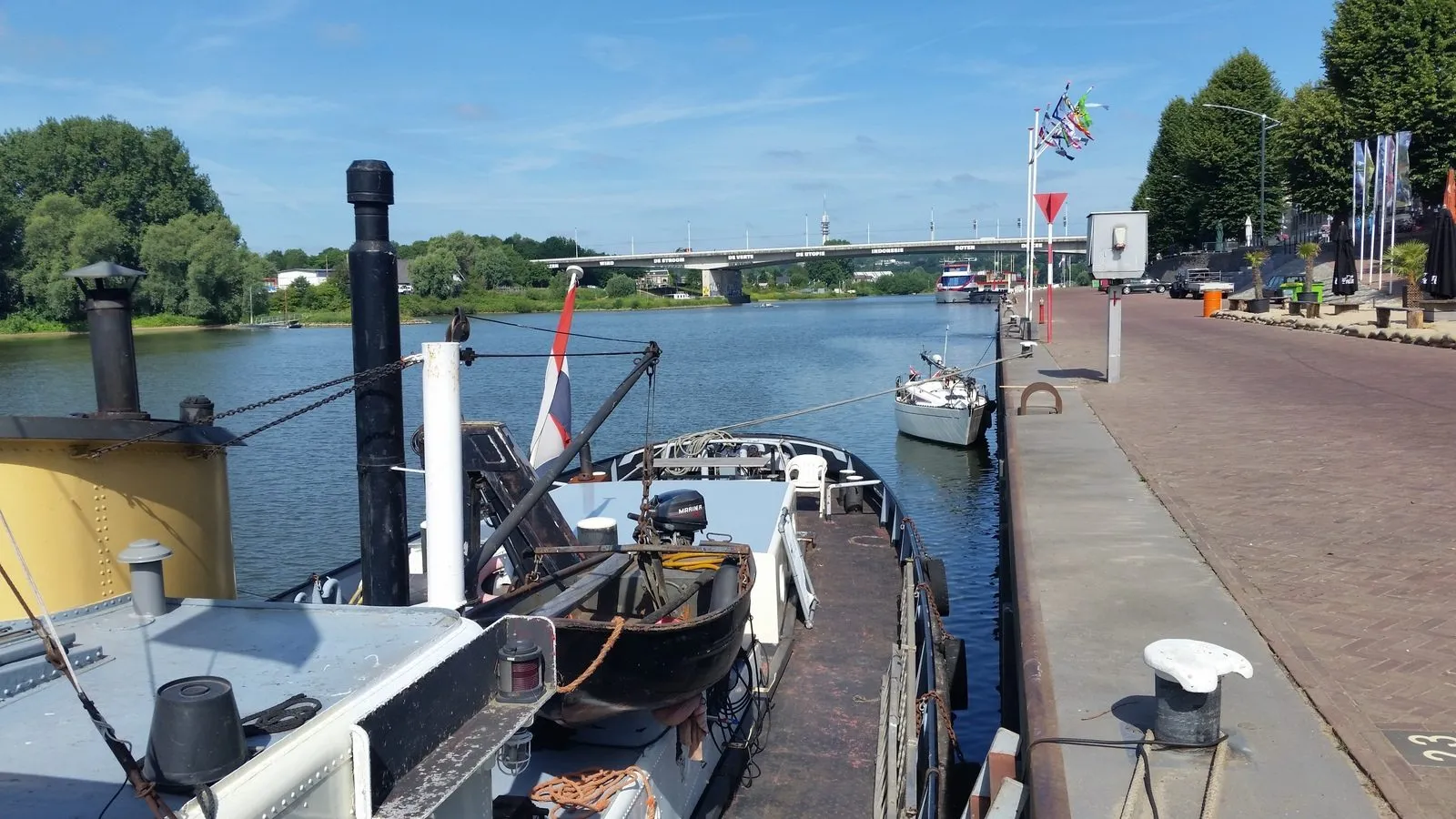
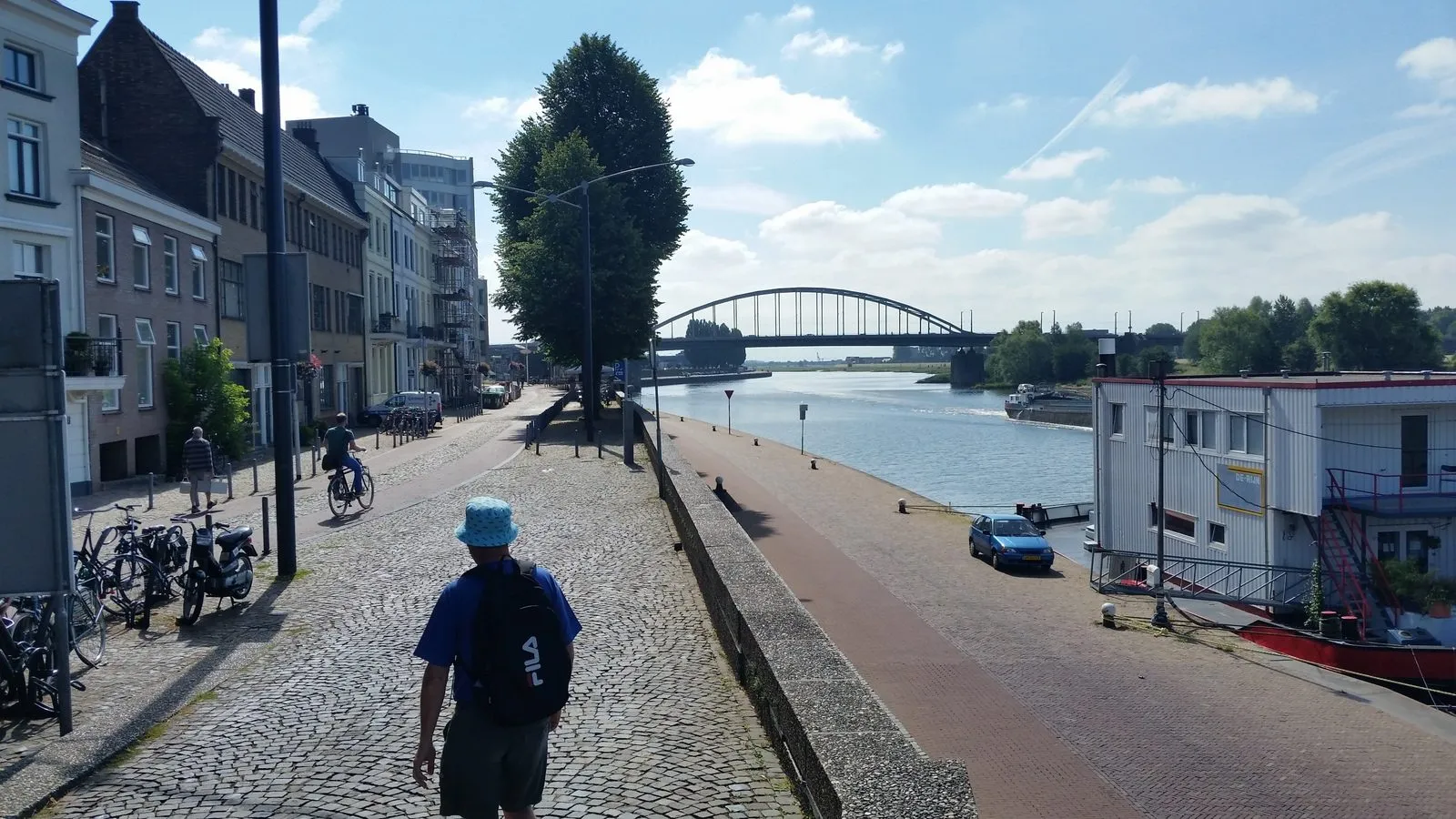
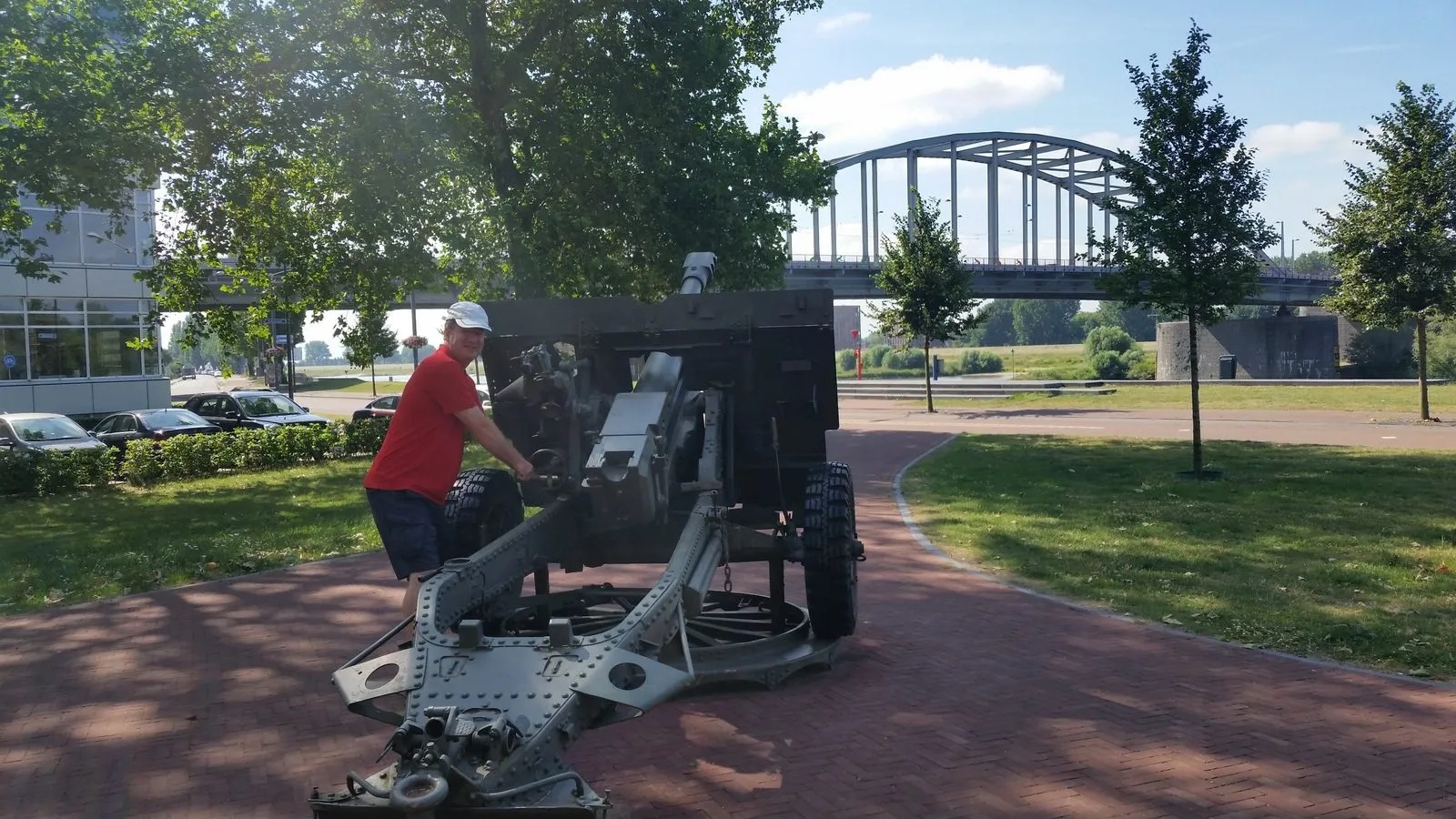
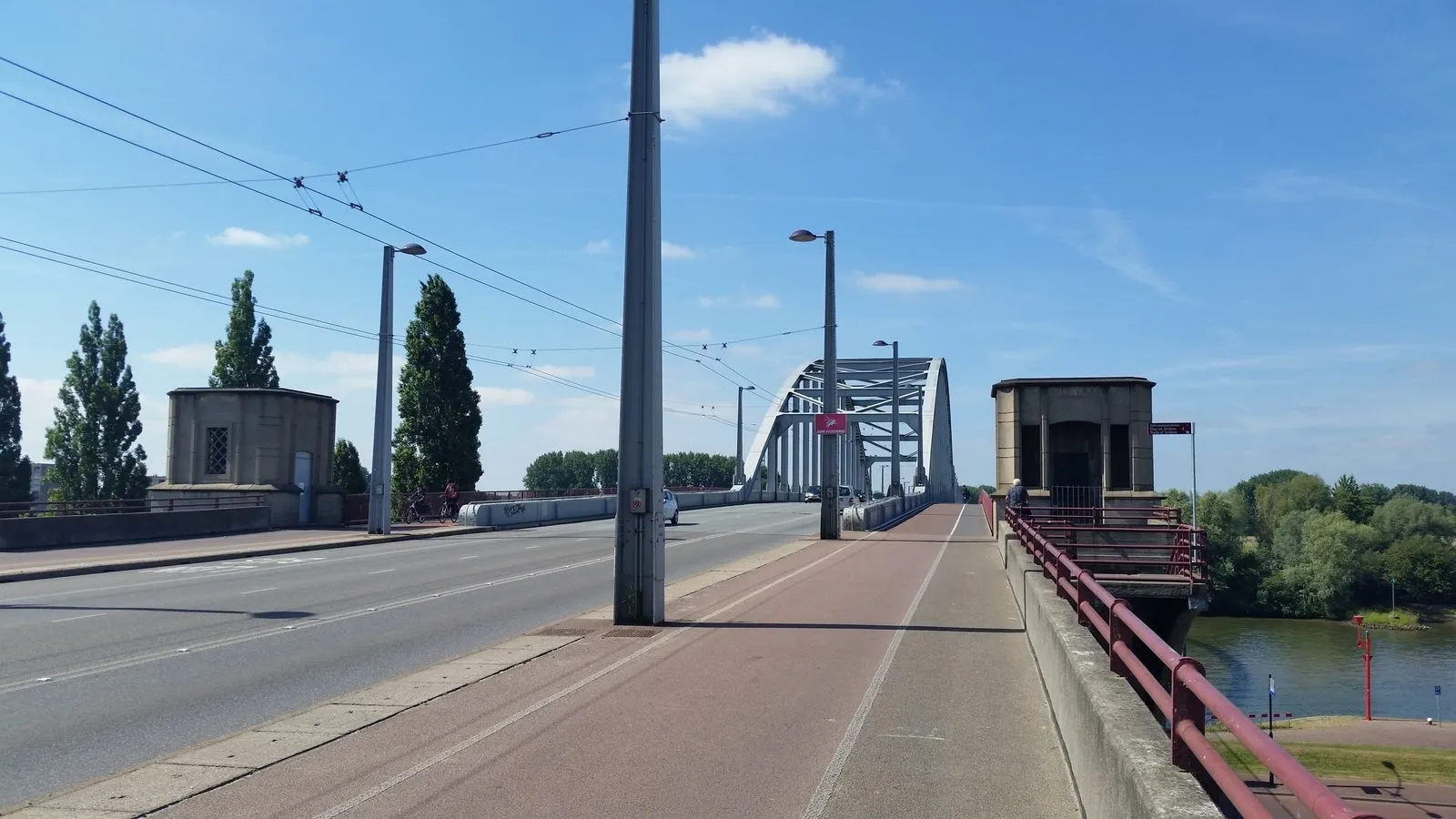
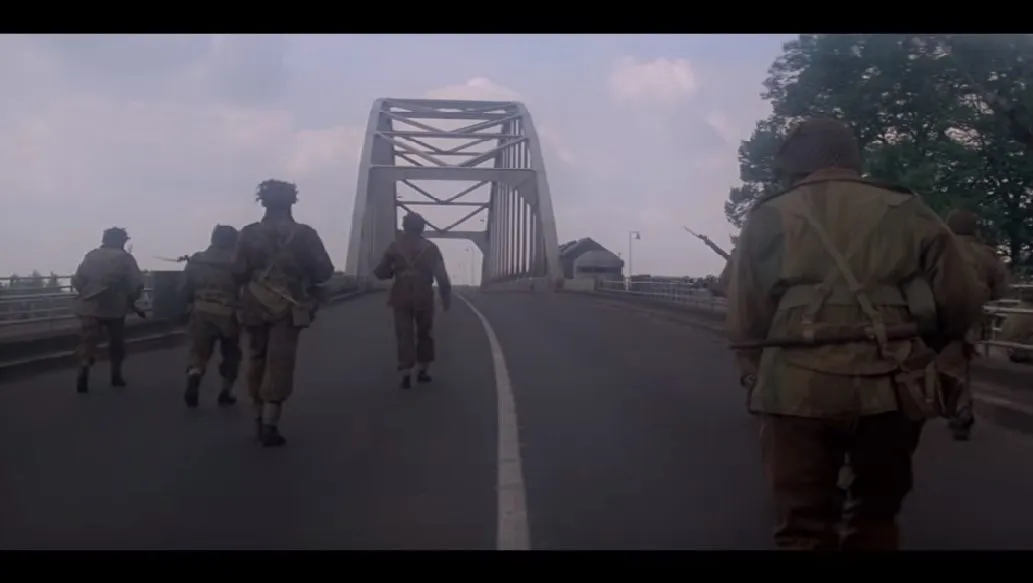
First of all we wanted to take the bridge. After a thorough artillery barrage we captured it in a single hussar charge; the Germans disguised as Dutch cyclists fled in panic.
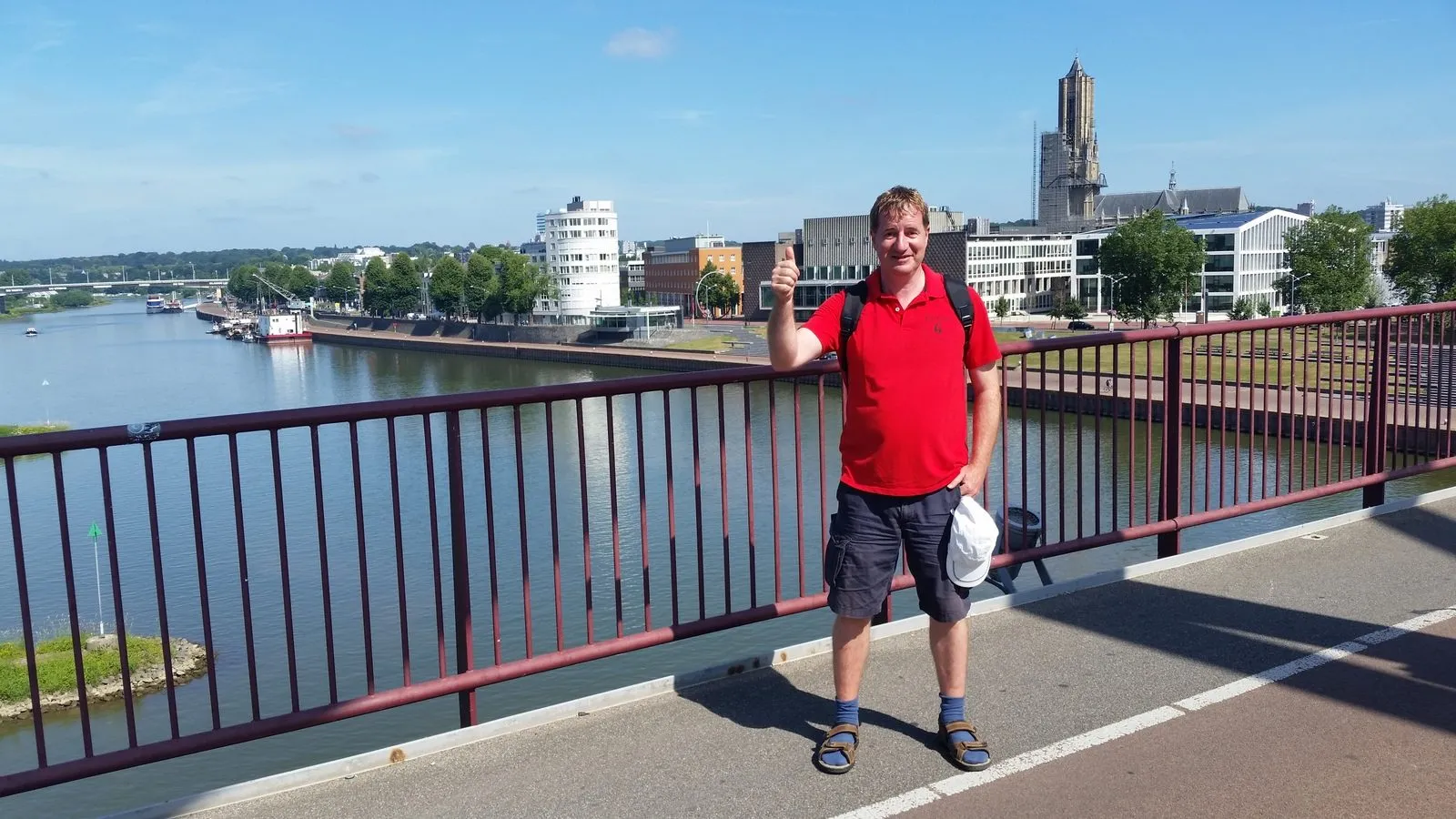
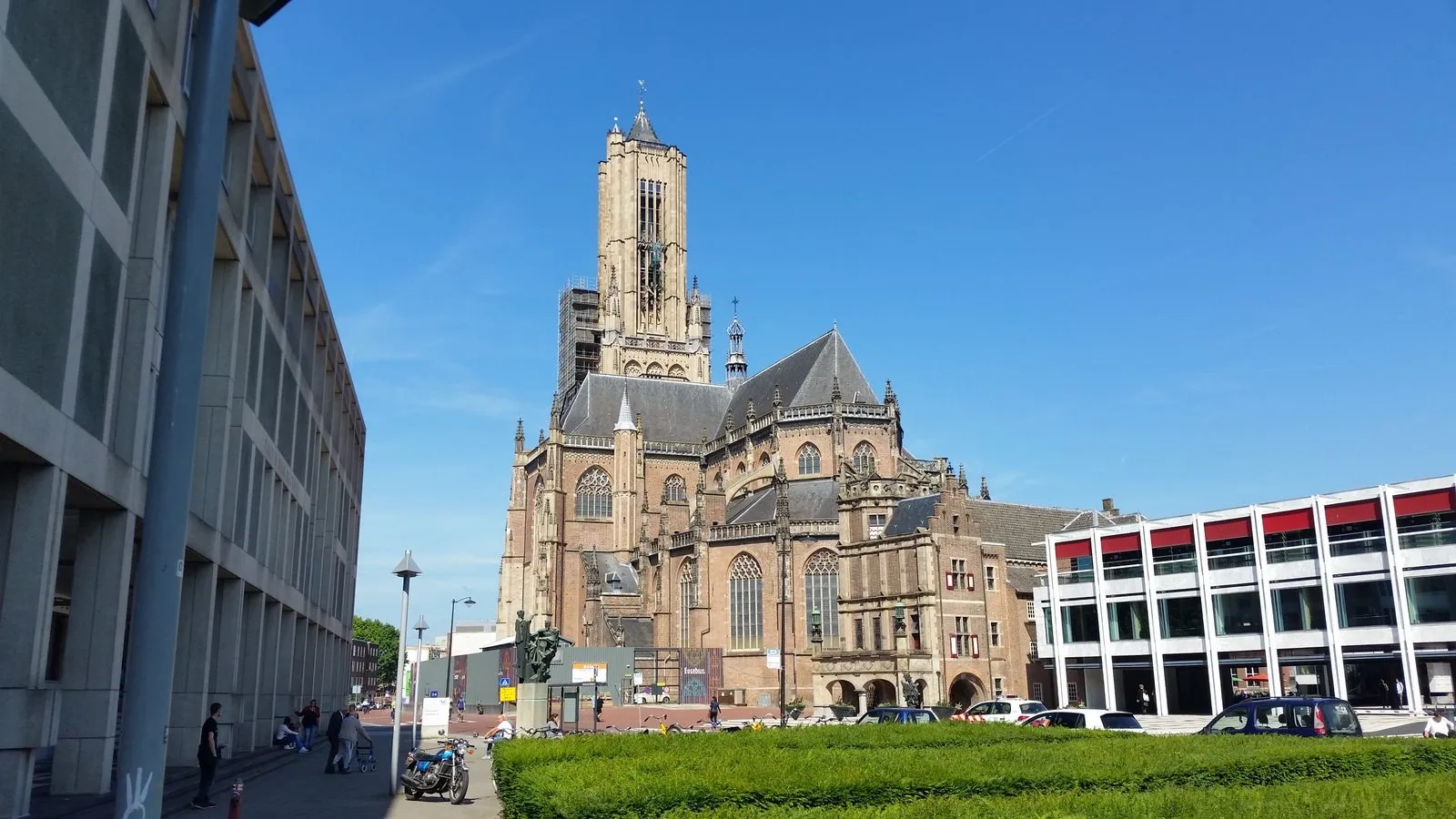
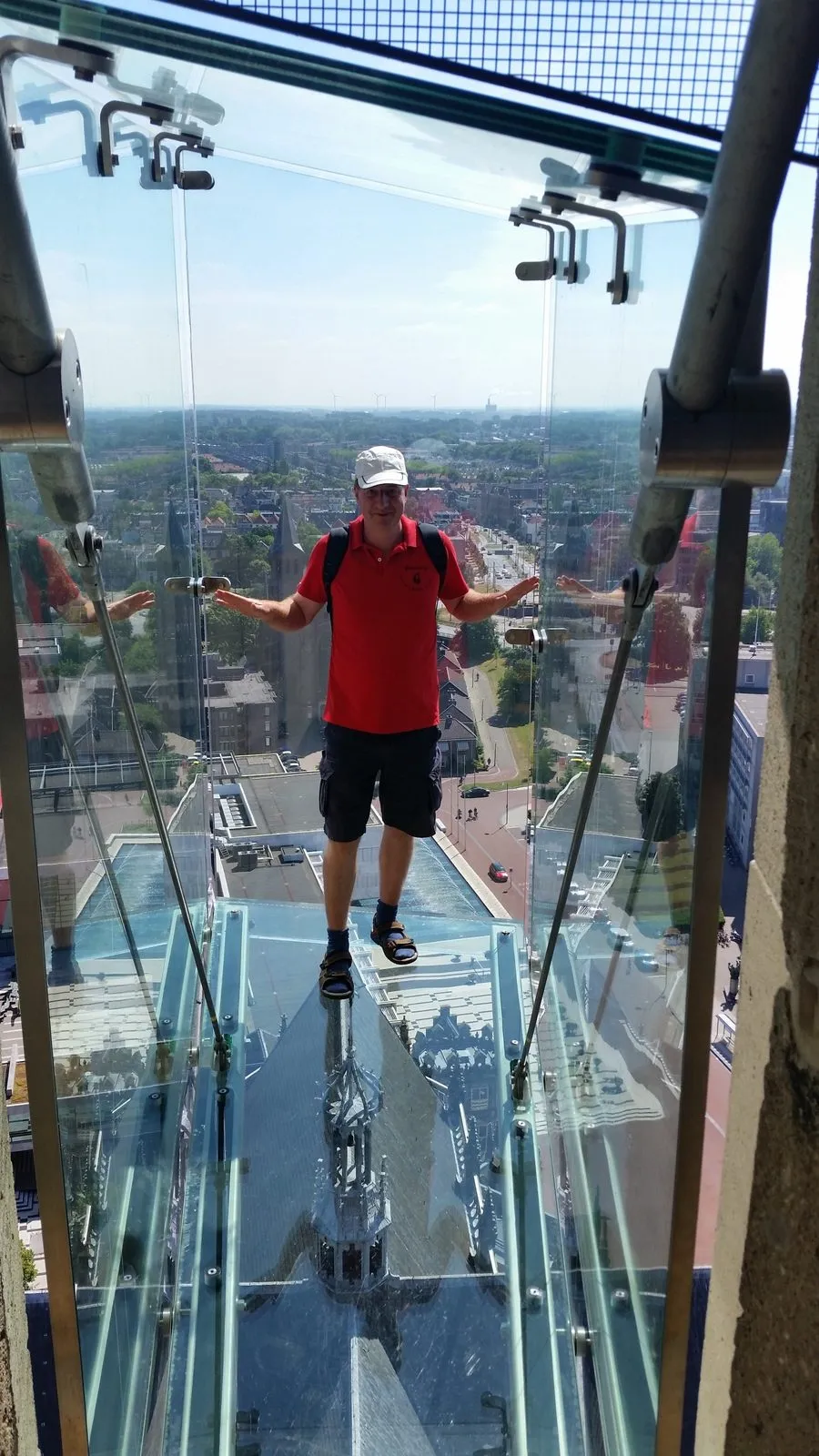
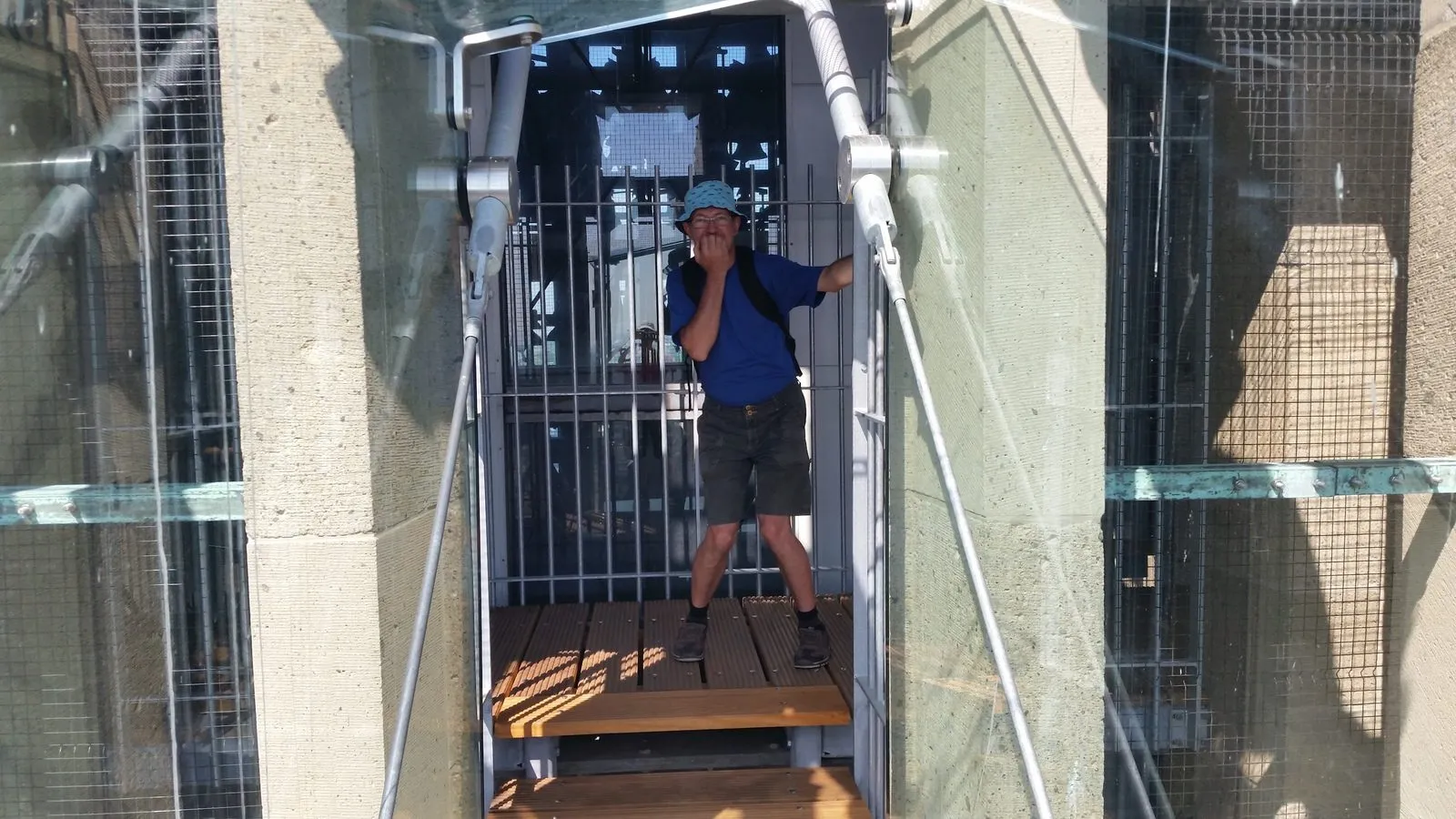
After that we trudged over to the cathedral and took the lift up the tower to the observation deck, 80 m up, where you could step out into the glass-walled void. It was a strange feeling, though there was no sign saying no leaning out in a skirt… Maybe they figured whoever gets a look up there has earned it…
Bazsi let me test the load capacity of the glass floor first, but then didn’t try it himself after all – the abyss was calling him a bit too loudly.
As noon was fast approaching, to be on the safe side we grabbed a bite at an Italian place, then moved over to the café on the corner to upload our stuff using their wifi. Ever since we left I’ve been struggling with my phone, because I can’t get the hotspot to work, though with that we could upload the blog material while under way. As it is, we have to spend precious hours ashore on this, when we could be making progress. Bazsi finished uploading first and headed back to the boat, because we were a little worried about her. The wash from passing ships can bang her against the quay wall, a mooring line can work loose, you’re in someone else’s spot and you get fined, etc., etc…
Soon I was done too and set off back to the boat, but when I reached the riverside I got a real fright, because on the waterfront I couldn’t see our boat, or Bazsi, or our mast anywhere… Had someone taken her after all? Or where was she?
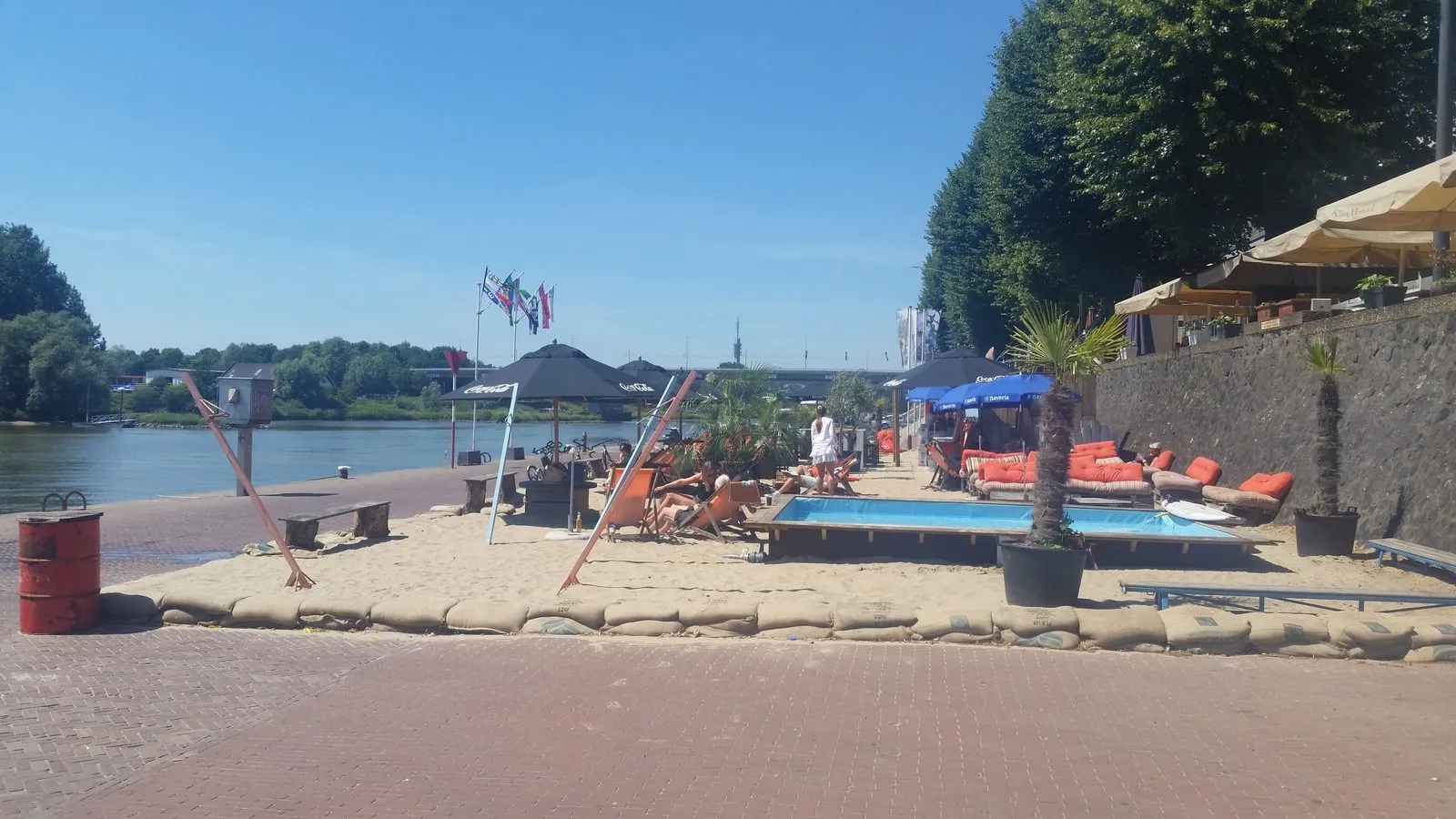
Then it dawned on me that I couldn’t see our boat because the 4-metre quay wall was hiding it, and I couldn’t see our mast because I’d lowered it with my own hands three days earlier…
Well, my long-term memory isn’t what it used to be either…
To celebrate the successful capture of the Arnhem bridge, we bade farewell to the town bellowing “It’s a Long Way to Tipperary” in a British paratrooper accent, and sailed on at 14.15.

From the Lower Rhine we switched onto the Waal with a right-hand handbrake turn. This is the main branch of the Rhine – here in the Netherlands they call it the Waal – and two thirds of the Rhine’s flow runs to the sea this way. The other third goes down the Lower Rhine, the one we’d just been coming up against the current at 6 km/h. After the turn we motored on downstream on the Waal – at the same revs – at 16 km/h.
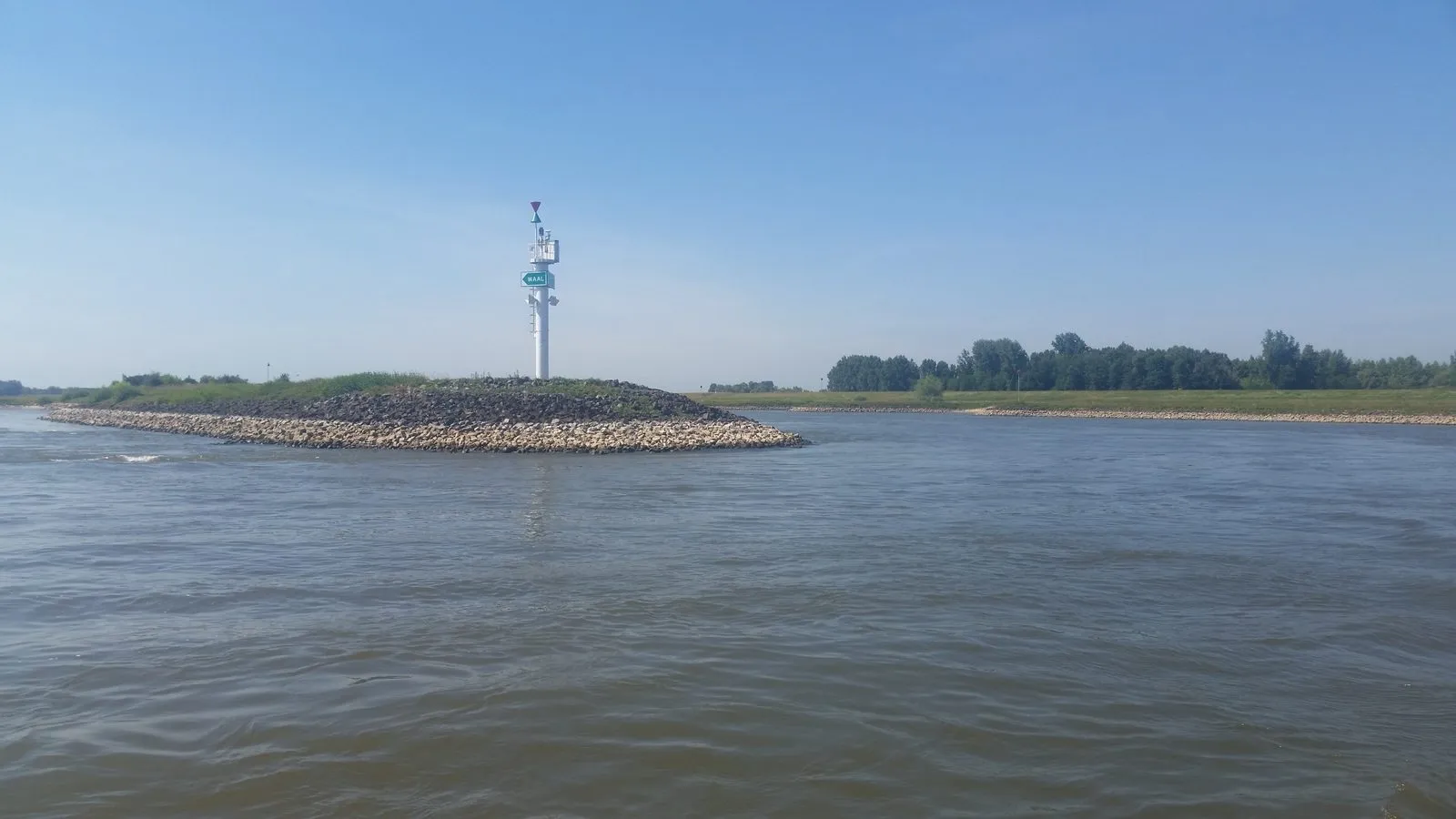

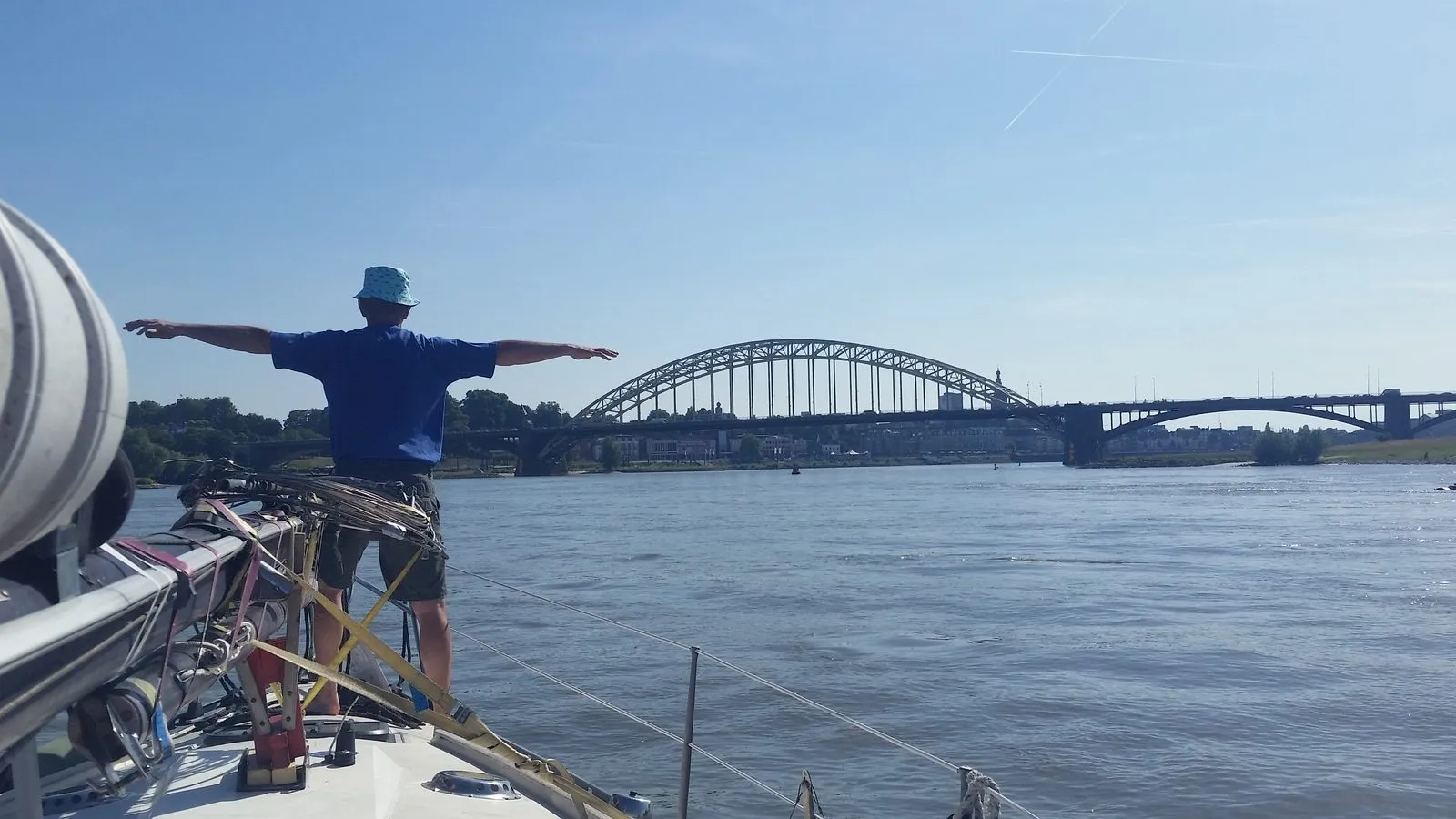
At Nijmegen we turned onto the Maas-Waal Canal, where lock No. 5 awaited us.
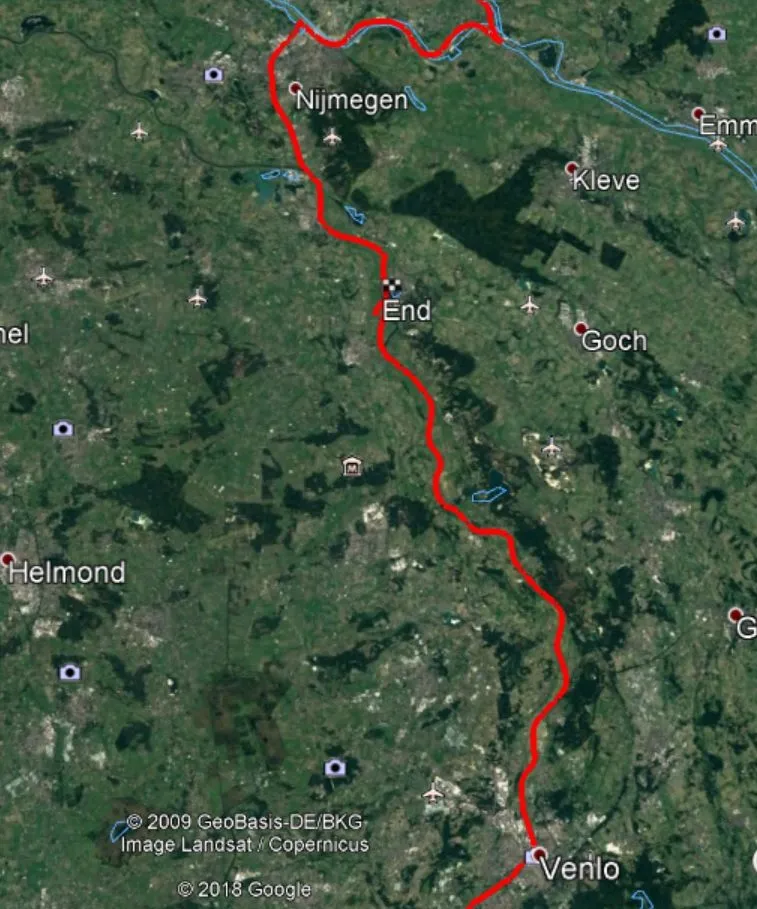
Since we’d by now gained sooo much experience in locking, we made the mistake of following the barge entering ahead of us too closely, and it was still correcting its backside right, left and back with big splashy bursts just as we pulled in and tried to tie ourselves to the lock wall…
The upshot was that I just managed to grab the ladder on the wall from our bow and tie on, and the current was already swinging us crosswise before Bazsi could get a line on a bollard at the stern. I could no longer slacken or ease out my line, so our mast, which sticks out about 1 metre beyond the bow, got caught in the lock-wall ladder. The headsail furler drum, which sticks out a little beyond even the mast, gave a big crack, split, and its line guide arm snapped off and dangled limply. After a bit of wrestling we freed ourselves, and since the barge’s propeller had meanwhile calmed down, we managed to make our stern fast to the chamber wall too. We finished locking through without any further incident.
Lesson learned: wait for the elephants to settle in, and only then go near them.
The canal linking the Waal and the Maas is 12 km long, which we knocked off in just over an hour. At the other end, before the Maas, there’s another lock (No. 6), which stood wide open (because the canal and the Maas are at the same level just now), and we weren’t one bit sorry not to have to put what we’d just learned into practice right away.
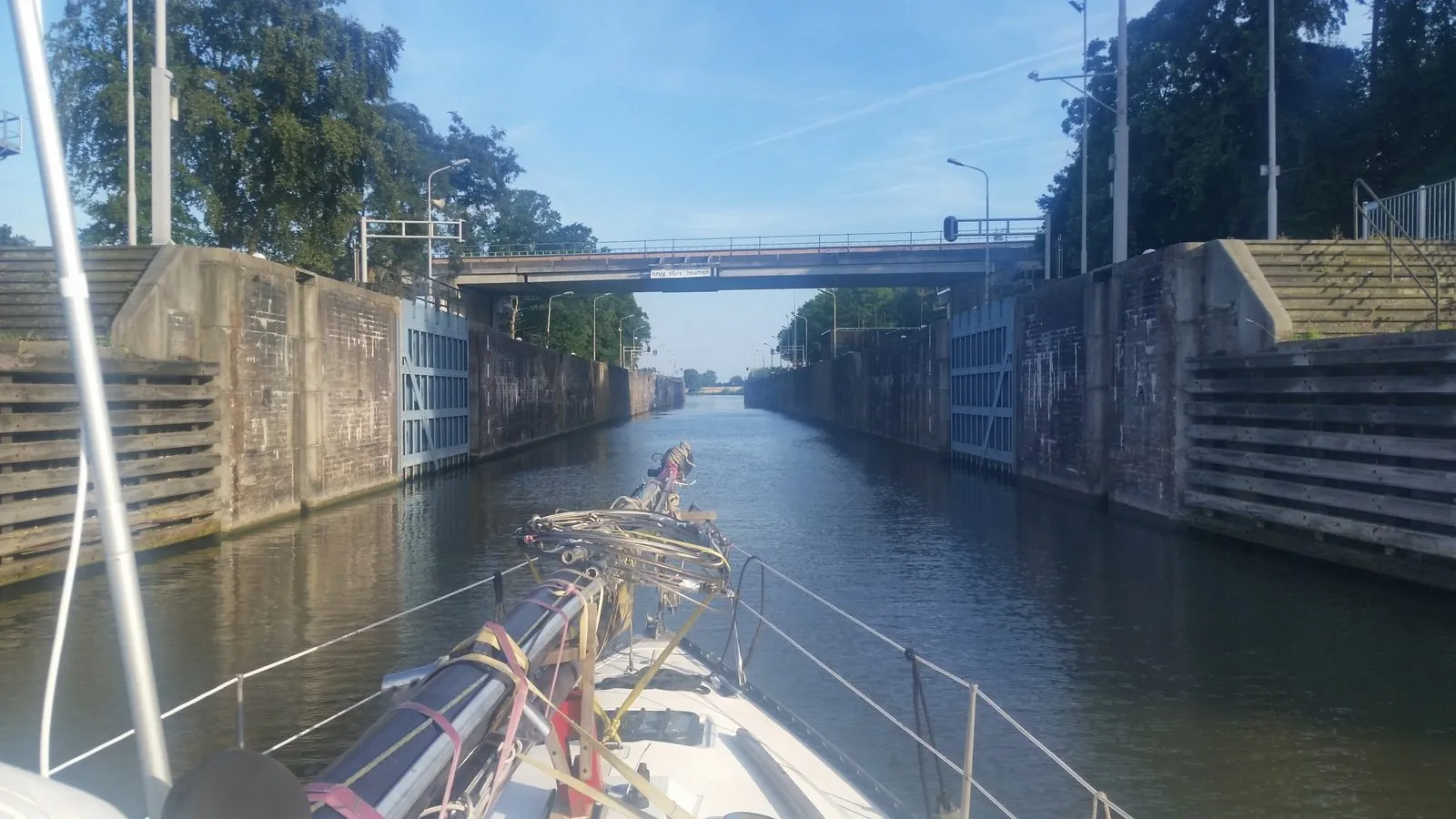
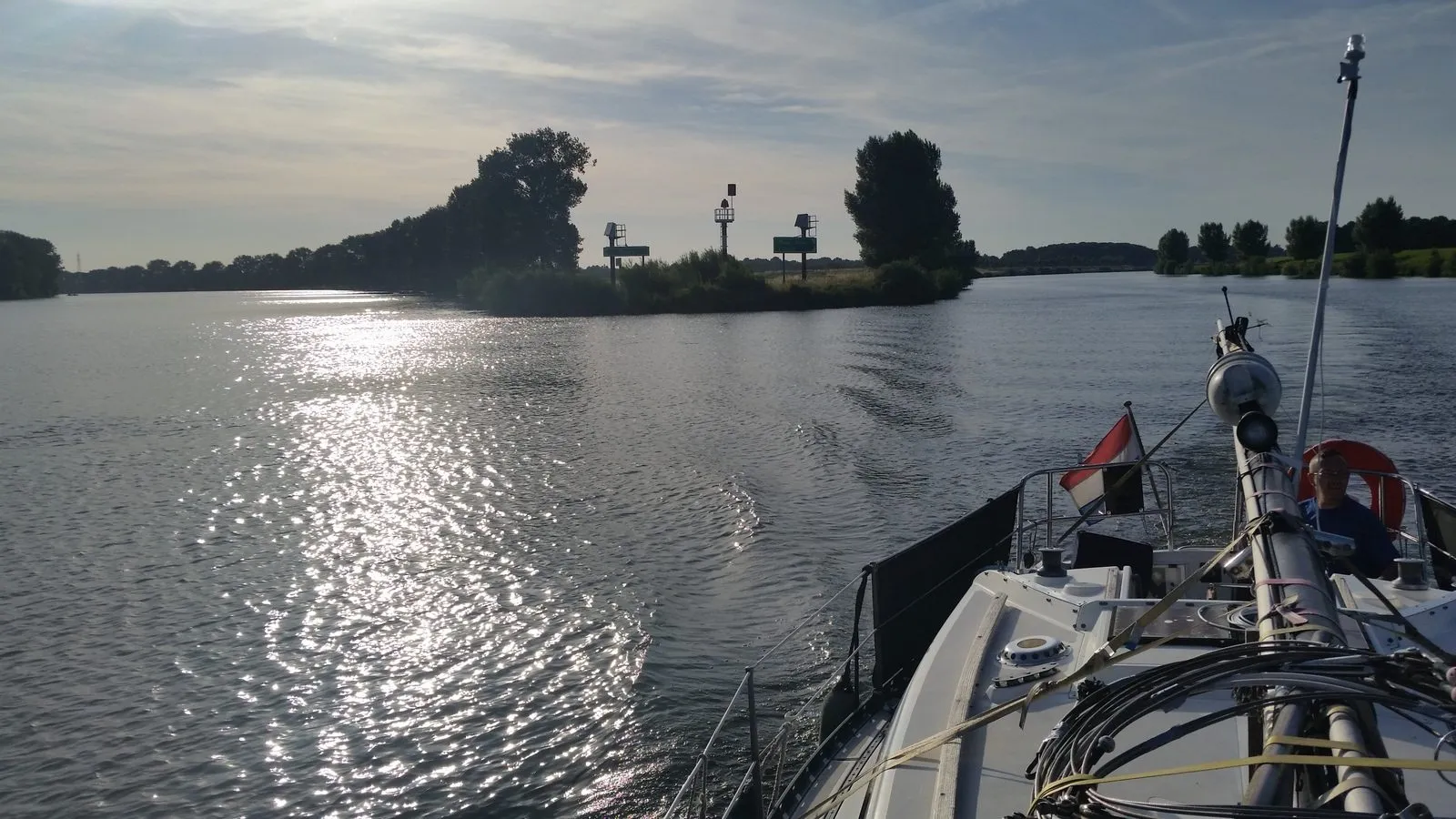
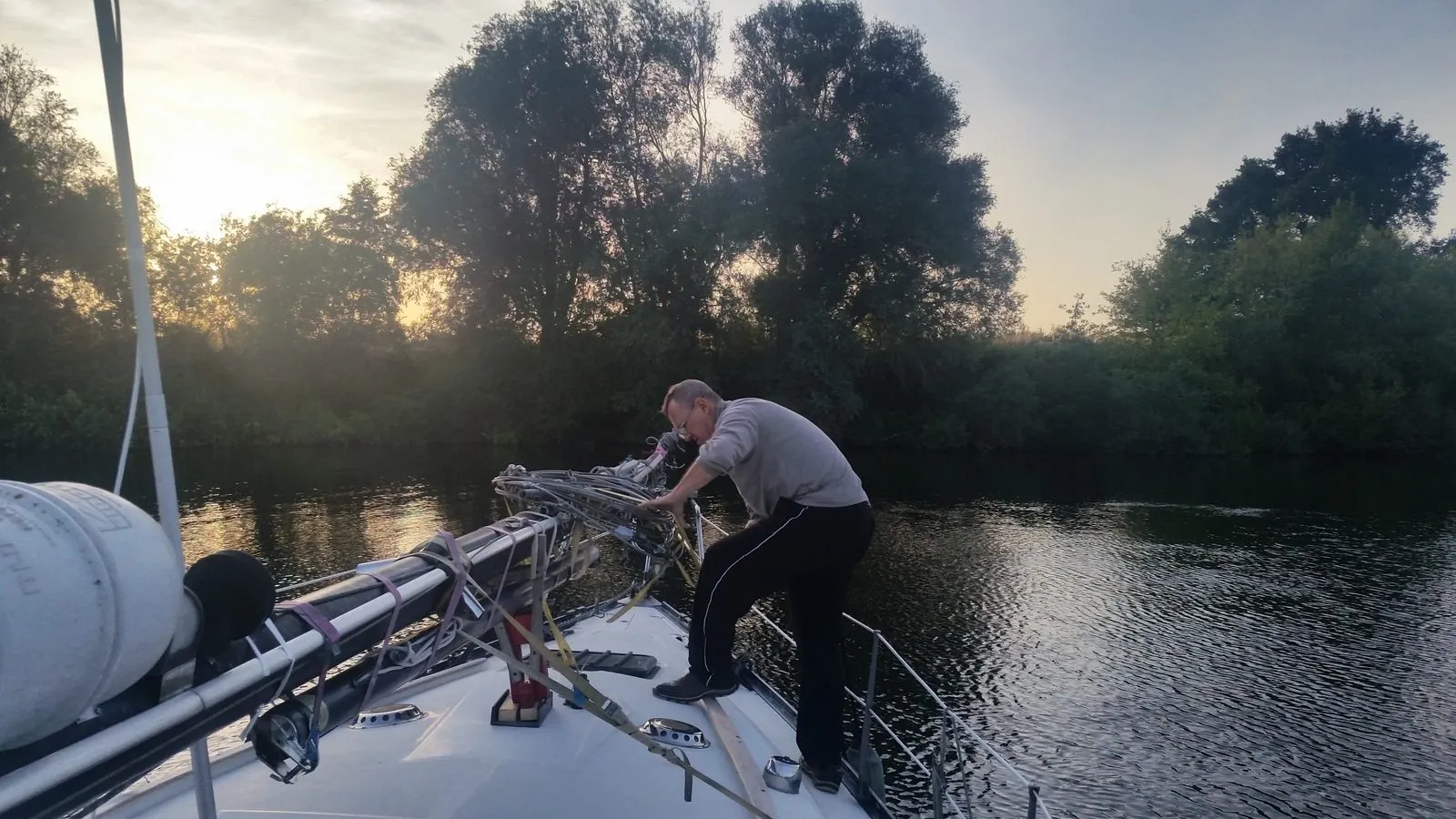
We motored about another 15 km up the Maas, turned into a backwater and dropped anchor. We secured the mast’s loosened lashings, and Bazsi was pleased to find that the damage suffered in the lock wasn’t so bad – he’ll be able to fix it himself.
Machine translation (AI, Claude) of Balázs’s Hungarian original. Read the original →
Wednesday, 27 June 2018
Day 4, 65 km (267 km)
At 6.50 Bazsi announced that we were leaving, and he really did fire up the engine. He means it.
“But what about the scrambled eggs? We agreed last night we’d make some before setting off!”
“I’ve already had breakfast.” Came the reply. Now hold your horses right there!
But the horses didn’t hold – off we went anyway.
Up in my pyjamas, anchor up, then back to bed for seconds. I went to bed after midnight yesterday, I mean today, and I’m still a growing organism, I need some sleep… I’d just dropped off when the next order came from above: Loock! That means all hands on deck. Which includes me. And I’ve never seen anyone go through a lock in pyjamas.
I got dressed, we ticked off our 7th lock without any trouble, and got another 4 metres closer to the good Lord.
This day has already started, I can’t stop it, so I might as well make scrambled eggs on the move.
It can’t have turned out badly, because Bazsi, while steering, accidentally tipped half of it onto the bench, and he didn’t let it go to waste: he scraped it back onto his plate and shovelled it down, no problem at all.
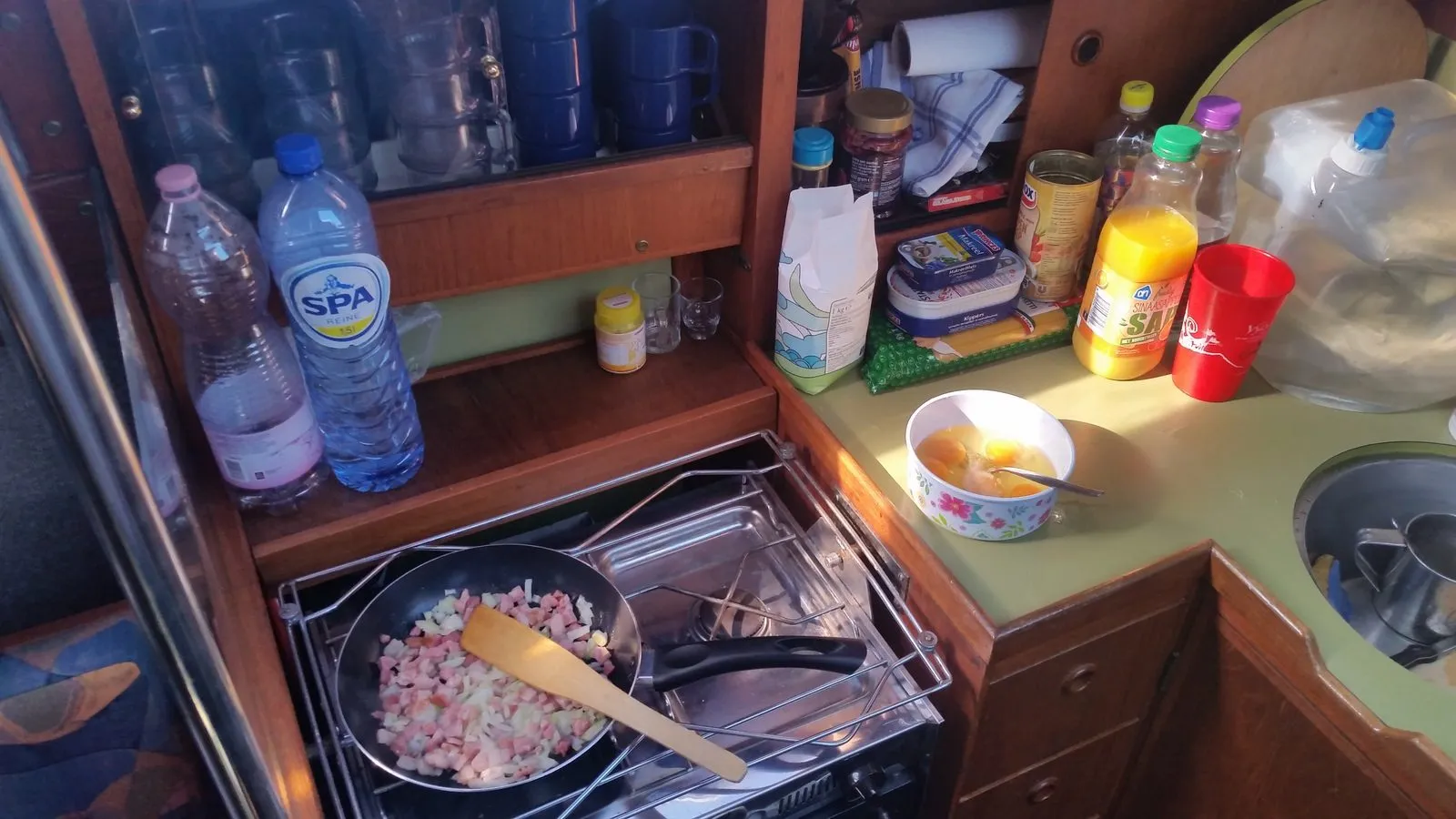
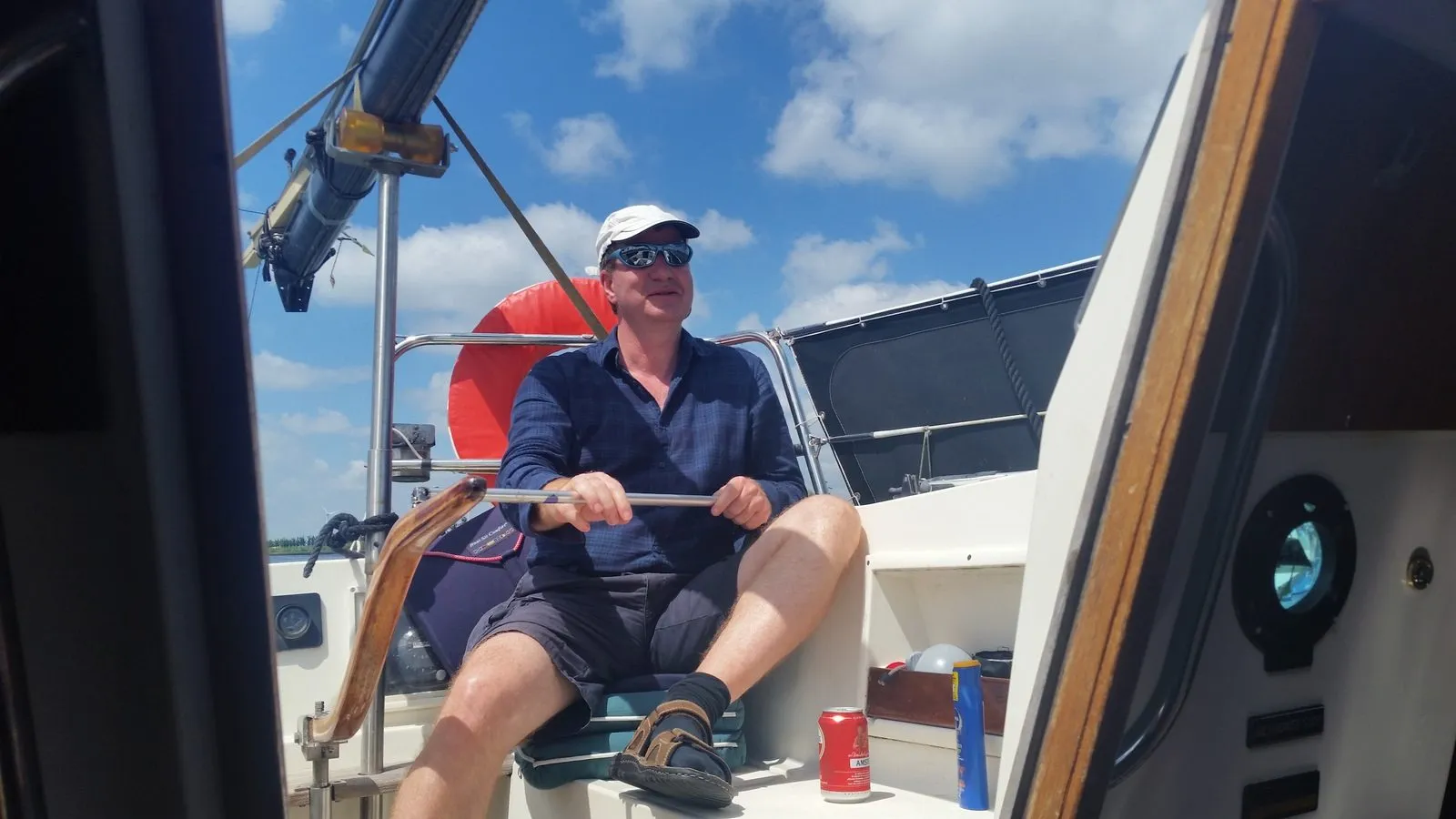
This was our wave-iest day so far. Leisure boaters always wave when they pass each other, just like on Lake Balaton, or like motorcyclists (on the roads). There were so many today that towards the end I was only waving from the elbow, then just from the wrist. By tomorrow evening I reckon, after the nodding stage, I’ll just be winking. Then again, maybe that’s why Dutch pensioners are so fit. Because the people passing us have an average age of at least 68.2 years. They’re clearly living from day to day – make that from day to Dutch – enjoying life and waving enthusiastically. Only we are such wet-behind-the-ears, barely-just-over-50 youngsters in this company.
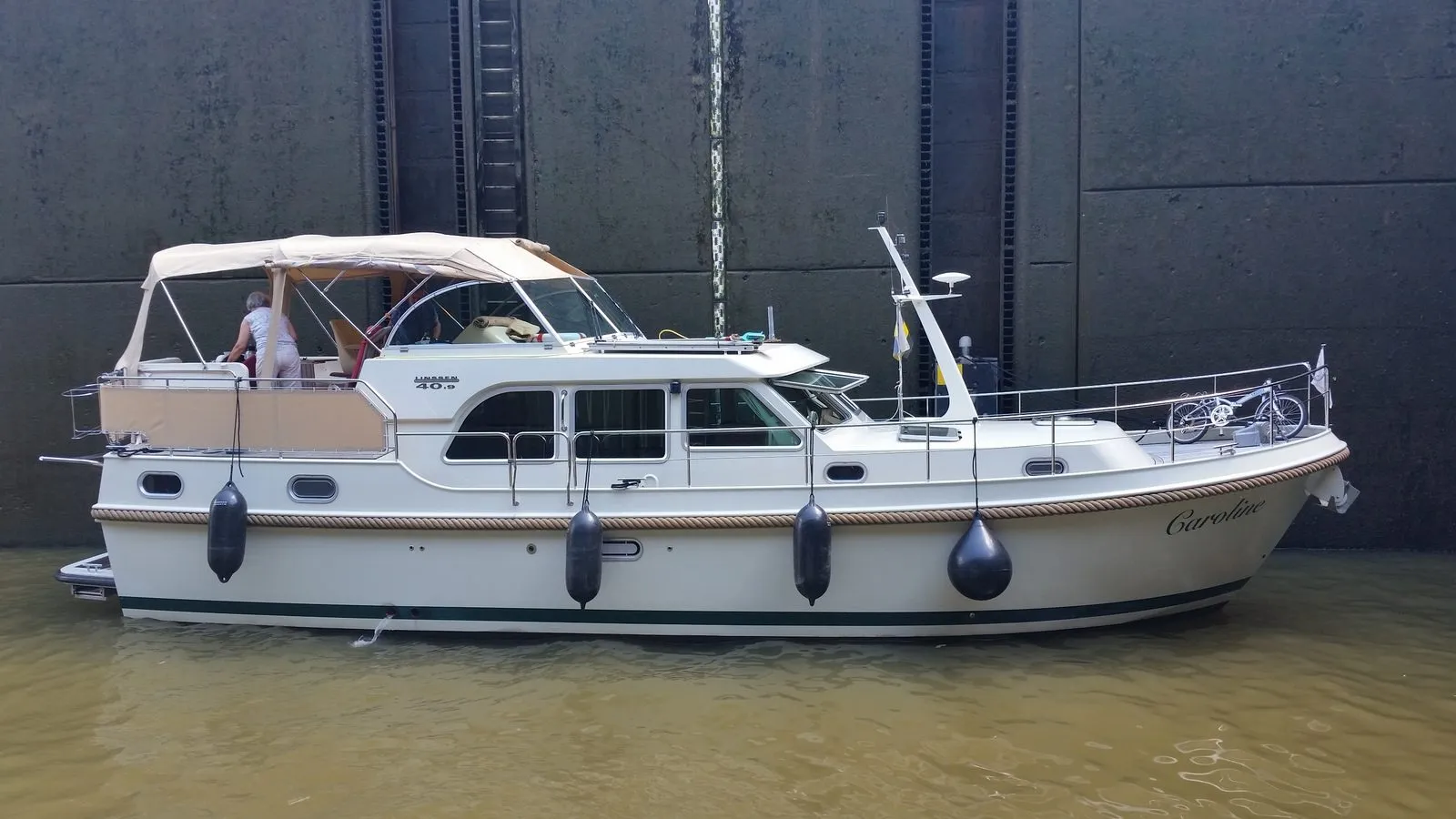
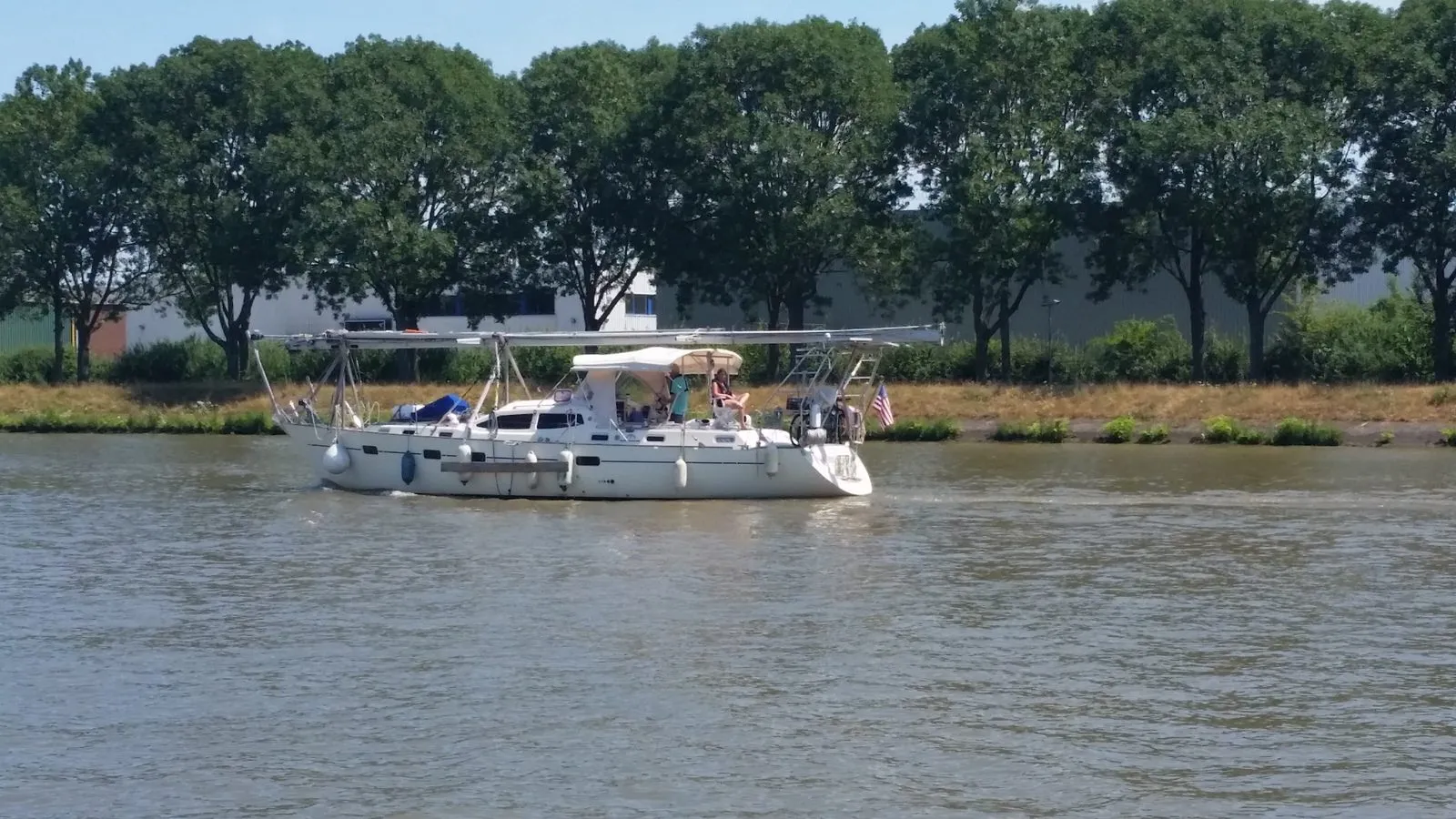
90% of the motor yachts fly the Dutch flag, 8% German, and the rest all sorts: Australian, Belgian, US, etc. Experienced sailors fix a plank over the fenders on the side of the boat so that locking doesn’t ruin either the hull or the fenders, as you can see on this American sailing boat:
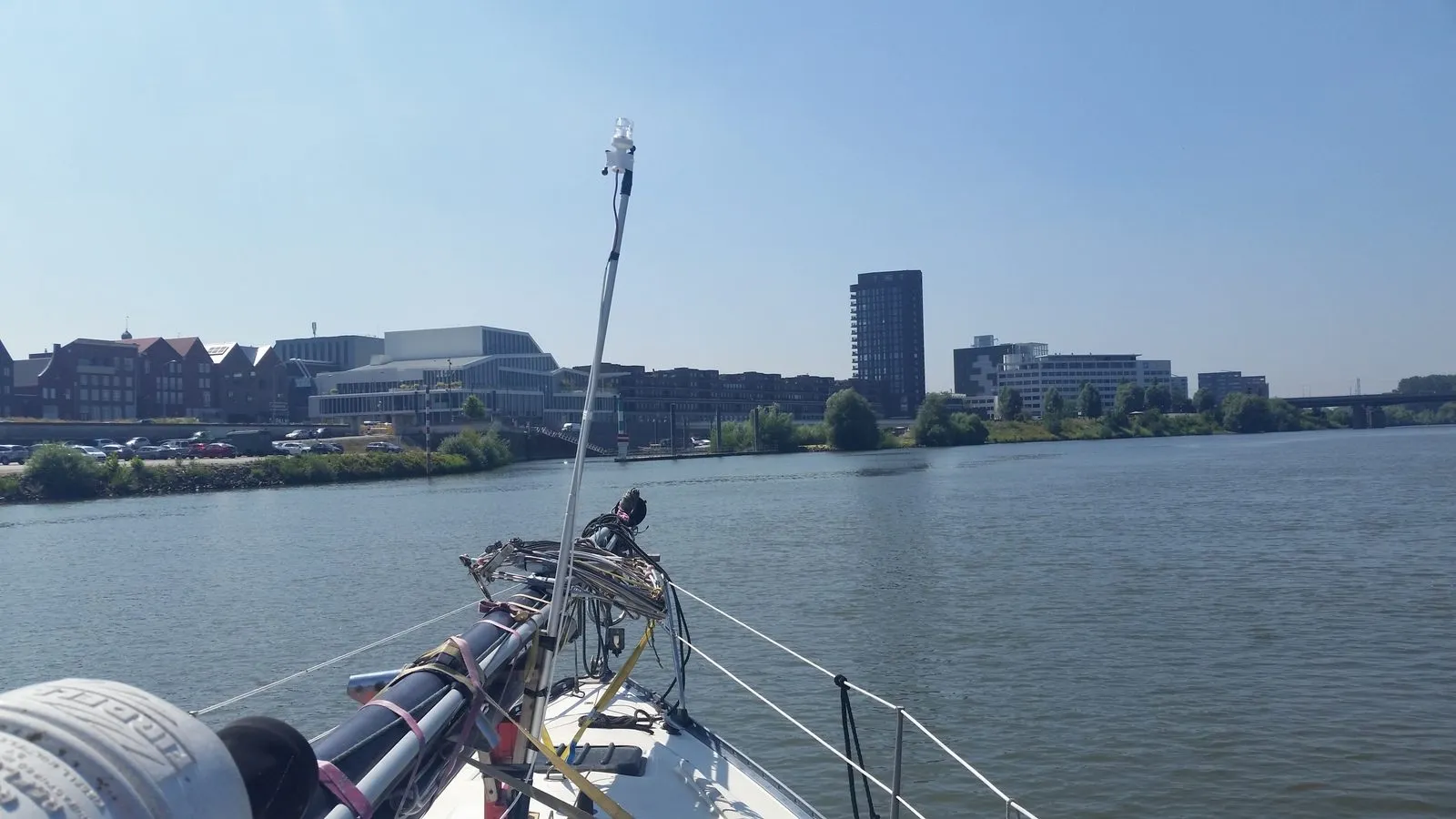
At noon on the dot we moored in Venlo, in the modern marina built in front of the town centre.
Bazsi spotted the Australian sailing boat he’d already seen yesterday.
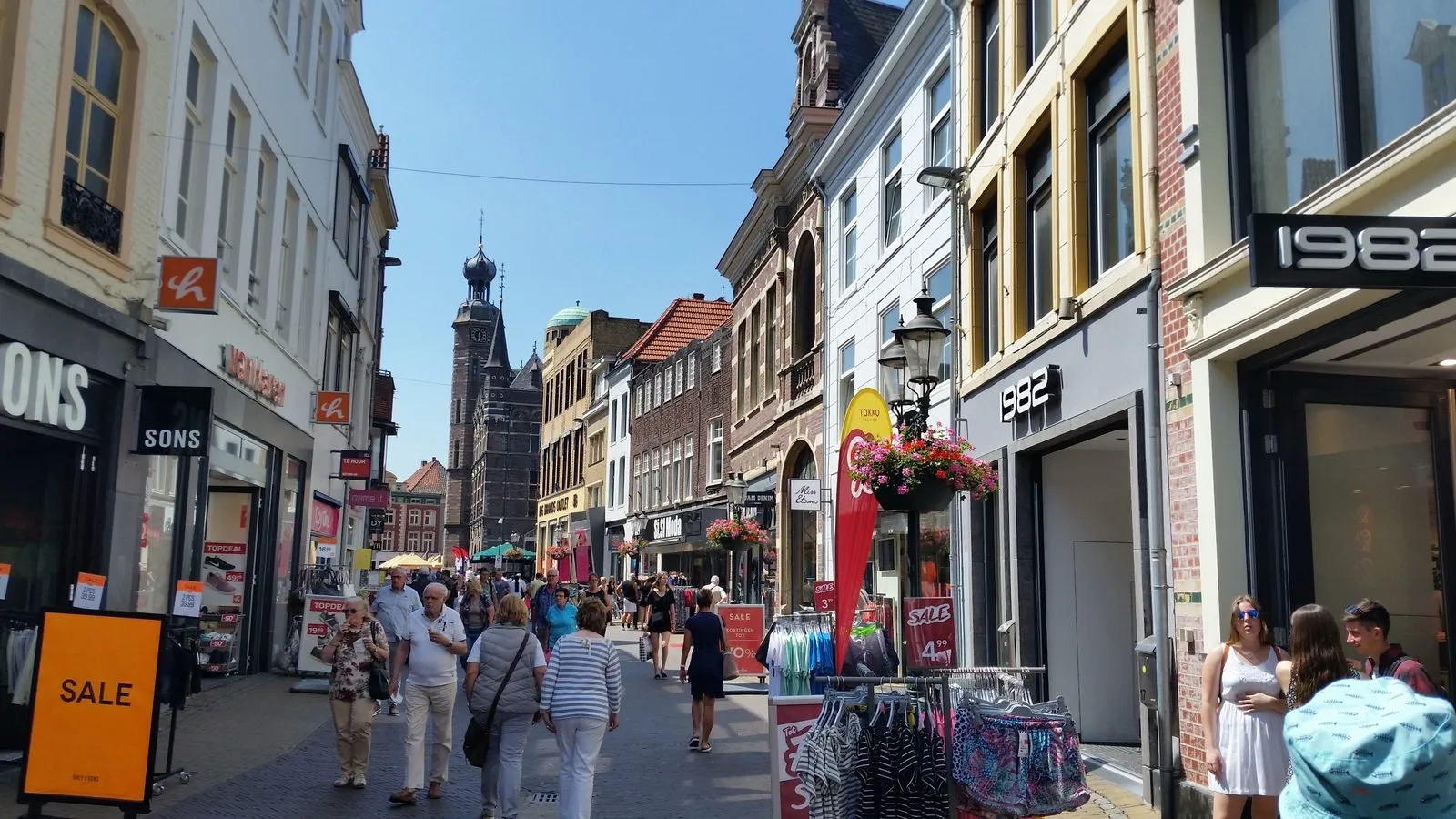
Mooring is free until 14.00, so until then we go shopping, sightseeing, and then sit on the terrace of the café next to the marina to get online and work.
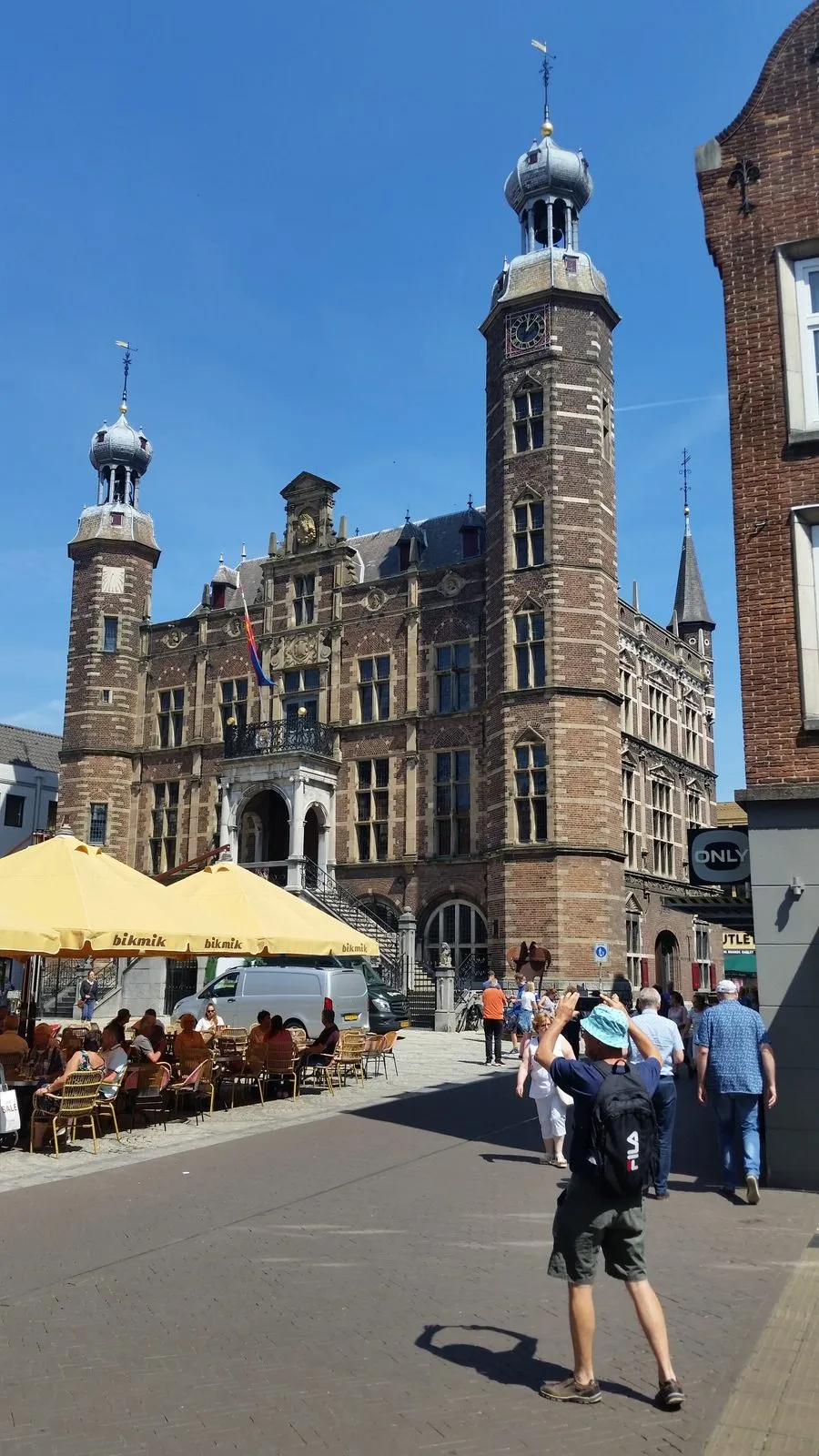
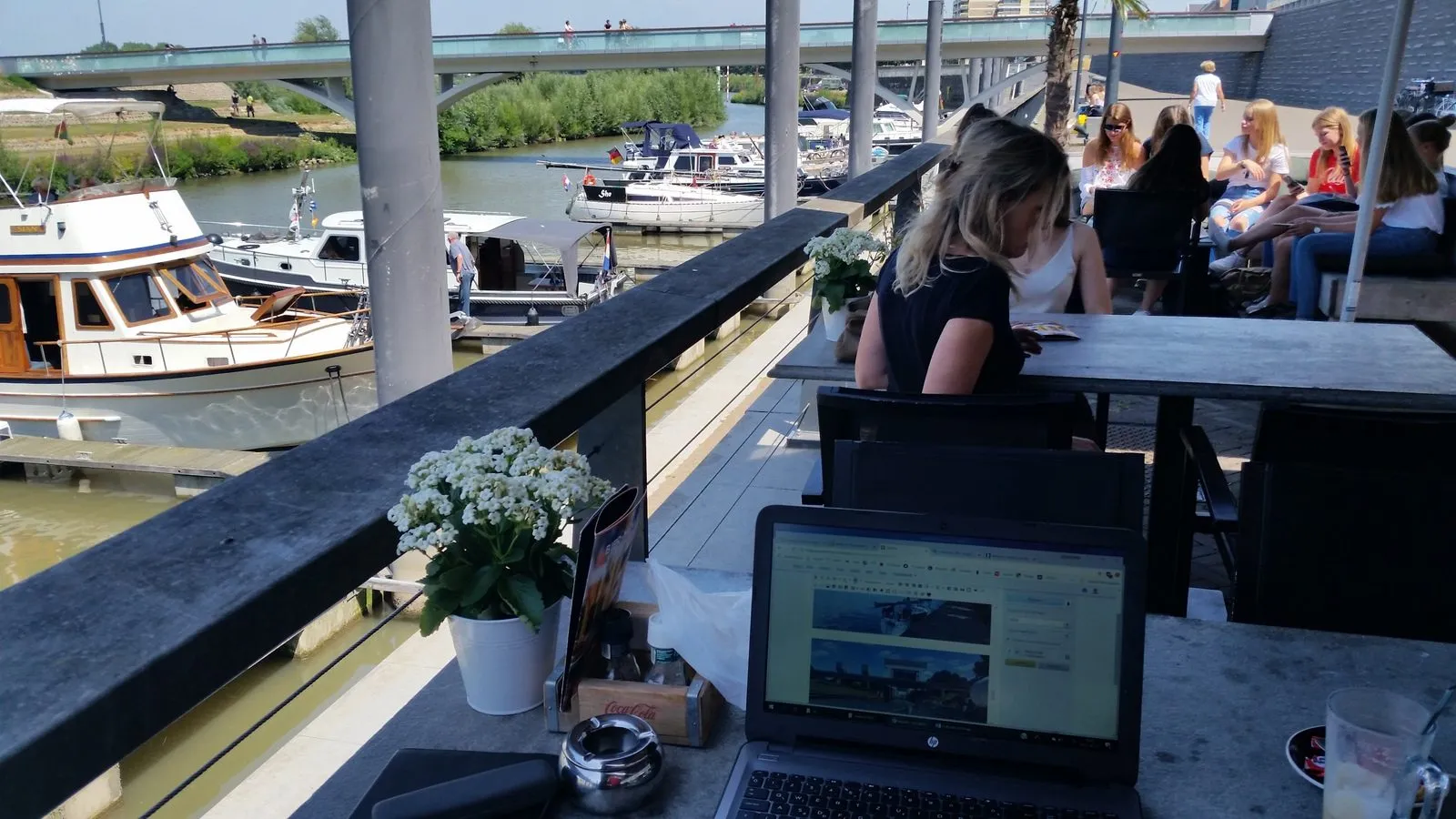
We’d have liked to chat a bit with the Australians, but they sailed out before us, so we set off again too.
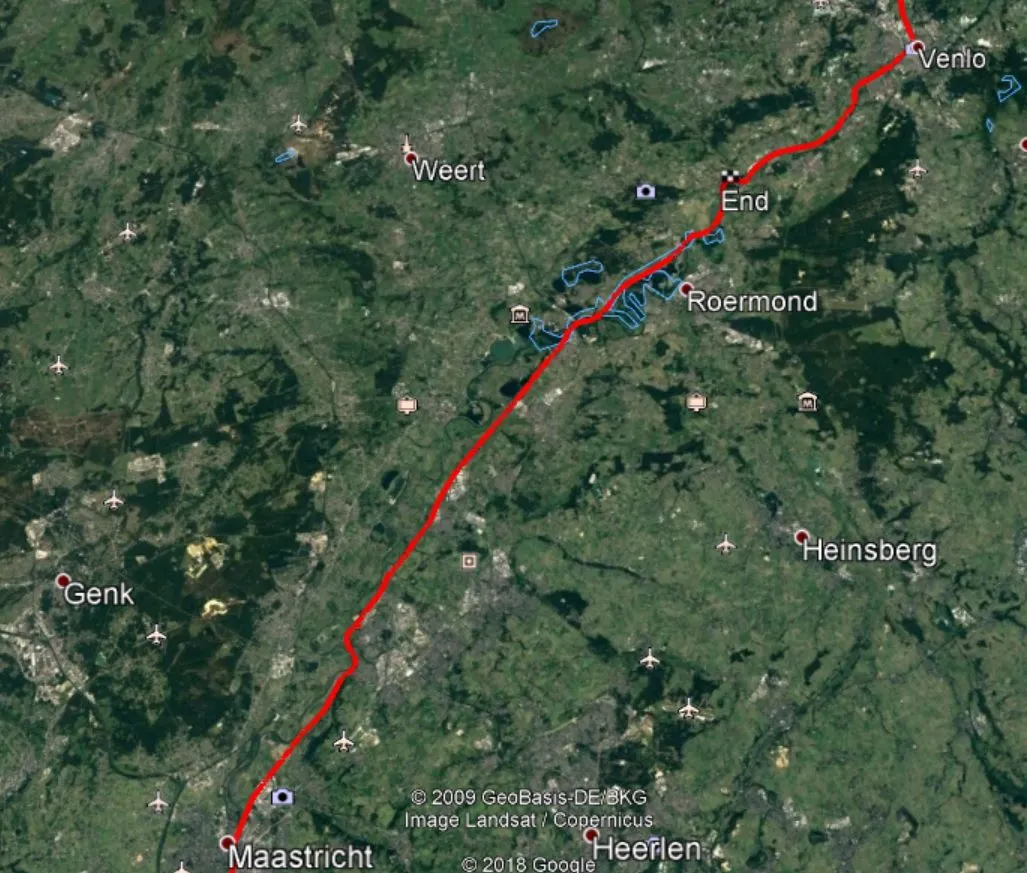
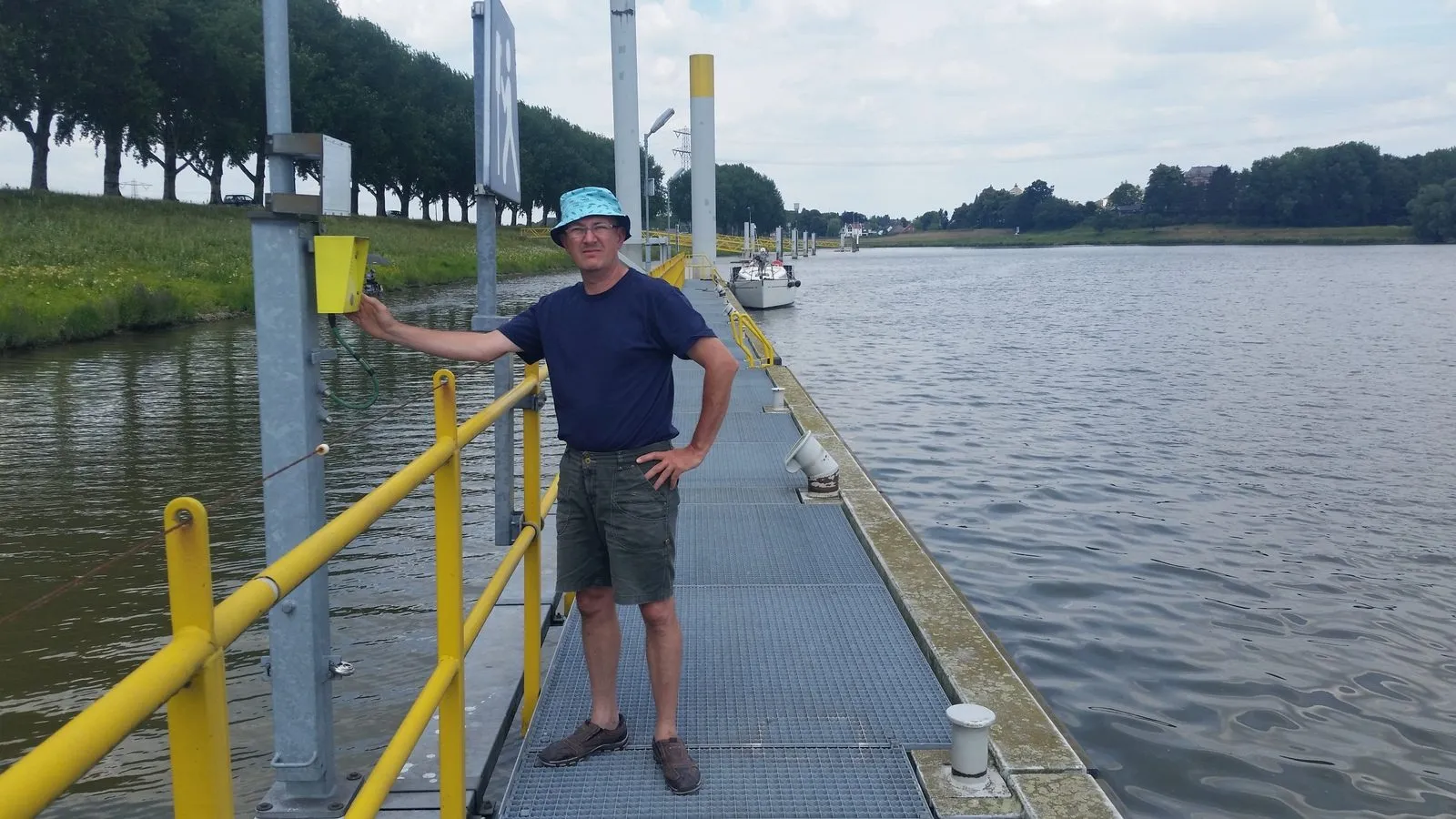
The afternoon locking (No. 8) wasn’t skipped either. Here we couldn’t phone ahead; instead you had to get off onto the metal jetty in front of the lock and talk mouth-to-microphone with the dispatcher to sort out which chamber we could go into, behind whom, and in what order.
The rest of our route led through flat country, past meadows, rows of holiday homes, caravan sites and a castle. These people know how to live…
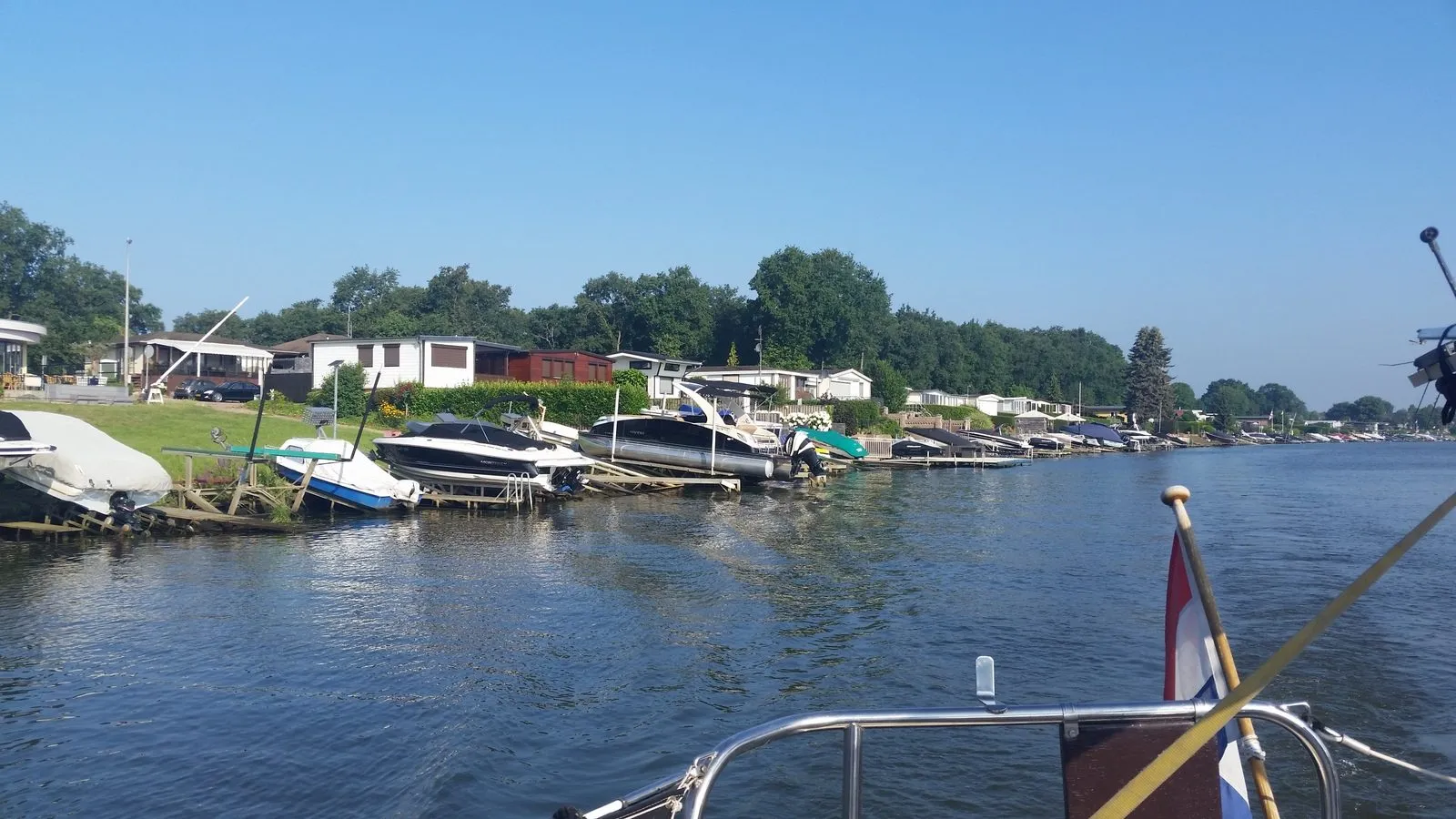
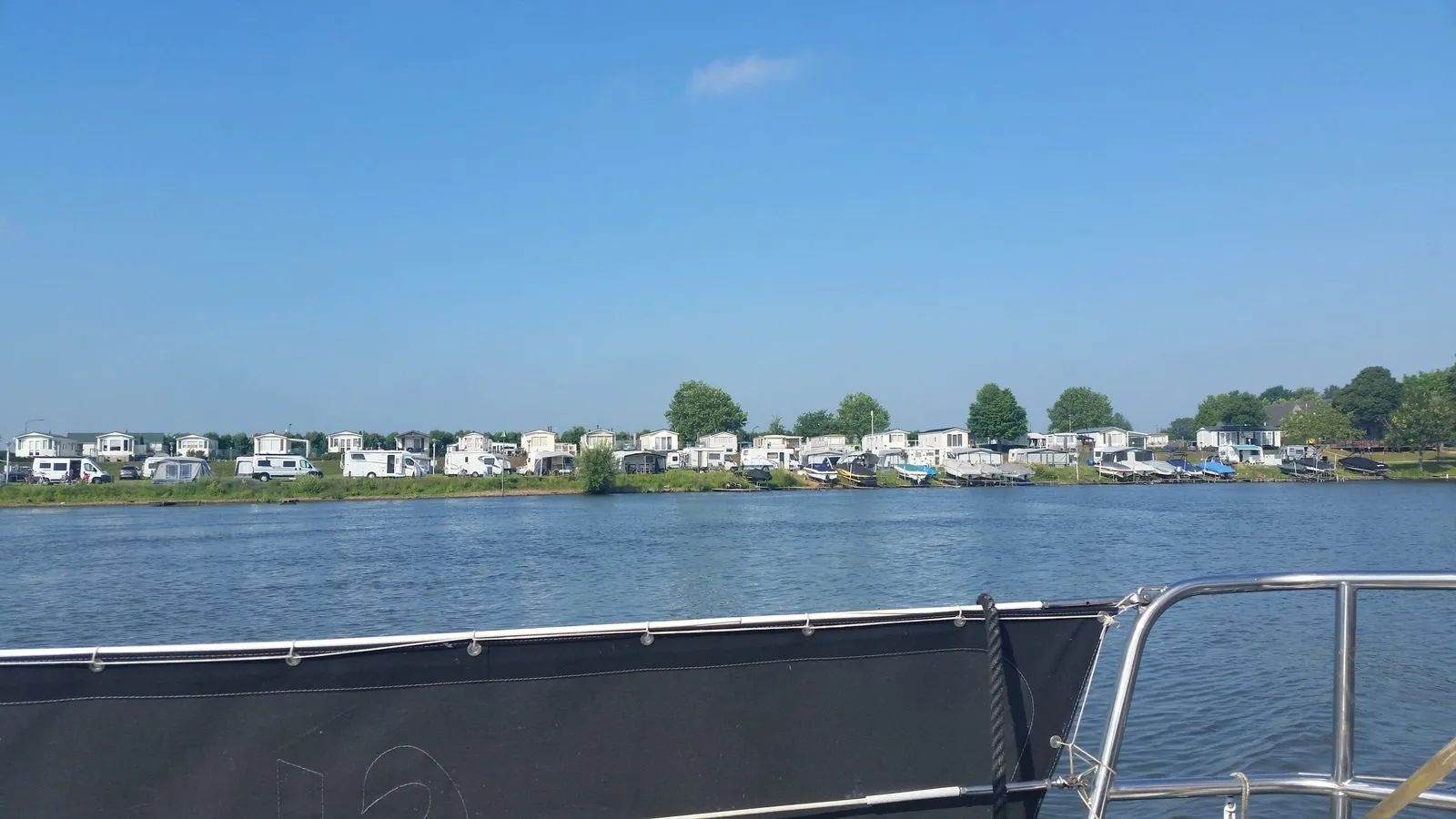
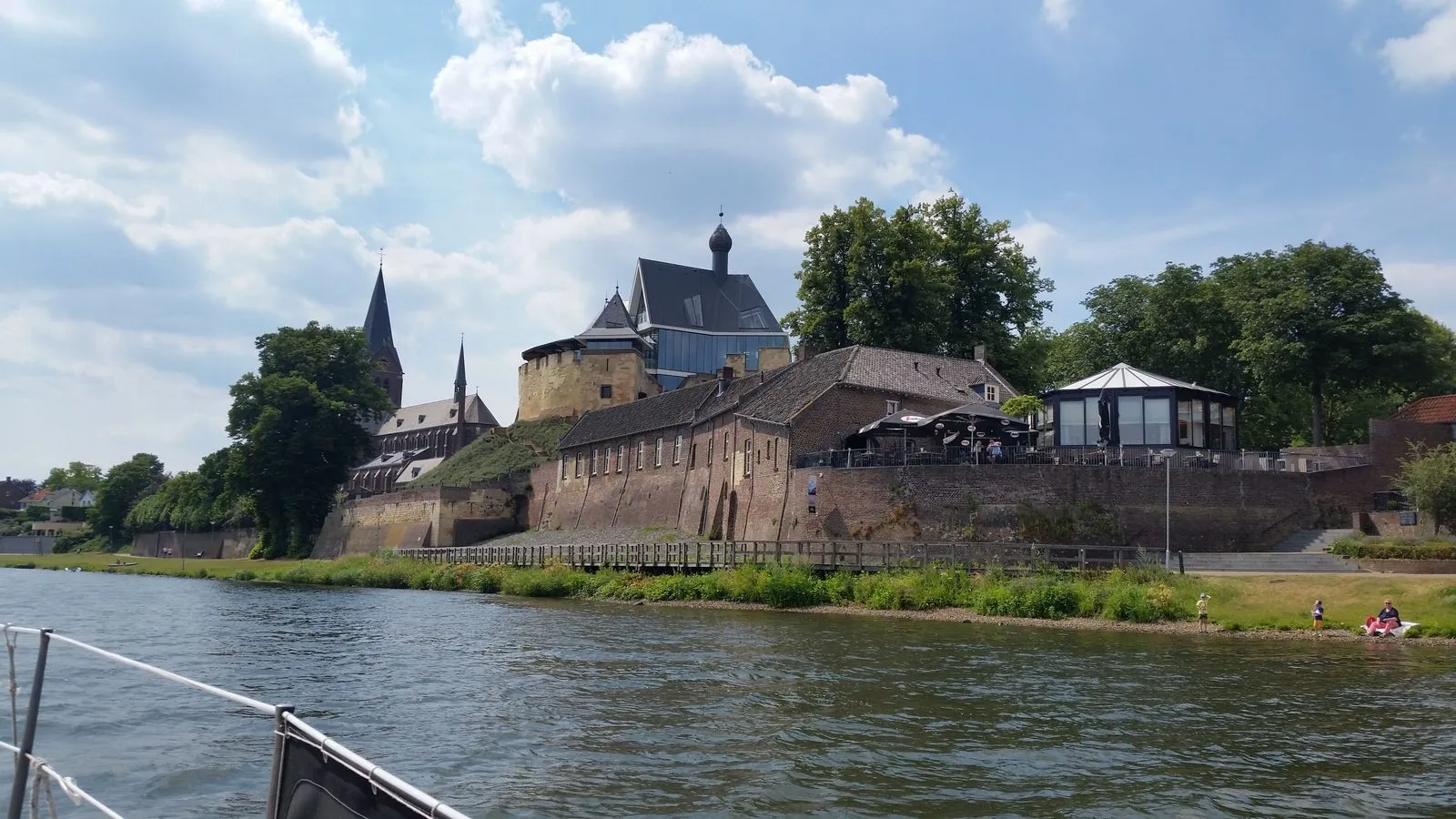
Today we planned to spend the night in a small marina in Neer, so we could wash the dust of the road off the boat, and off ourselves the good few layers of sunscreen we’d slapped on. I wanted to watch the German team’s last group match, kicking off at 16.00, so I looked on longingly as, 20 minutes before kick-off, we puttered past another marina. I’ll miss a bit of the start, they’ll replay the goals, I told myself. At 16.20 we moored at our planned spot, a friendly little marina where, besides the boating wanderers, motorhomes were parked and camping on the bank. The two separate camps, the boaters and the landlubber motorhome rats, get along fine side by side. (just as long as they don’t jump aboard our ship…)
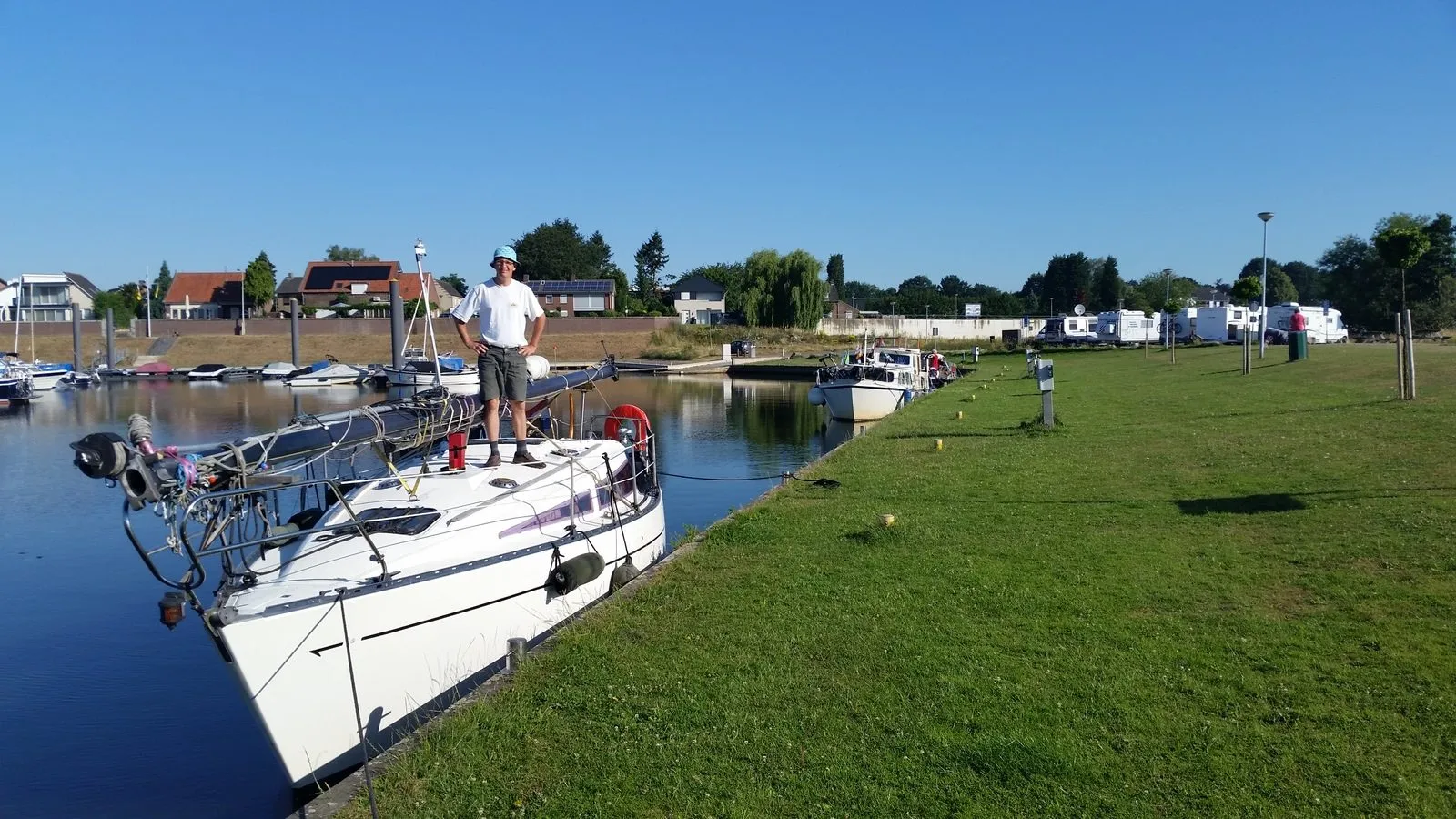
And with that, hell for leather: I dashed straight up to the marina canteen – the shower can wait another two hours, at worst I’ll sit a bit further away if anyone else turns up… – and asked the owner, the harbour master, to switch on the TV. I thought I’d drink a couple of Christmas bonbons in the meantime, but they only had beer… Oh well, let the devil have it – or rather, I’ll drink it myself.
I managed to join the Germany – South Korea match around the 30th minute, which then ended very sadly from the Germanic point of view. Good thing I had two beers in the end…
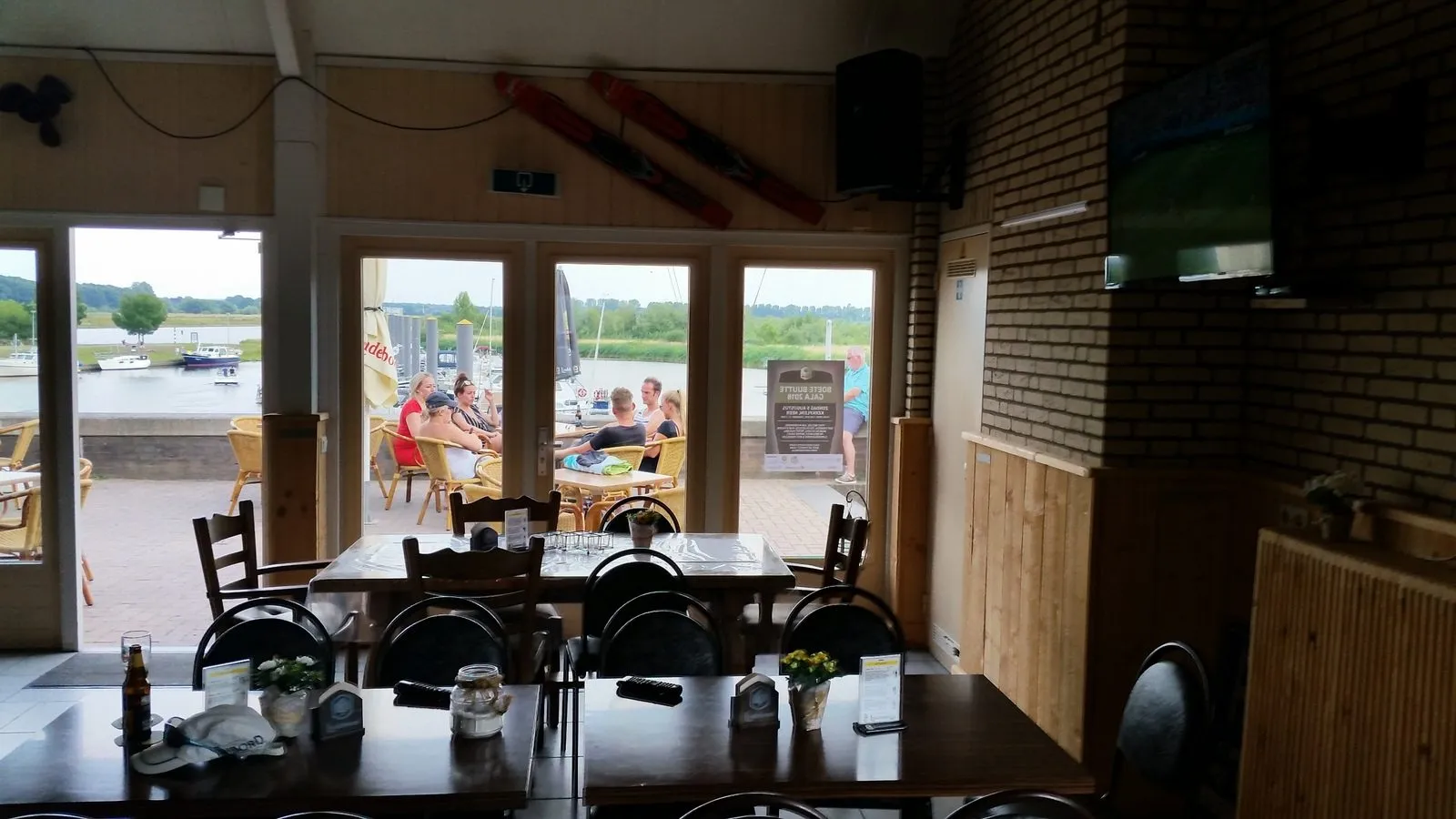
I paid the mooring fee, €8 a night including water, electricity and wifi. Hot water in the shower was extra, you had to drop 50 cents into a little machine. Bazsi got away with 50 cents, my shower cost €1, and I’m not even twice his size…
I don’t know what I cooked afterwards, but it turned out well. It had fish-soup stock cube, tarhonya (Hungarian egg barley pasta), sausage, potatoes, diced bacon and water in it… I’ll share the recipe if anyone asks.
The wifi worked on the boat in the evening too, I was diligent and uploaded two days’ worth, then brushed my teeth without any incident and went to bed after midnight.
Machine translation (AI, Claude) of Balázs’s Hungarian original. Read the original →
Thursday, 28 June 2018
Day 5, 62 km (329 km)
We set off at half past 8; the plan was to go down the Juliana Canal all the way to Maastricht today, then on to a small Belgian marina.

Somewhere we switched onto the Juliana Canal, because it’s shorter than the winding Maas and you make better progress on it (it may also be that the Maas isn’t navigable on this stretch, but that never became clear).
At the fork before Roermond we turned right onto the Julianakanaal, where we soon completed our 9th lock at Heel and rose 6.5 metres.
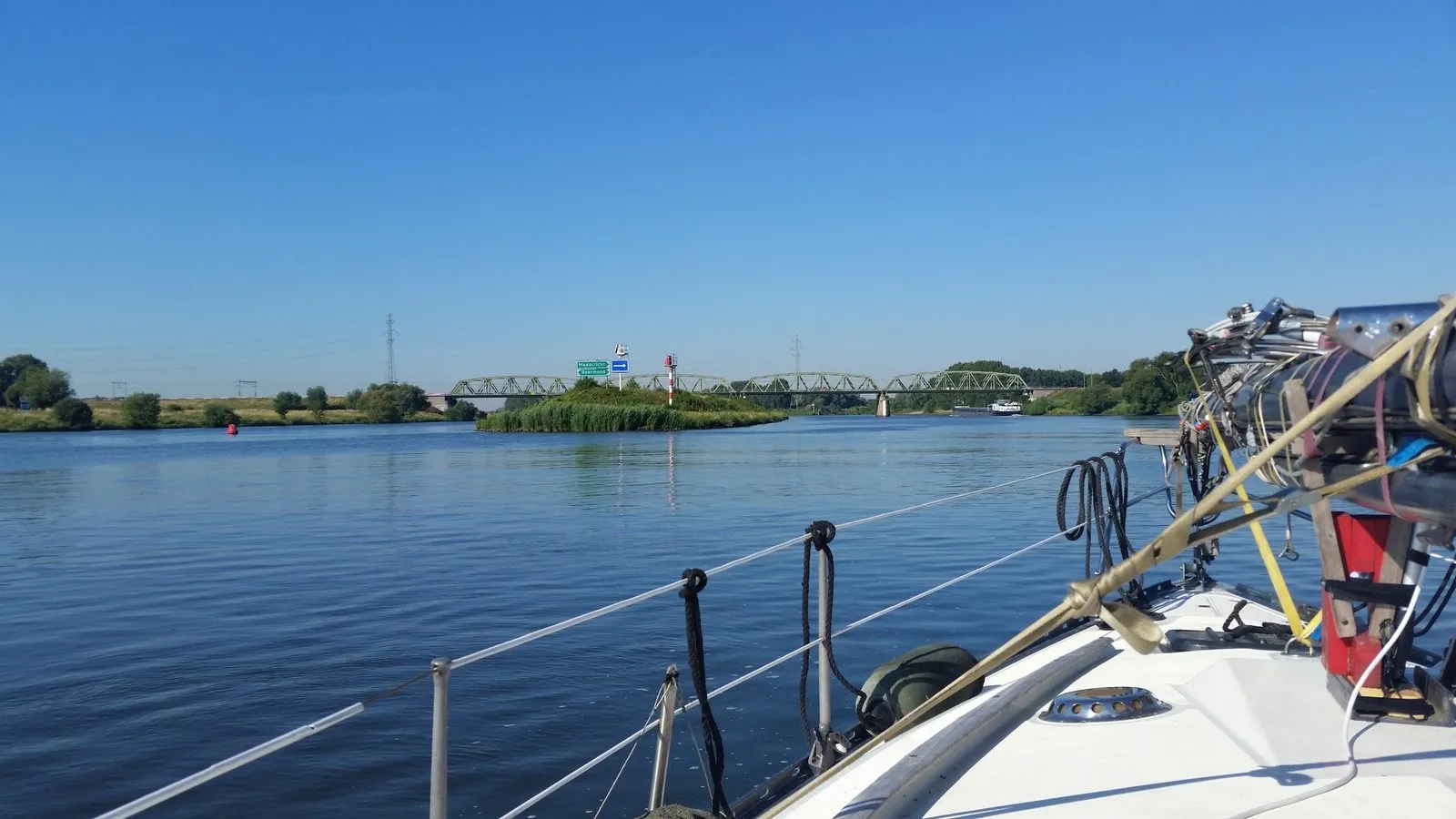
Along the way we also got a glimpse into the lives of river freight skippers.
The barges mostly carry bulk cargo – gravel, crushed stone, coal, sand – or containers, and more rarely soil from one place to another. Maybe they’re cutting off more bends of the Maas and using the dug-up earth to expand somewhere else. Sometimes they load a barge so full you’d think it’s about to sink, because its freeboard is completely under water, and even the walkway alongside the hold leading to the bow gets flooded.
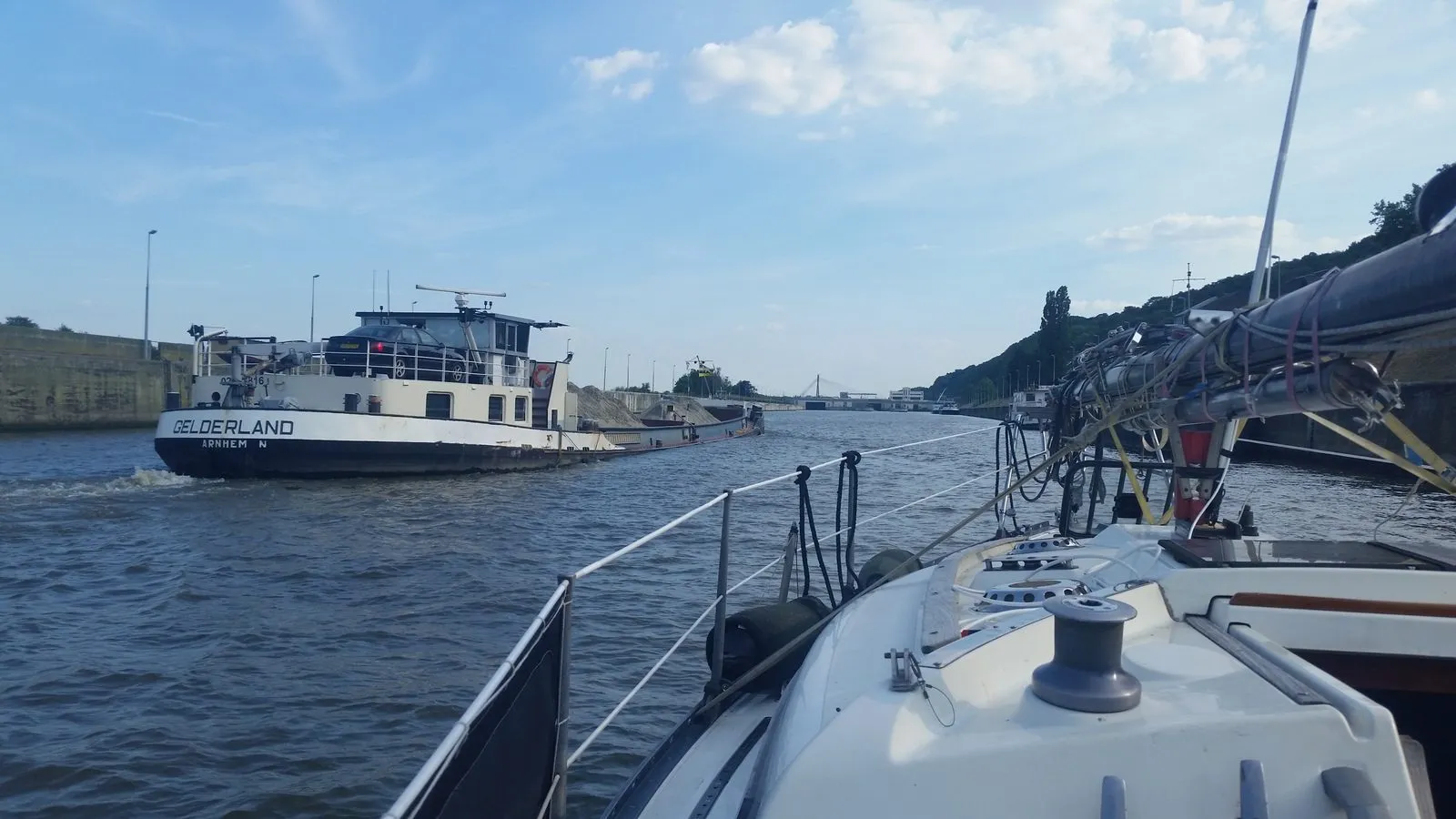
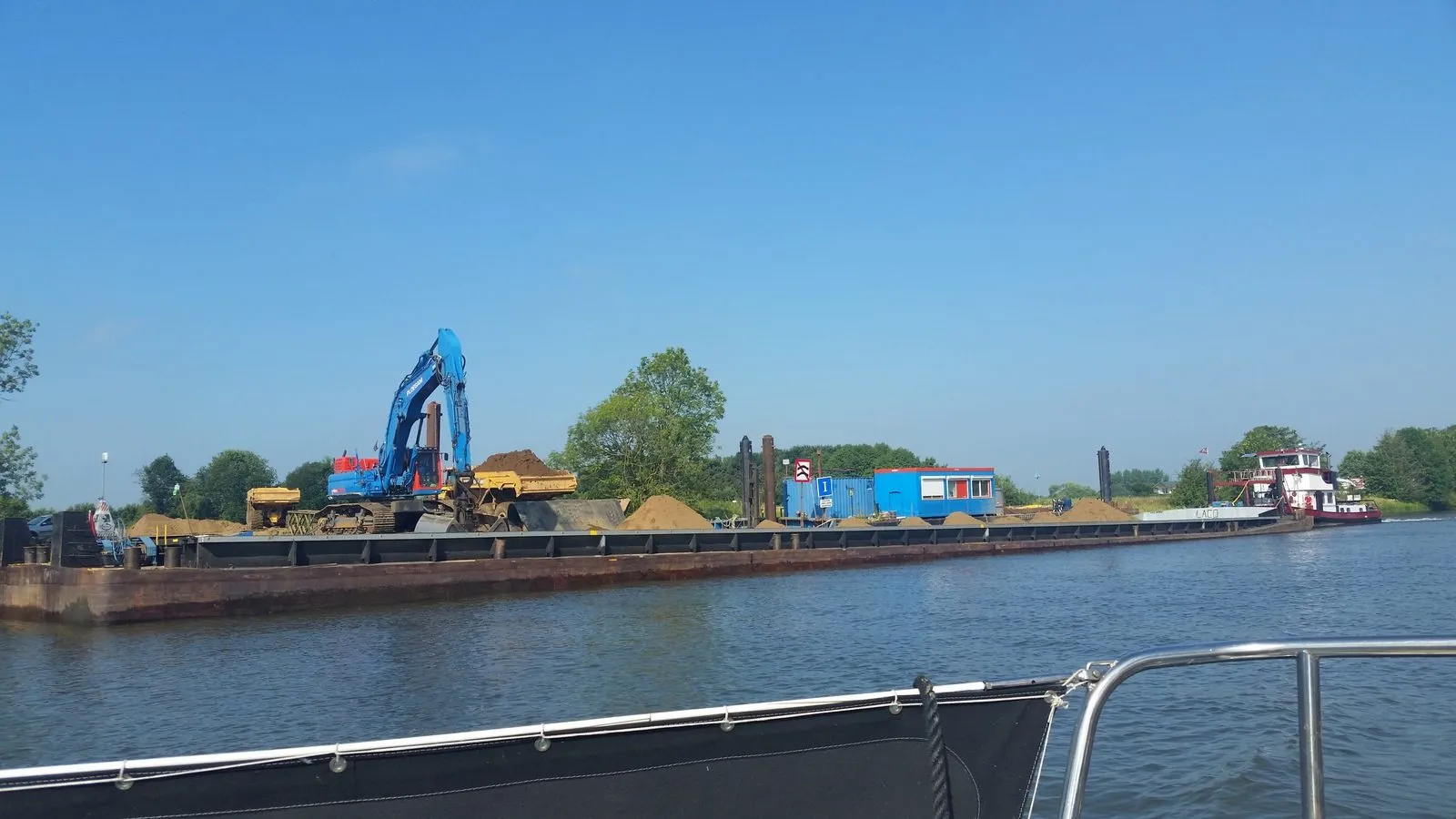
Quite a few boats are run by families – wife, husband, maybe together with the grown-up kids. On most barges their car is parked on board too, and they lift it ashore onto the quay with the ship’s own crane (like a tow truck) so they can drive home to their families at the weekend. They don’t wave (most of them we can’t even see through the tinted windows of the wheelhouse); they either sprawl in the helmsman’s armchair or fiddle with their phones and tablets.

While we were waiting for lock No. 10 at Maasbracht, I asked a blond boy, who was painting the motor of a big winch on the neighbouring barge, whether the ship belonged to his parents.
“No, I work here!”
“Summer job?”
“No”
“How old are you?”
“16,” he answered proudly
“You want to be a captain too”
“Yes!”
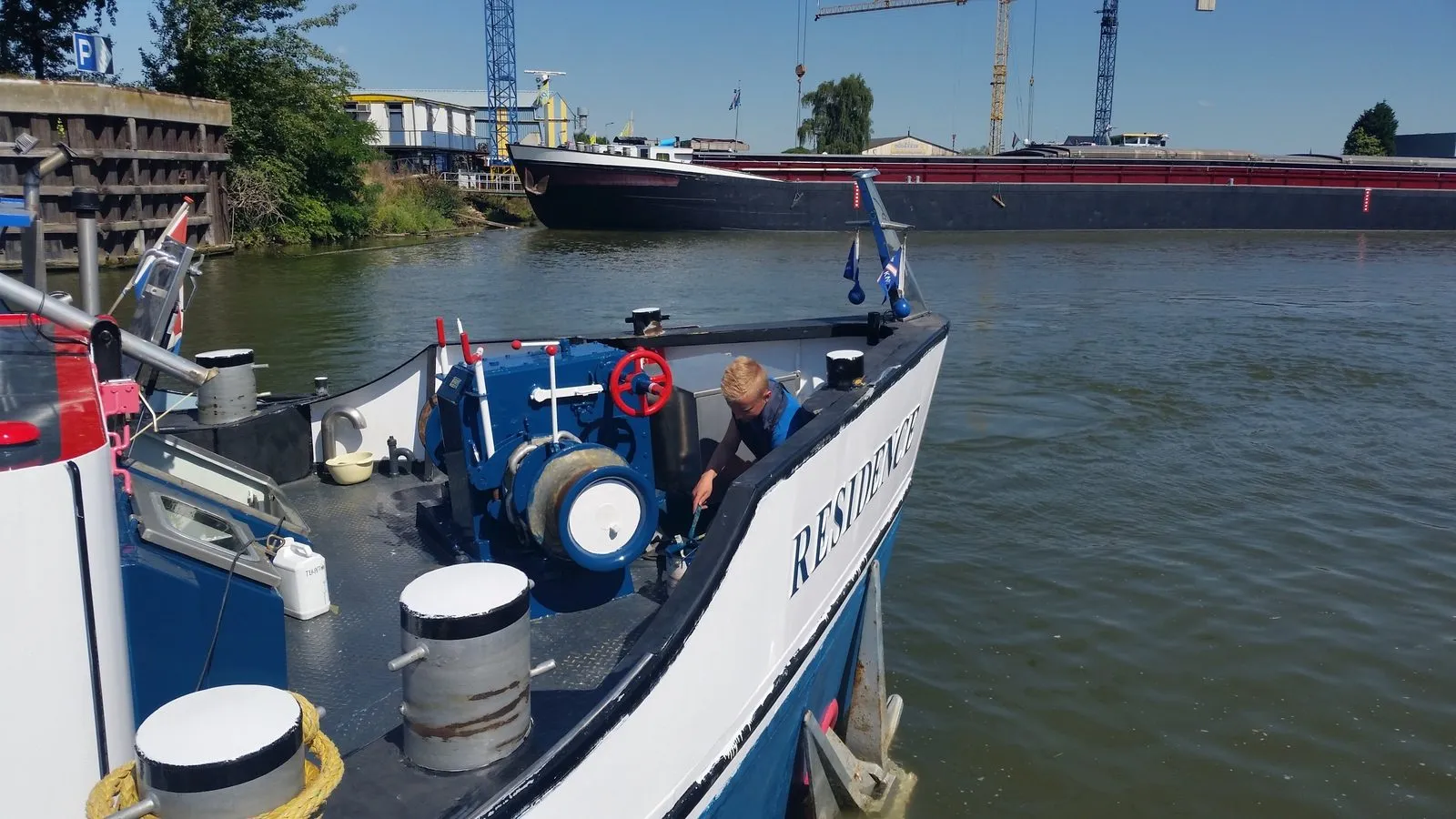
Shortly after that a heavenly voice – from the loudspeaker – from the invisible dispatcher told us we could enter the middle lock chamber first. This is where we first met floating bollards on the chamber wall that rise with the water level, which is a big relief for locking boaters. You don’t have to re-tie the bow and stern lines a metre or a metre and a half higher or lower each time, which is a source of risk every single time. You untie the boat from the lower bollard, which means you let her go, and if you don’t manage to throw the line over the upper bollard first time, you get more nervous, because the side of the boat is drifting away from the chamber wall, which makes it even more likely you’ll miss the second time too. So you have a choice: either you throw a third time (but if you miss, the swirling water in the lock may turn the boat crosswise), or you try to lean out and just about reach the lock wall by hand and pull the boat back, which – if circumstances are stronger than you – threatens to end with you clinging with both hands to the weedy, slimy ladder on the lock wall while your legs, instead of pulling the boat back, push it away, and in the end, when you’ve gone from a press-up position to full stretch and are lying horizontally taut over the water, there’s no way around it: a moment later you have to let go of the problem, and your next task will be figuring out how to climb out of the water. I’ve seen it happen, on a cold October evening in Fonyód harbour. It’s hilarious, as long as it’s not you. Our friend jumped out of the 16-degree Lake Balaton in two seconds flat. In wet clothes and a coat, with no help, he hauled himself up onto the deck, 1 metre above the water. Later, in calm conditions and in swimming costumes, we tried to copy it – and he tried to repeat it – and it didn’t work, except after a long struggle. Well, that’s what you’d rather avoid.
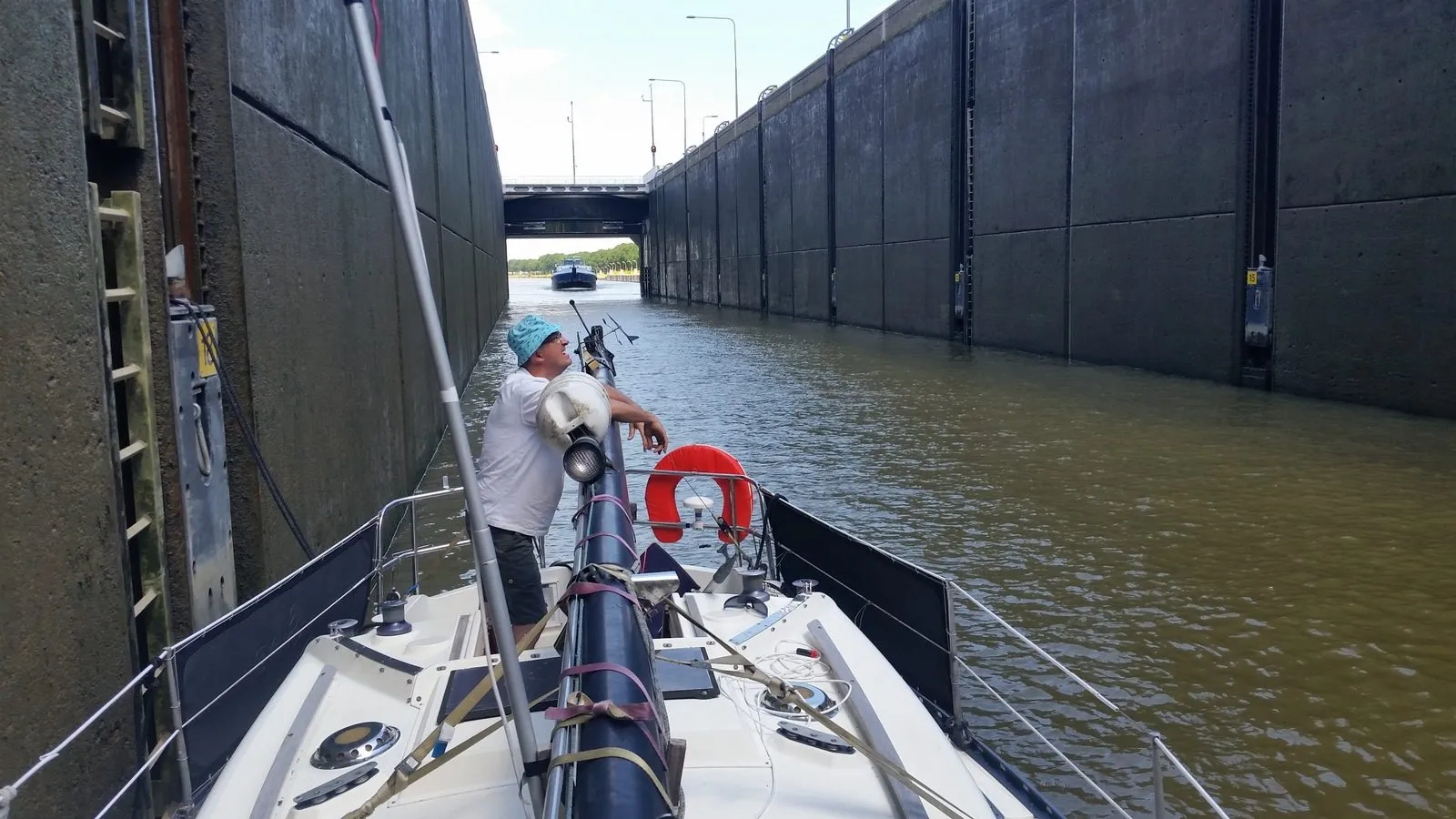
So here there was no such danger, because in the lock we tied onto the bollard rising together with our boat, and that was that. It took about 20 minutes to rise 12 metres, the biggest rise in water level on our trip so far.

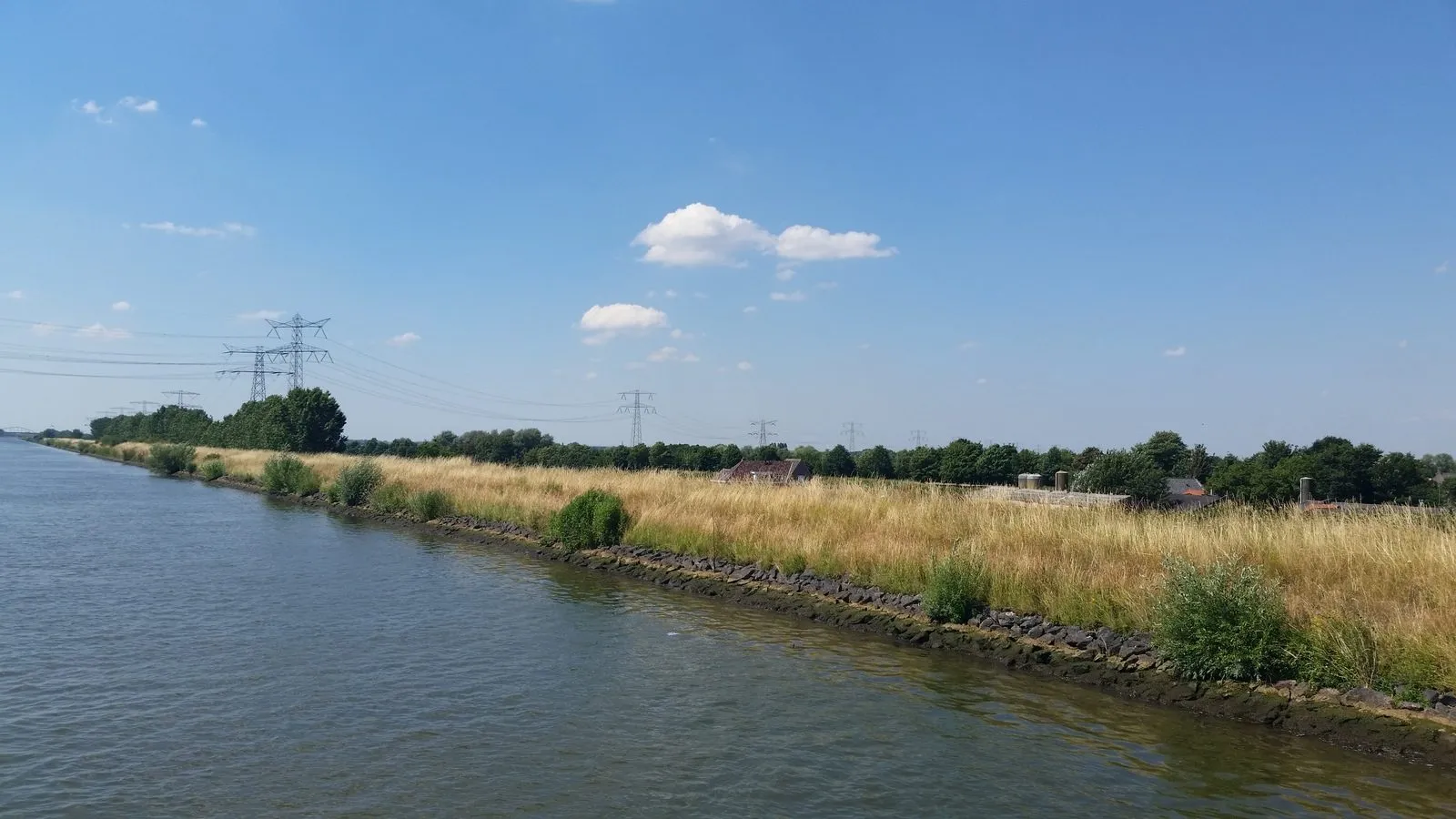
After that we came out onto a dead-straight stretch of canal, where we were surprised to find that we were sailing level with the treetops and the rooftops – in other words, here the canal had been built on top of a huge 10-metre embankment.
At 13.00 we reached our 11th lock, at Born, which we were done with, lock, stock and barrel, in 30 minutes; this one was 12 metres high too. Here there were floating bollards as well – it seems above a certain height (5–6 metres) they’re mandatory, for safety.
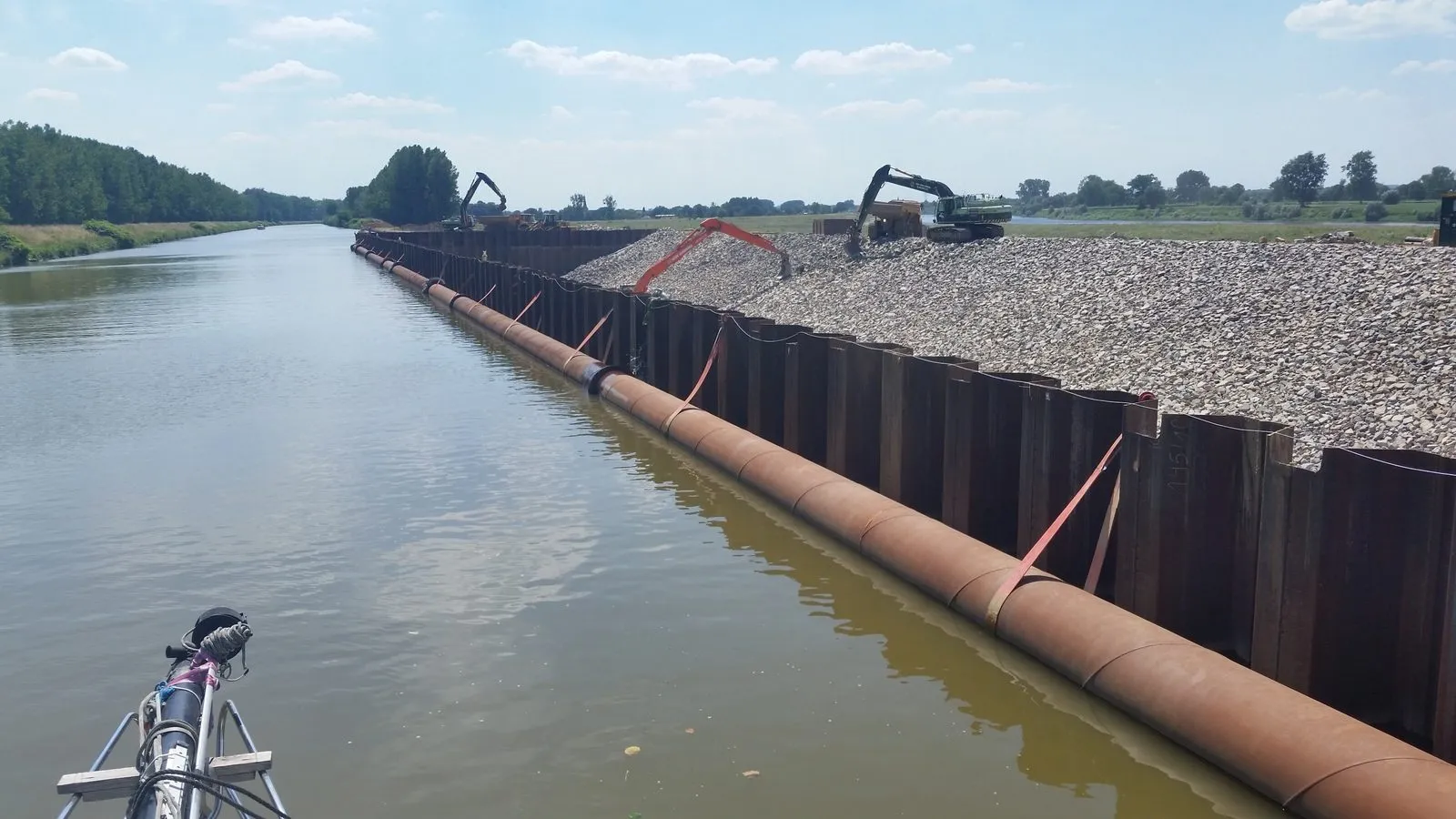
On the next stretch, before a narrowing of the road – I mean of the channel – where they were building the canal wall, the canal authority’s yellow patrol boat pulled us aside until the big oncoming barge had passed. Meeting of tows prohibited, as they used to say in the noon water-level report on Kossuth Radio (Hungarian public radio). Then we had to wait for the next one too; they lumbered past us nice and slowly, obviously so as not to kick up big waves. Before the third barge they waved us on, and this time it waited for us nicely on the other side.
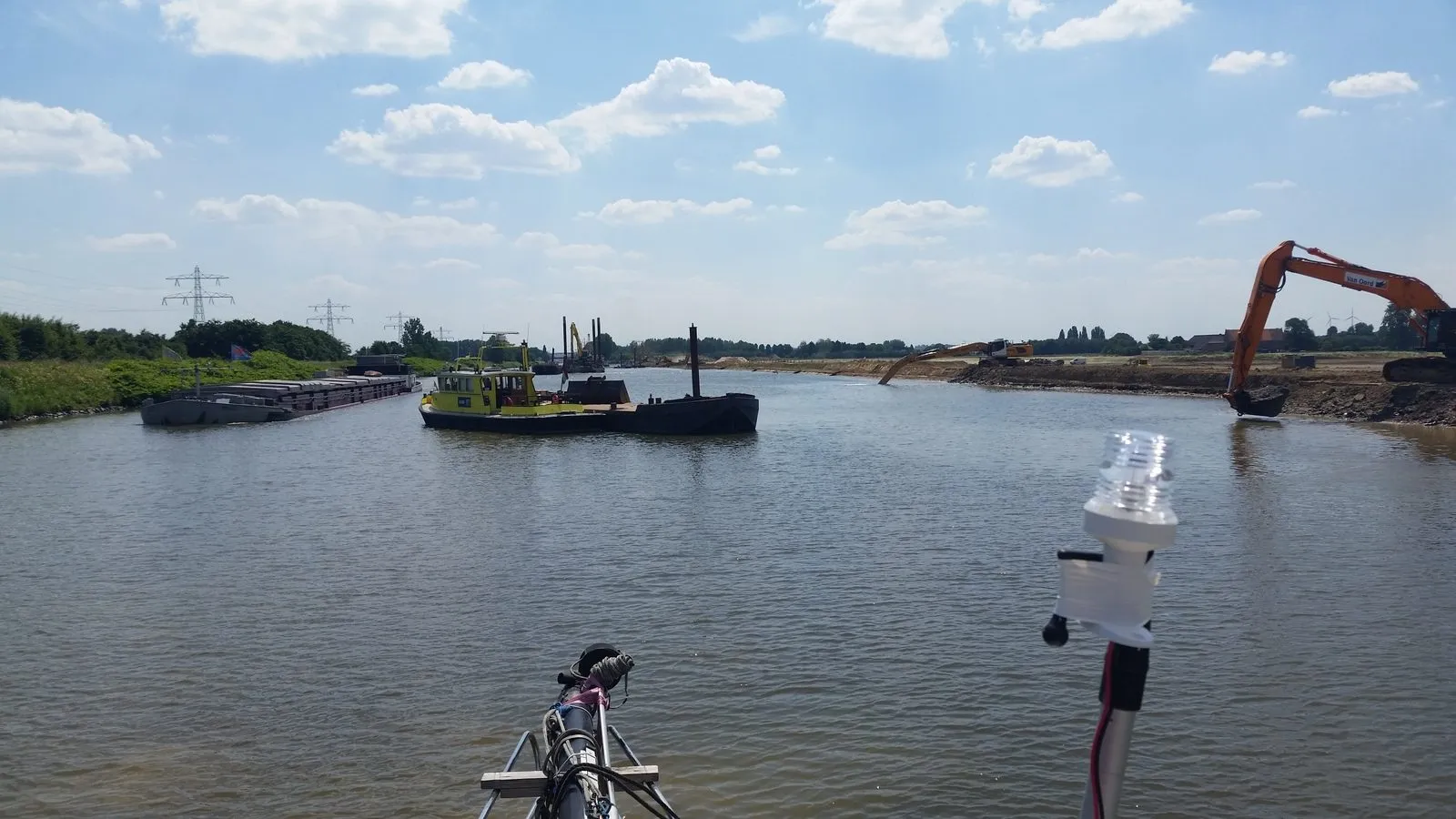
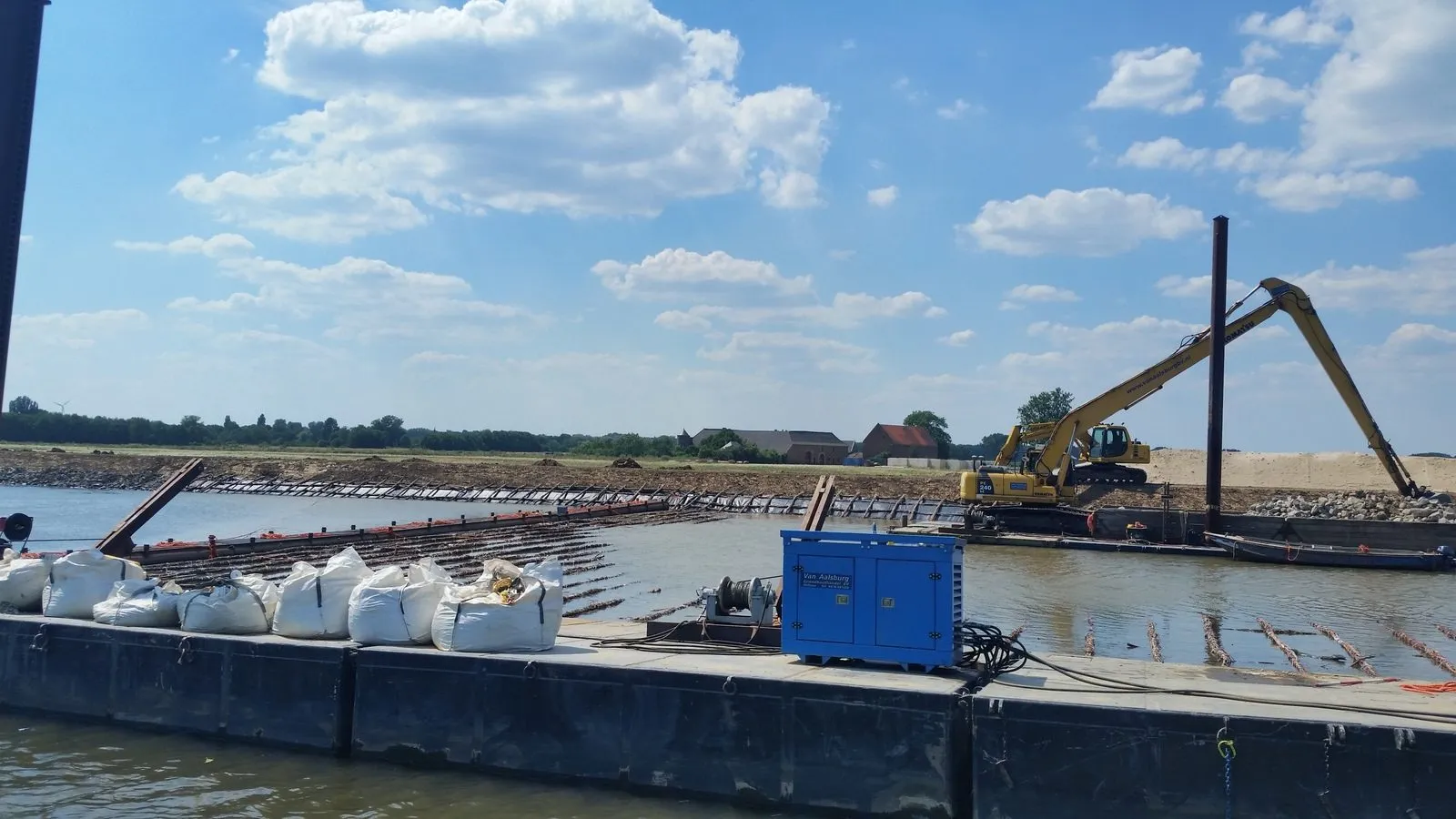
They were widening the canal so the big barges can pass each other safely. We had time to observe the technique. Under a large frame woven from willow (approx. 30 x 50 m) they fastened black waterproof membrane, then carefully loaded it with crushed stone until it sank to the bottom. Then they weighed it down with bigger stones, and done.
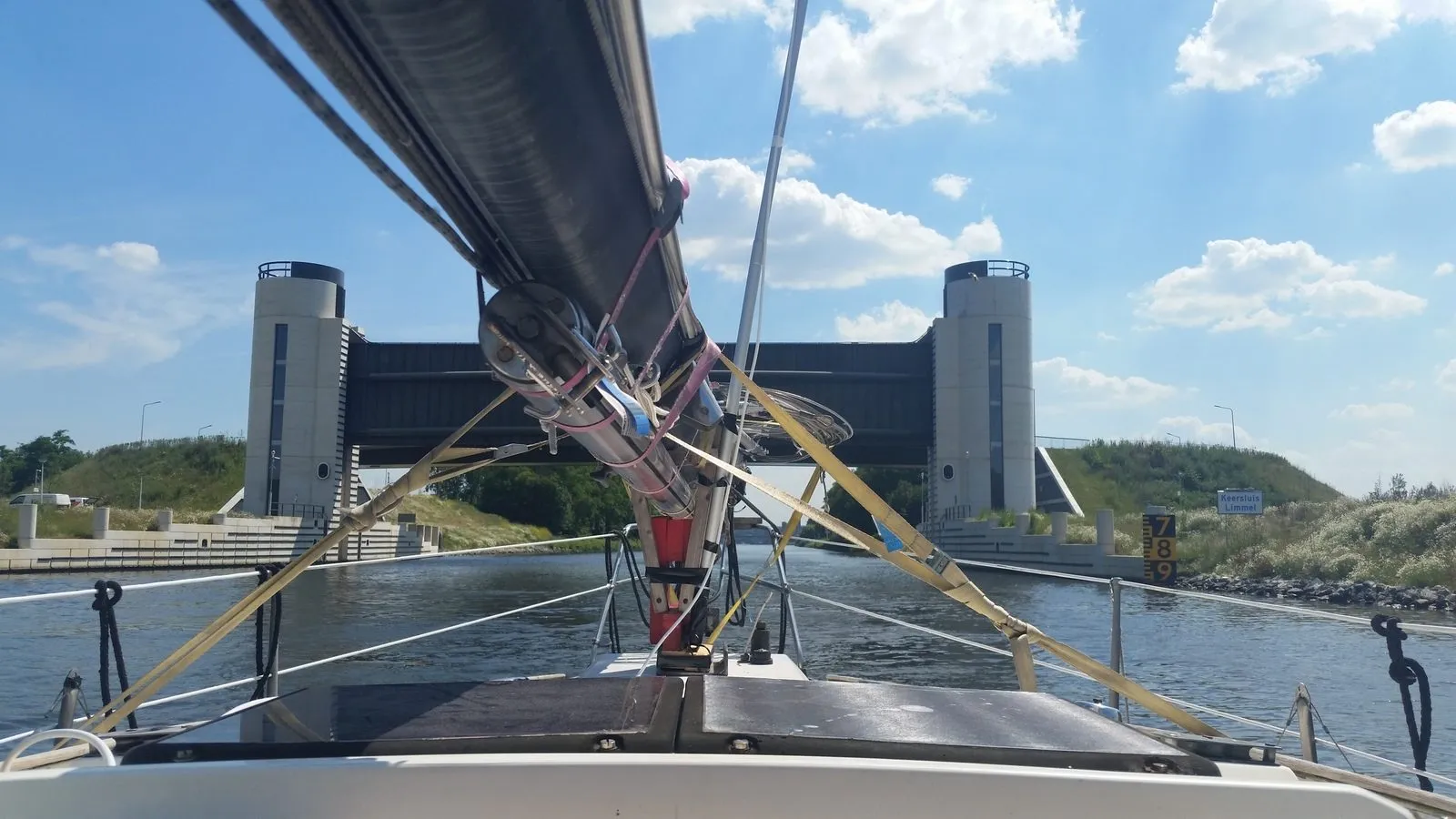
Passing under a huge canal flood gate, we got back onto the Maas, where we soon arrived in Maastricht.
In the heart of the town, in the middle of the river, we moored on a jetty connecting two bridges, in the line of other motor yachts.
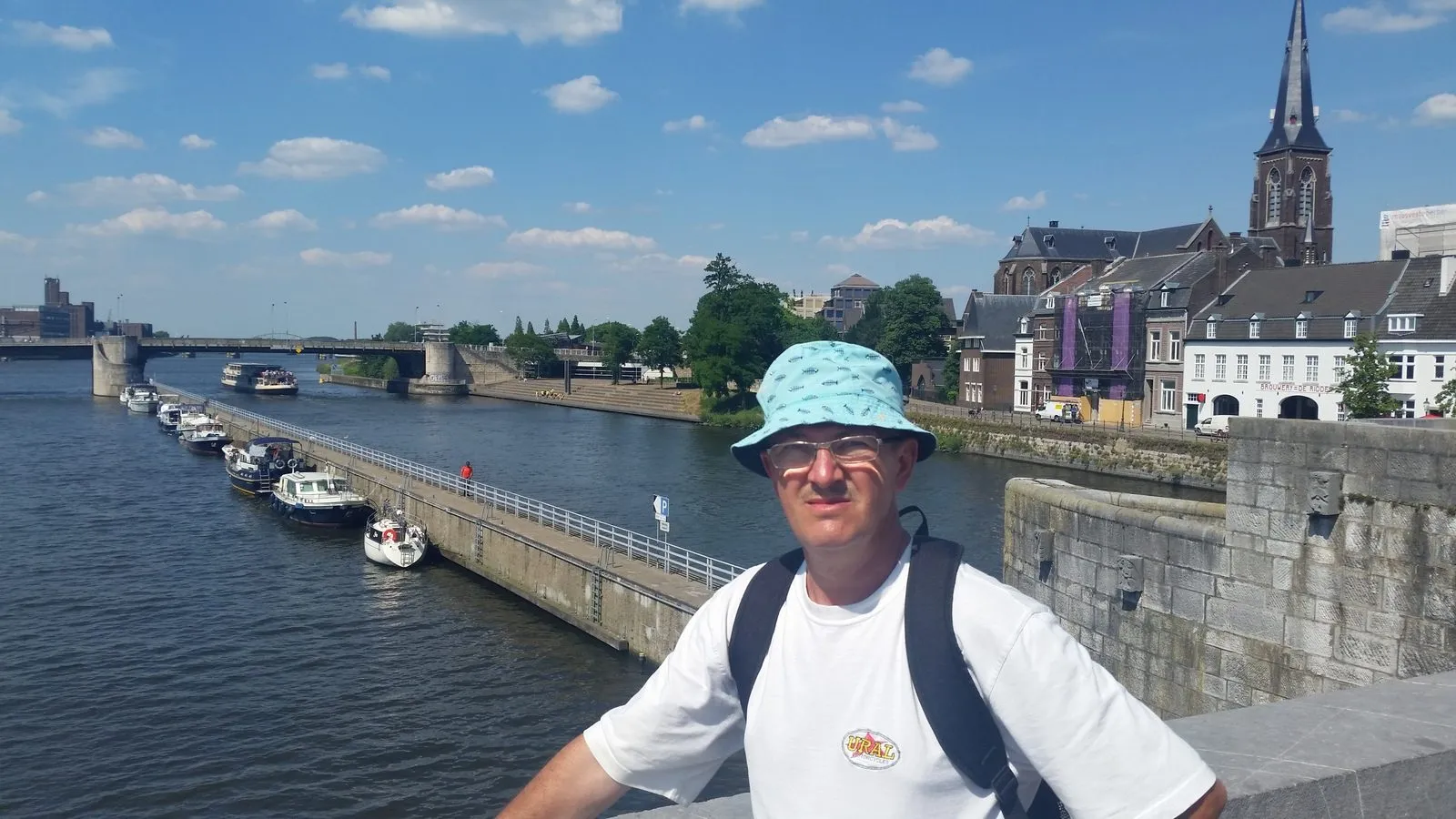
With that we had practically met the Maastricht criteria we’d set ourselves at the start.
After a bit of town-and-match watching and some shopping, we set off again; we wanted to reach the small marina at Kanne in Belgium that we’d picked out before dark.
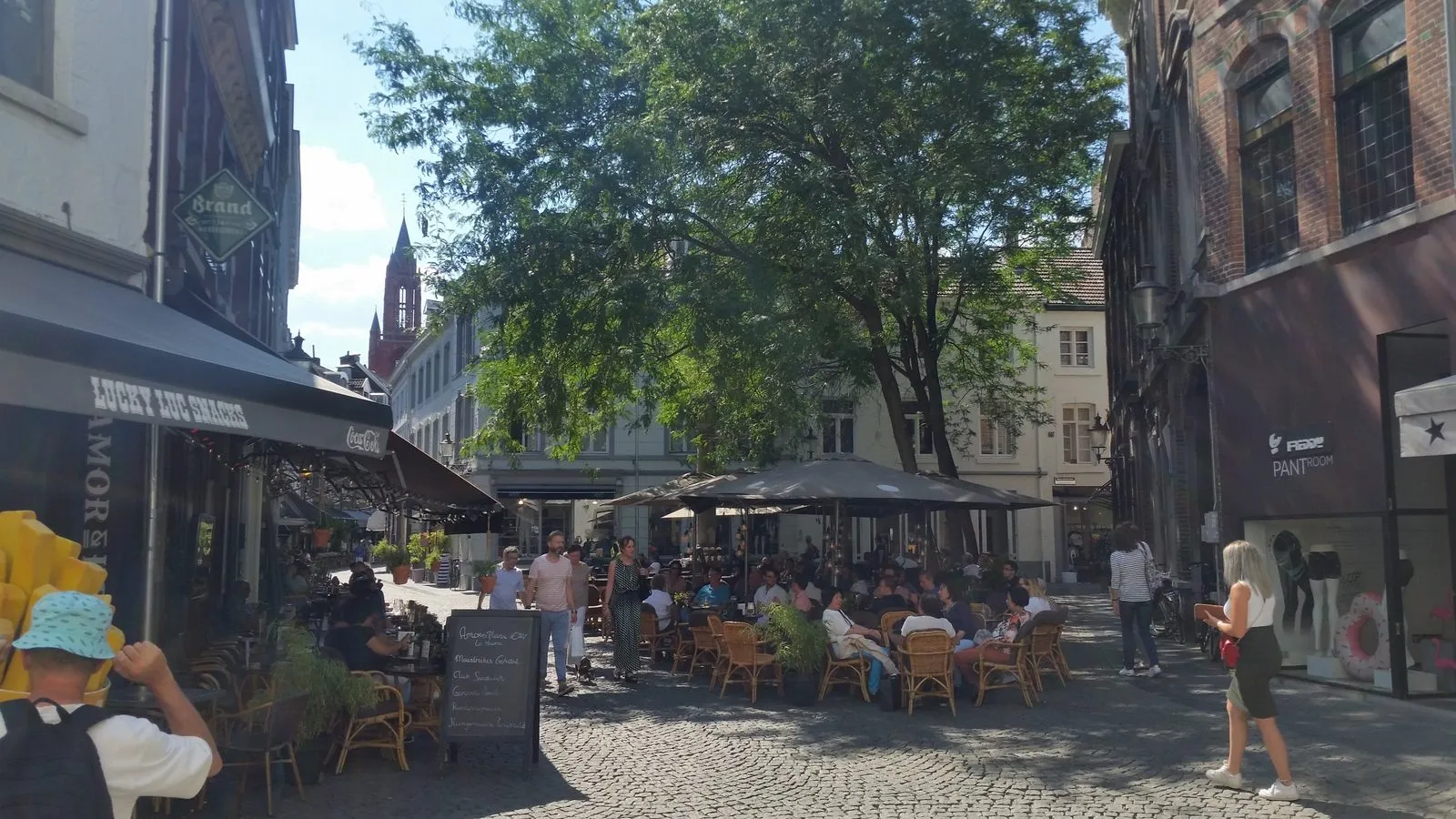
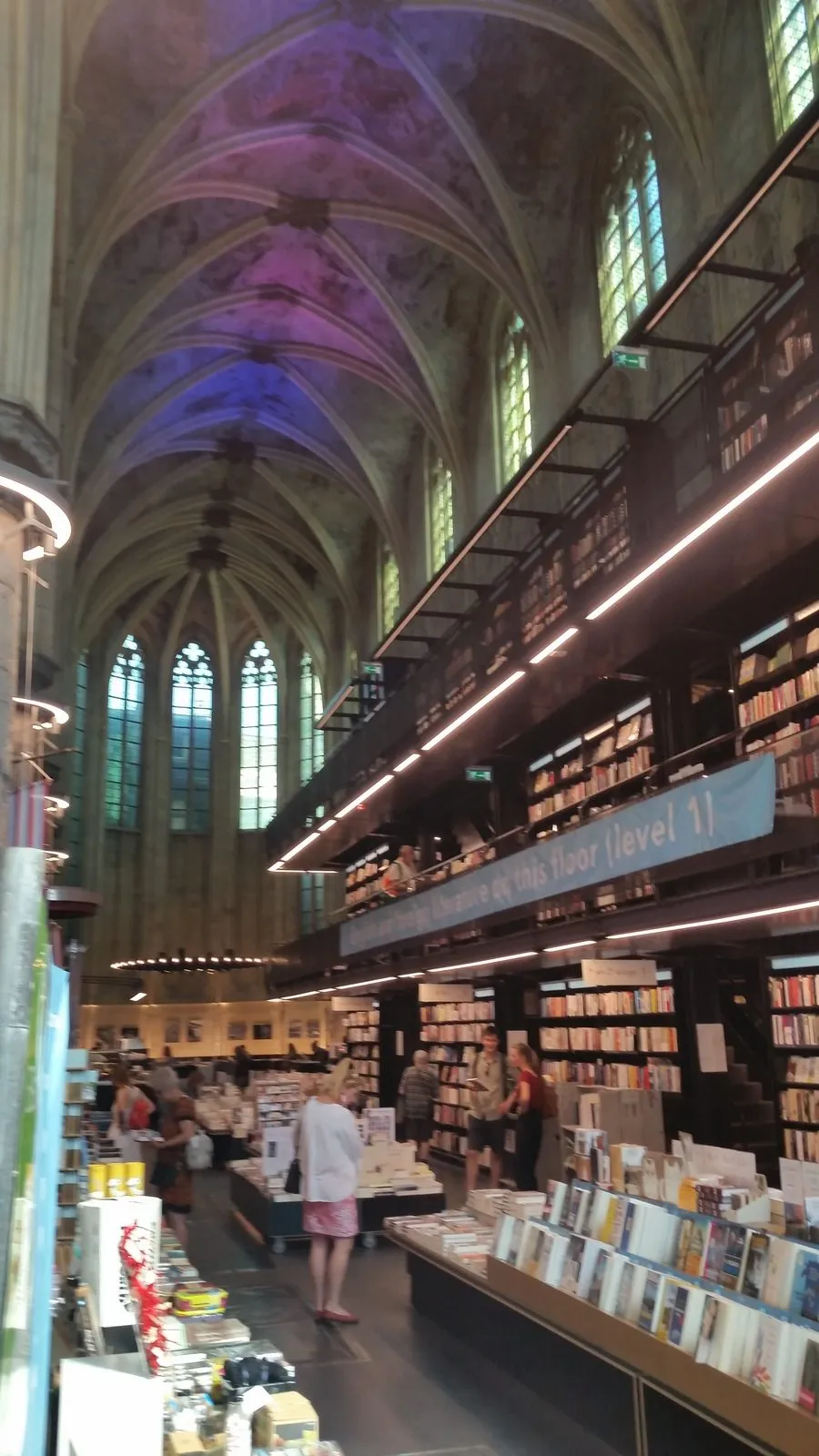
And we’re not in North Korea or the GDR, but in one of the emblematic cities of the European Union, Maastricht.
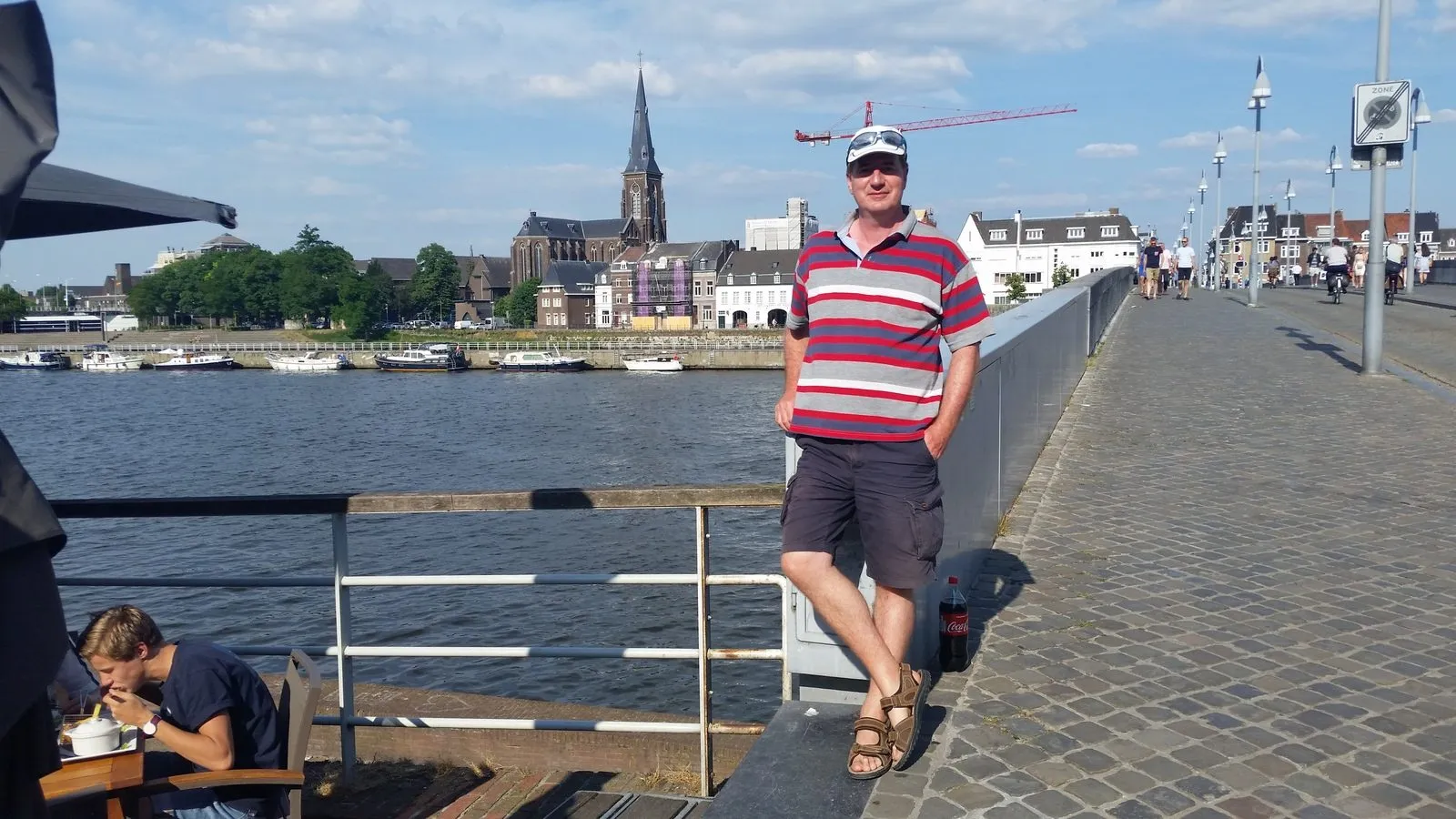
At the border, big lock No. 13 stood in our way. Literally. This was a Belgian lock already: we had no phone number for it, and you couldn’t talk mouth-to-microphone from the jetty either. We tried to sail into the chamber on the green signal, but the operators were sharp-eyed and kept switching to red in front of us. After three attempts we moored behind a barge on the highest bit of quay wall, I climbed up the ladder, trudged over to the barge and asked its skipper to arrange with the lock keepers when and into which chamber we could go, because we have no VHF radio.
He was a decent guy and did it, and said that when they went in, one more boat would follow, and after that we could go in too. Danke Sör! (danke sehr, with a Hungarian beer – sör – in it)
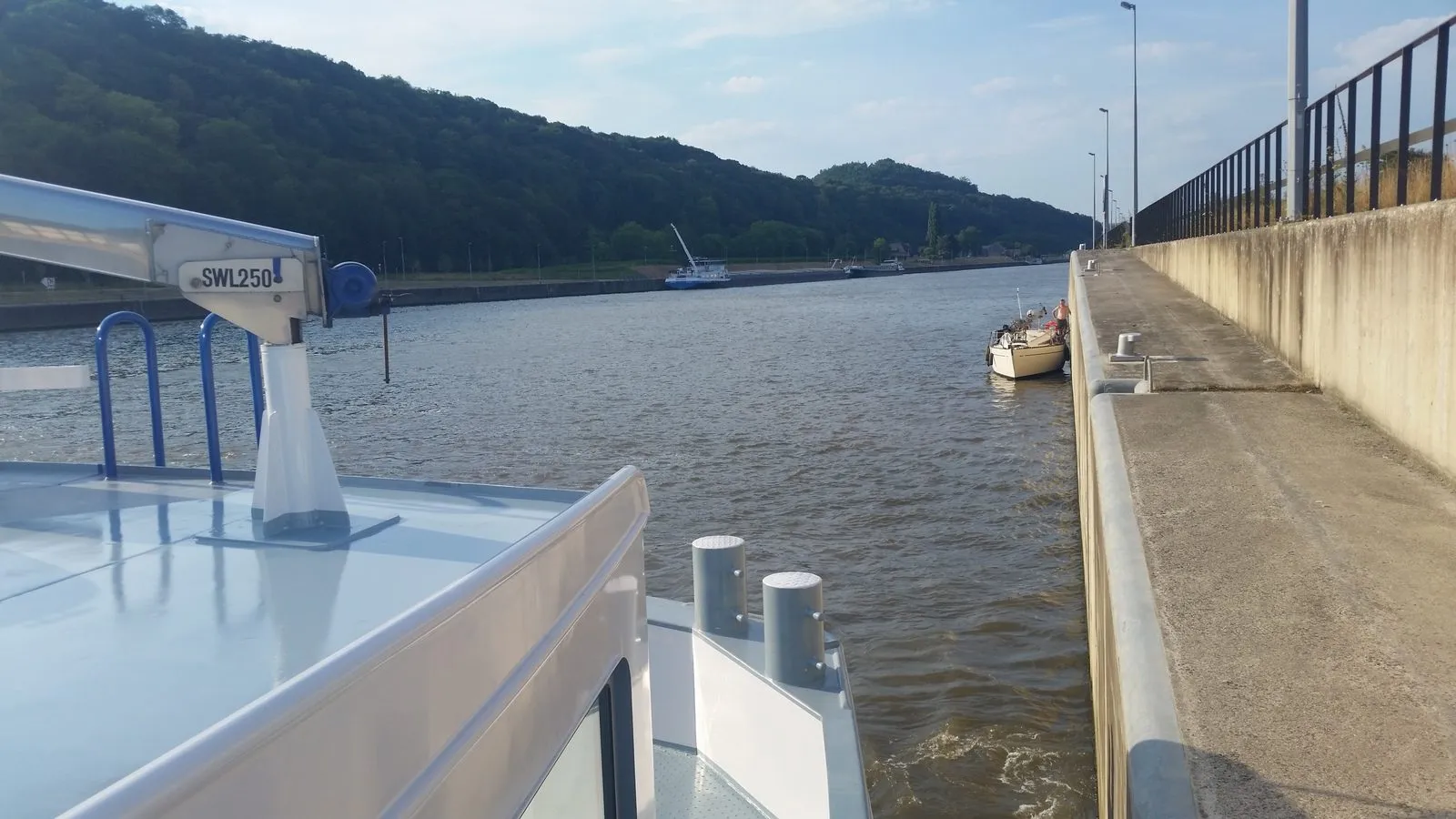
Not long after, they went into chamber 4, the next boat came too, and we set off to go in as well, but along came a big container ship that didn’t know about our deal and just kept coming and coming, very determined. Or we didn’t know about the change of programme. On the principle that the wiser one gives way, we let the big ox go first, and guess what? We got a red after it… These Belgians aren’t exactly waiting for us with open arms.
However, with eagle eyes we noticed that chamber 3 was open, and we barged in behind a freighter so fast the dispatcher had no chance to switch the light to red in front of us. We rose 16 metres, then right after the lock, taking a sharp right, we turned onto the Albertkanaal, which was built by cutting through a hill almost 100 years ago.
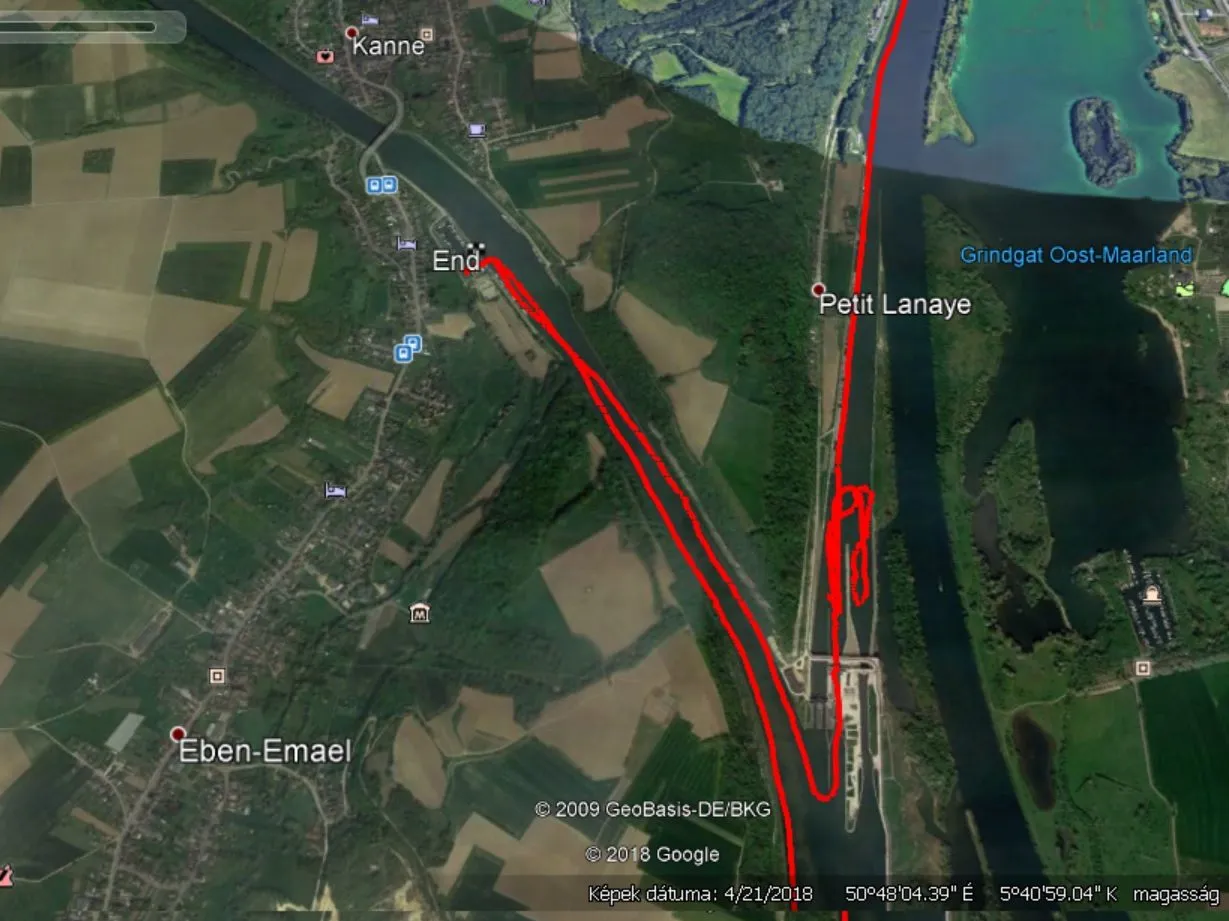
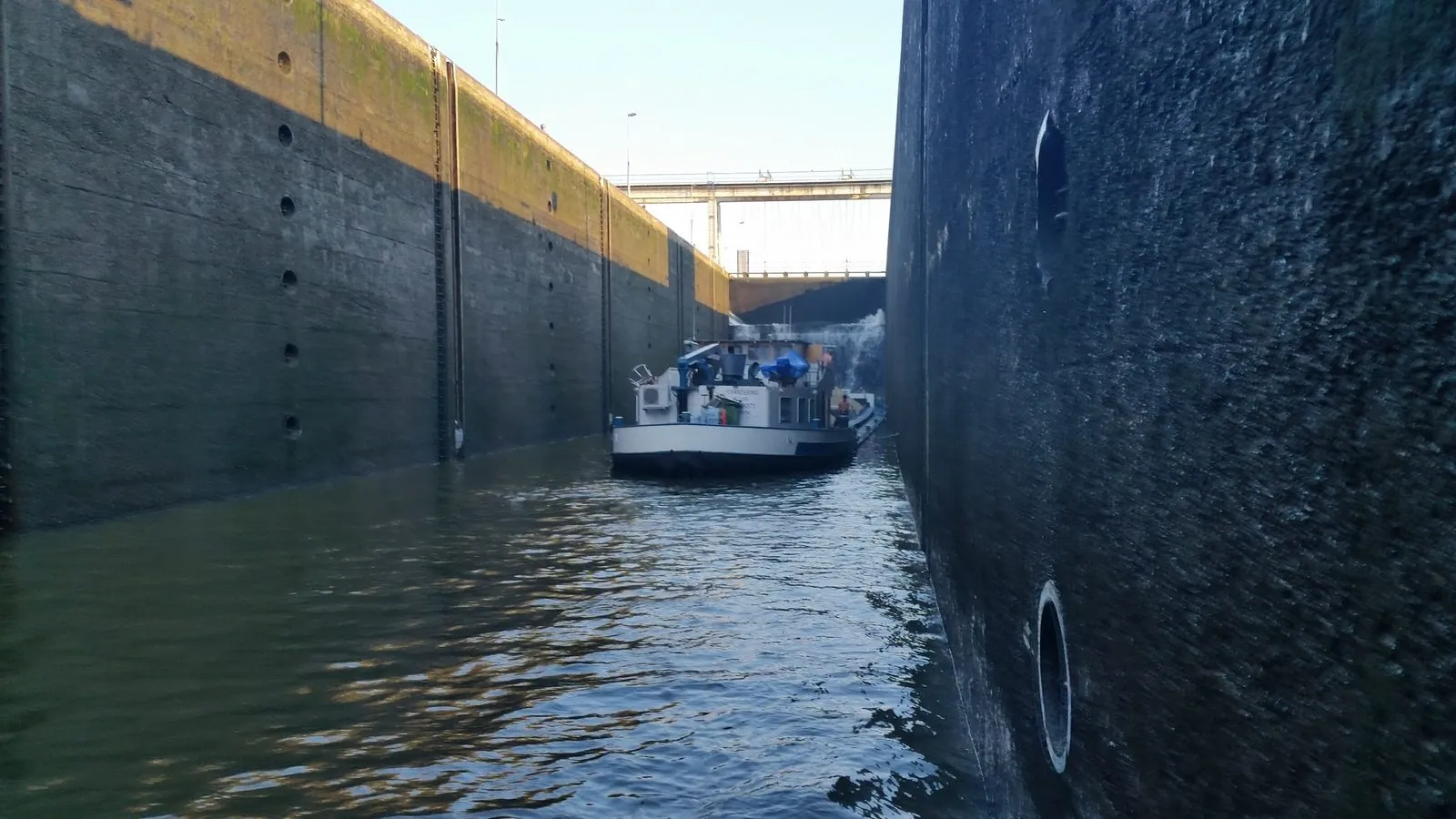
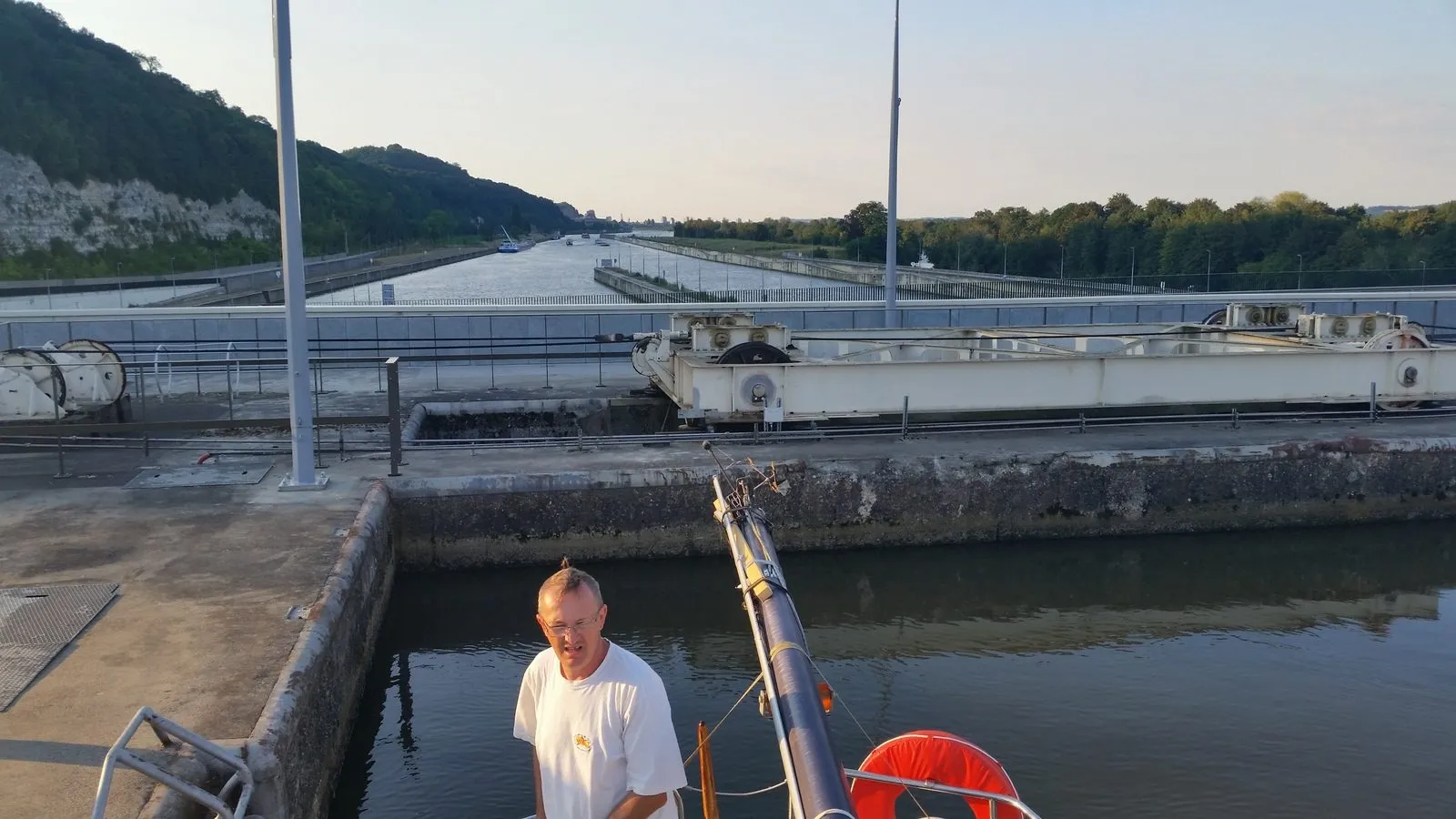
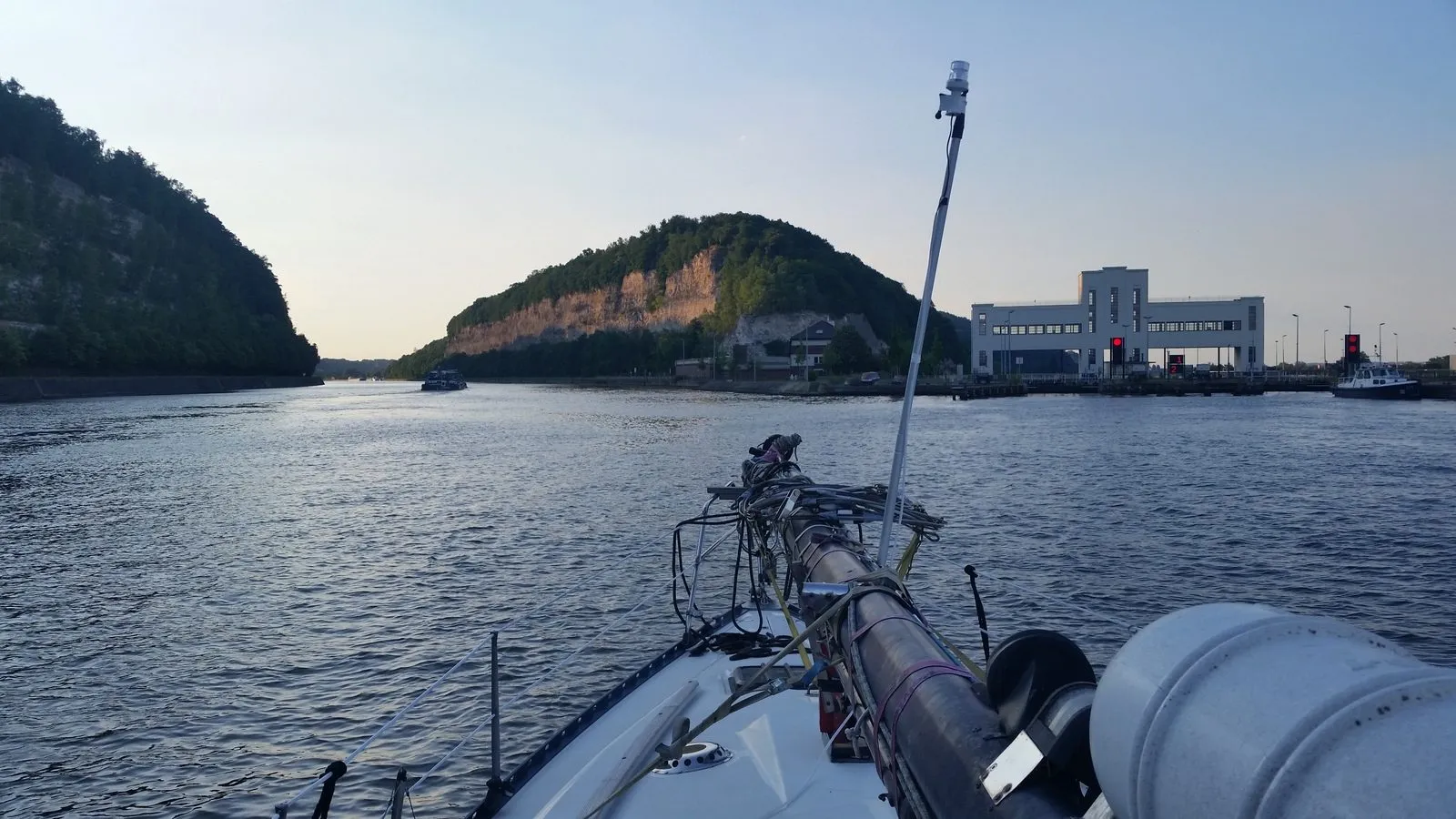
On the right bank, cyclists overtook us one after another, while on the left bank the embrasures of the concrete bunkers of Fort Eben-Emael watched us in silence. Tomorrow we’ll take them – come hell or high water – we vowed.
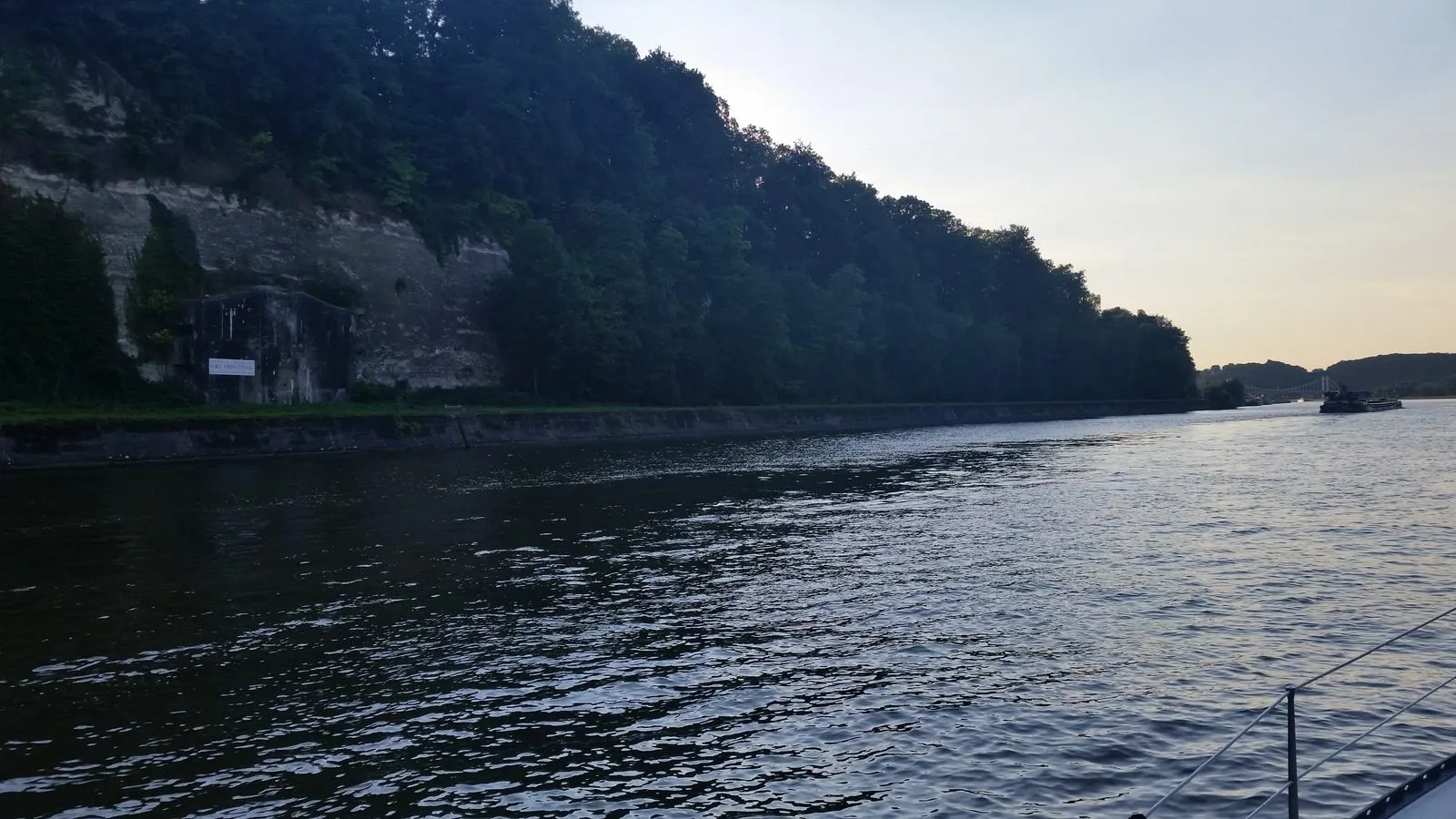
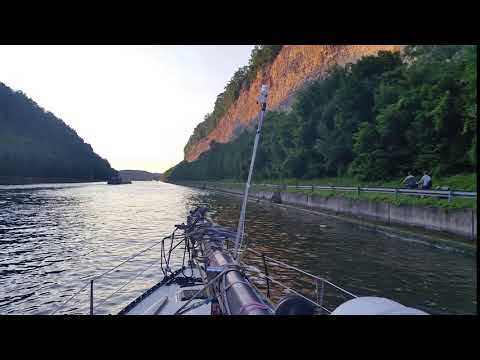
Right after the hill was the Kanne marina marked on the chart, but from a distance its entrance looked so narrow we thought we wouldn’t fit. Of course, as we got there, it widened just enough for us to get in, and we moored opposite the entrance shortly before sunset.

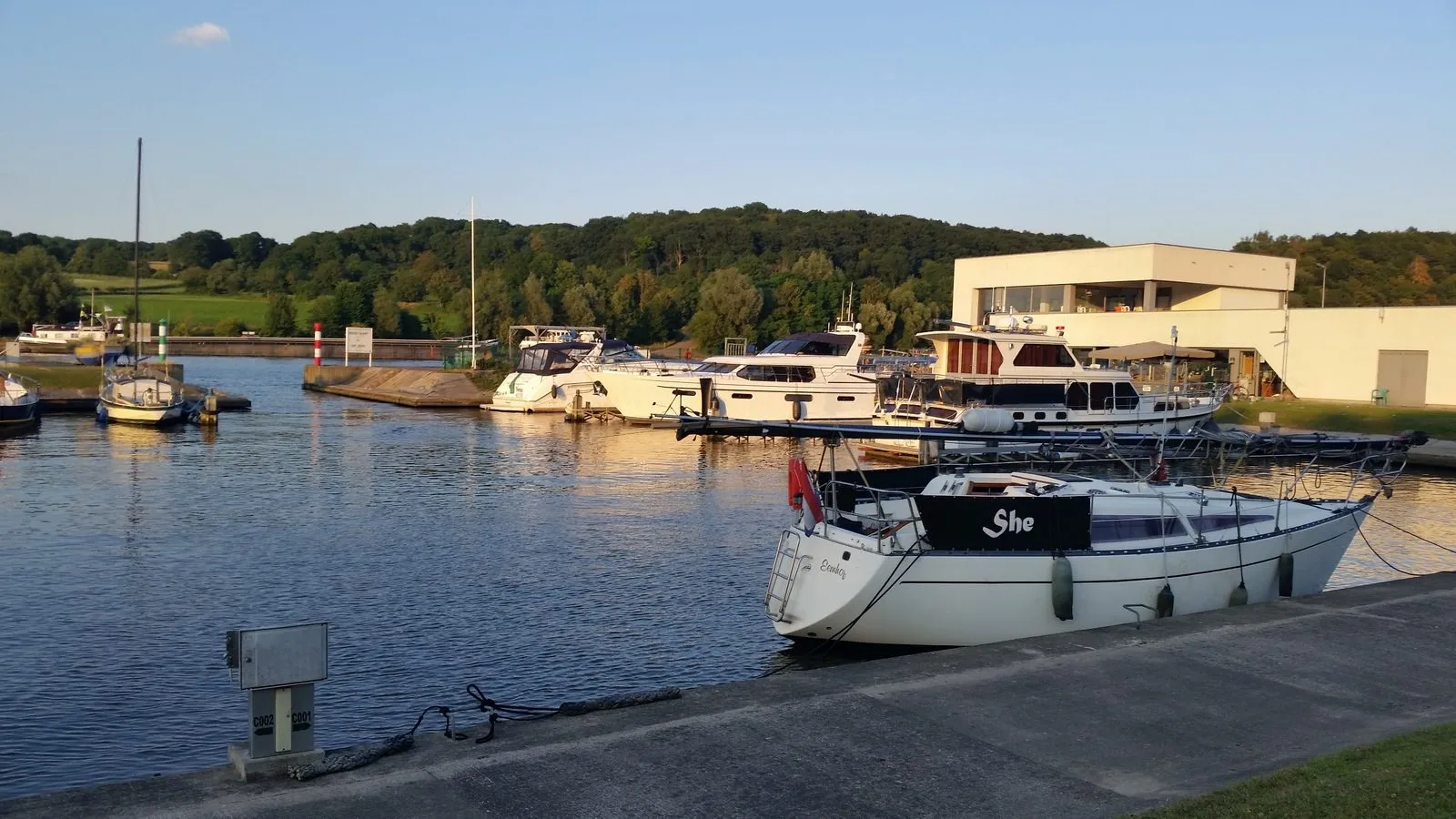
We checked in with the harbour master – we paid €16 for one night – and he went through the house rules. Wi-fi code, code for the shower block door, the men’s loo is blocked, use the ladies’ (if it’s empty), and leave the shower tidy behind you. Usually that’s the end of the briefing, but not here!
To show how seriously he meant the last point, he took Bazsi into the (two-cubicle) shower room and, one by one, presented the tools laid out there: a long-handled power squeegee for mopping, a long-handled window squeegee for wiping down the tiled shower walls, and a cross between the two, for I don’t remember what… This guy really means it… He very nearly hopped on the mop and flew off like a witch on a broomstick.
All I could think was that either
These Westerners can still come up with something new…
Oh well, never mind. While I watched the match, Bazsi showered and cleaned, then it was my turn. I don’t know how he managed to wipe down the tiled walls of an 80 x 80 cm shower cubicle with a squeegee on a metre-and-a-half handle, because however much I fiddled about, I kept getting stuck somewhere. In the end – as if leaving the presence of the Queen of England – I backed out of the shower mopping up my footprints, then tossed the power squeegee in with the others, as if it had just fallen over…
Before falling asleep, Bazsi and I agreed that he’d been in the right cubicle and me in the left, so if our friend complains in the morning, we can identify the culprit…
Machine translation (AI, Claude) of Balázs’s Hungarian original. Read the original →
Friday, 29 June 2018
Day 6, 21 km (350 km)
In the morning, while I was still asleep, Bazsi watched a few documentaries on YouTube about the capture of Belgium’s Fort Eben-Emael. Once I’d crawled out of bed (phew, this bed gets harder and harder…) we had a quick breakfast and then, under cover of the morning, launched the attack. The fortress system has only one entrance (and it always did), so that’s where we pushed forward. We neutralised the first gun and machine-gun nest in our path by peeing all round it – they didn’t even have time to squeak.
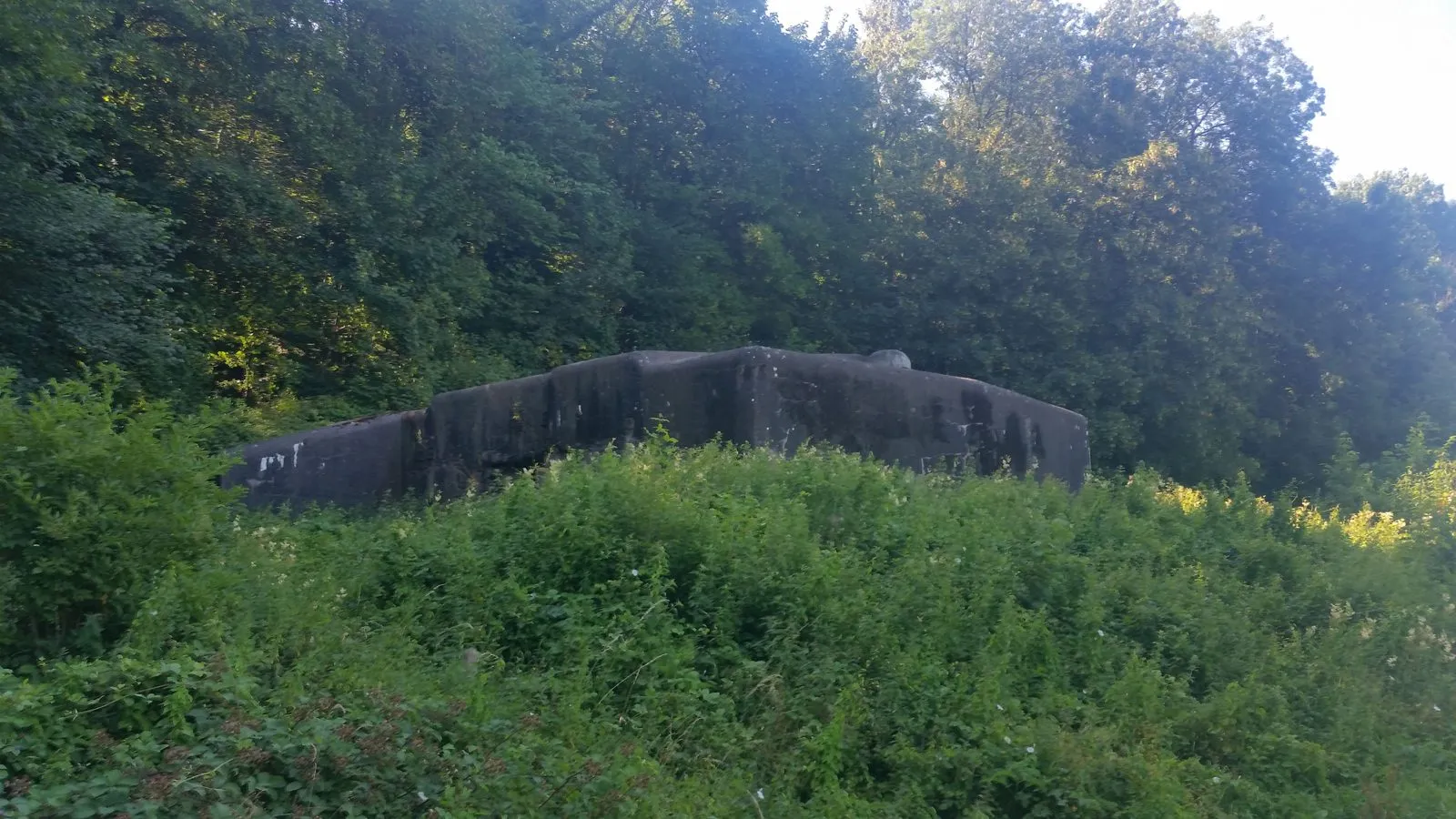
What can I say, it wasn’t easy creeping up silently through the nettles, but anyone who’s read all the Red Indian adventure novels knows how to clench a knife between your teeth without cutting the corners of your mouth.
In front of the main entrance, taking cover behind a tourist information board, we weighed up our next moves.
In 1940, 80 German paratroopers were trained for the attack – in the utmost secrecy – in a secret, closed camp. For six months no one was allowed to go home. The two soldiers who sneaked home without permission for a few days’ leave were shot in the head as soon as they were caught. And the Germans succeeded: to the utter shock of the Belgian high command, within a few hours they took the fortress system defended by 1,300 Belgian soldiers, mostly reservists. We didn’t escape a surprise either, because the information board quickly revealed that the fortress can only be visited on Sundays and is otherwise closed…
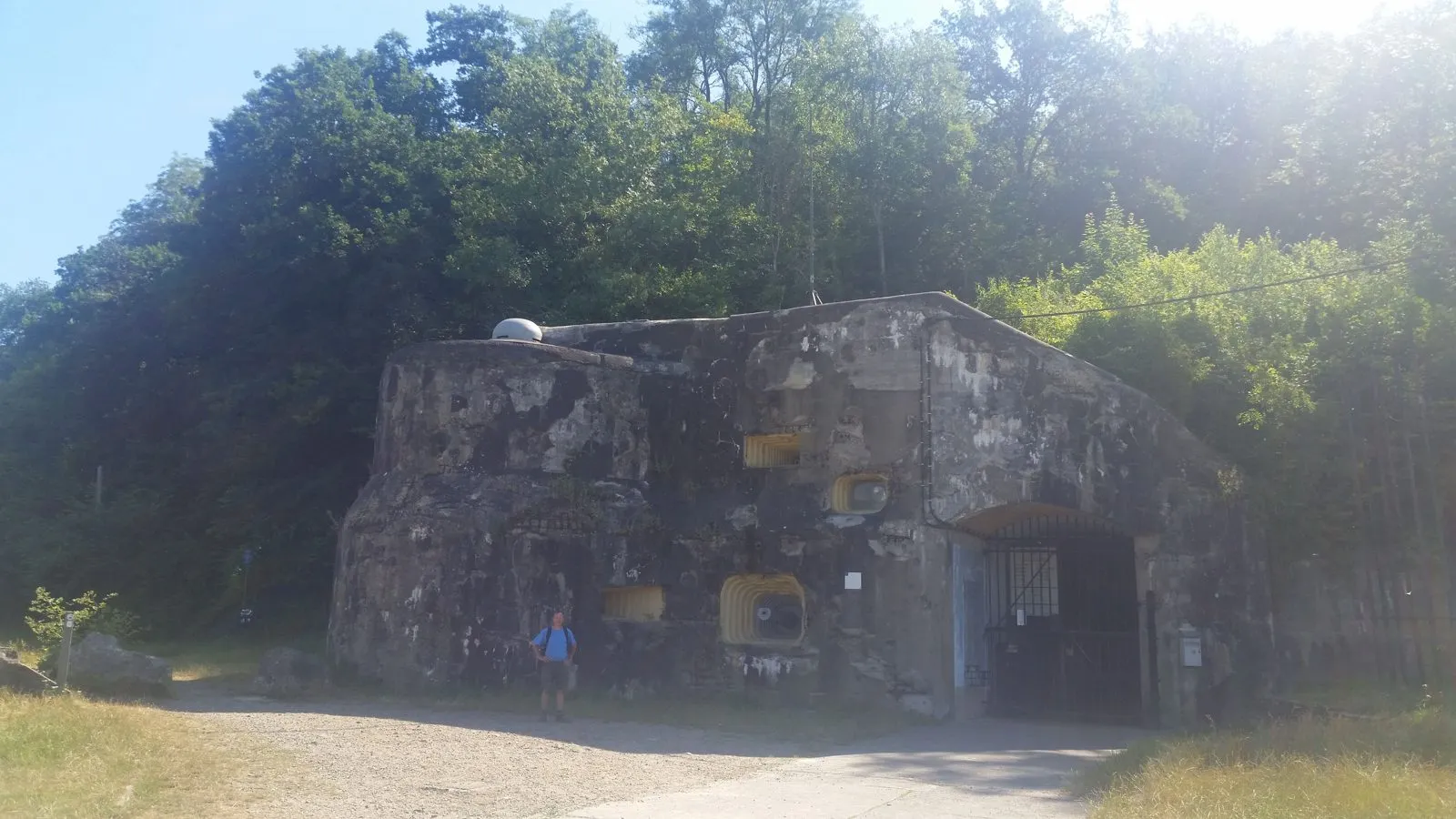
They hadn’t thought of us, the everyday – well, weekday – Hungarian Expeditionary River Force… The entrance really was locked, and since we’d left the bolt cutters on the boat, we had to postpone the operation. But since we were there anyway, we reconnoitred the terrain and walked all over the top of the fortress. You can still clearly see the landed-UFO-like machine-gun nests and the gun emplacements.
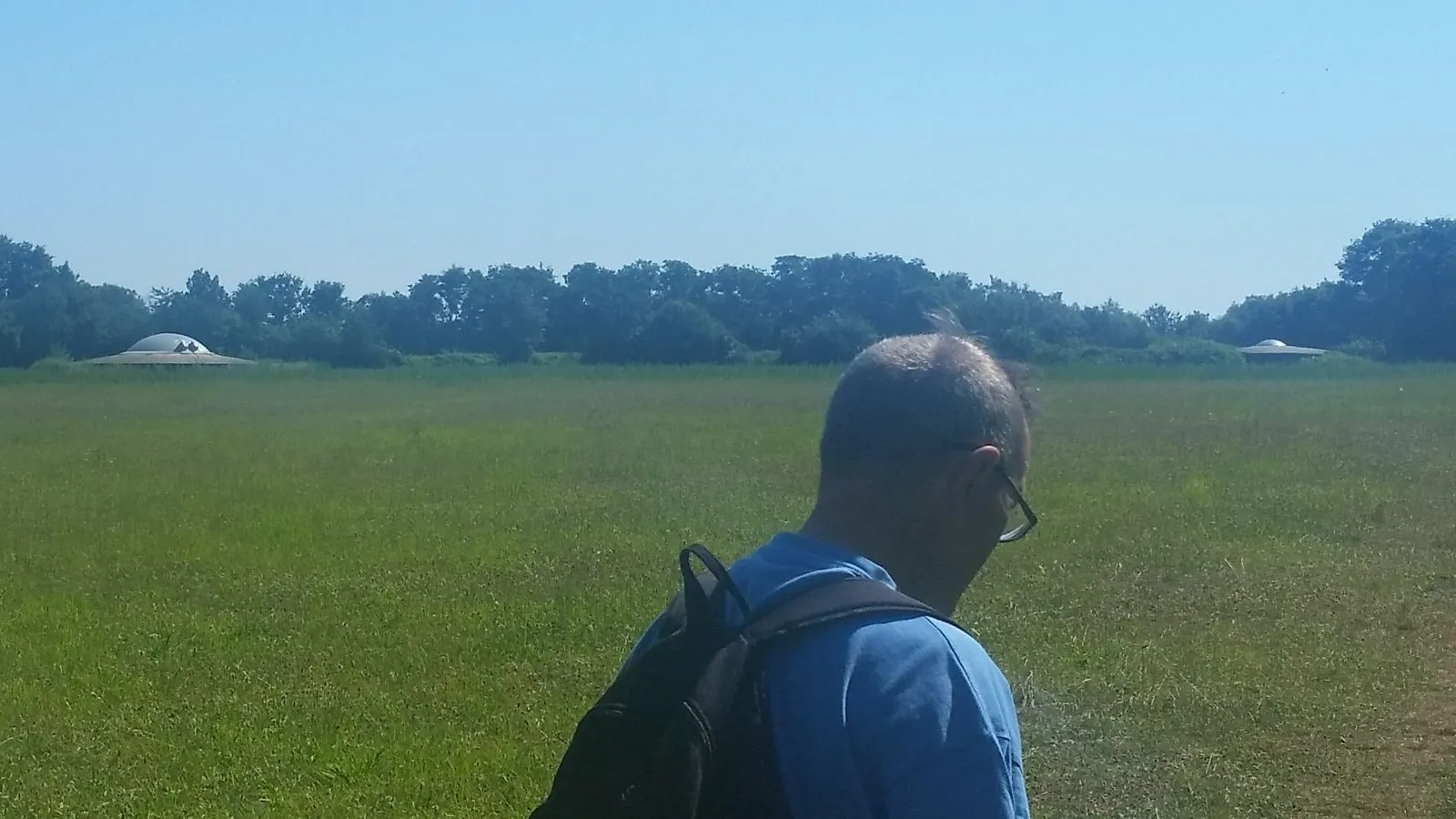
This Belgian fortress on the Dutch and German border was supposed to protect the bridges over 3 rivers, and Belgium itself, from a German attack. From the outermost machine-gun post there was a great view of our last lock of the previous day, the entrance of the Albert Canal between the hills, and the great “German plain”…

Not much later we got to inspect this lookout point from below, from the water, too, because back on the boat we had lunch and then set off along the Albert Canal towards Liège.
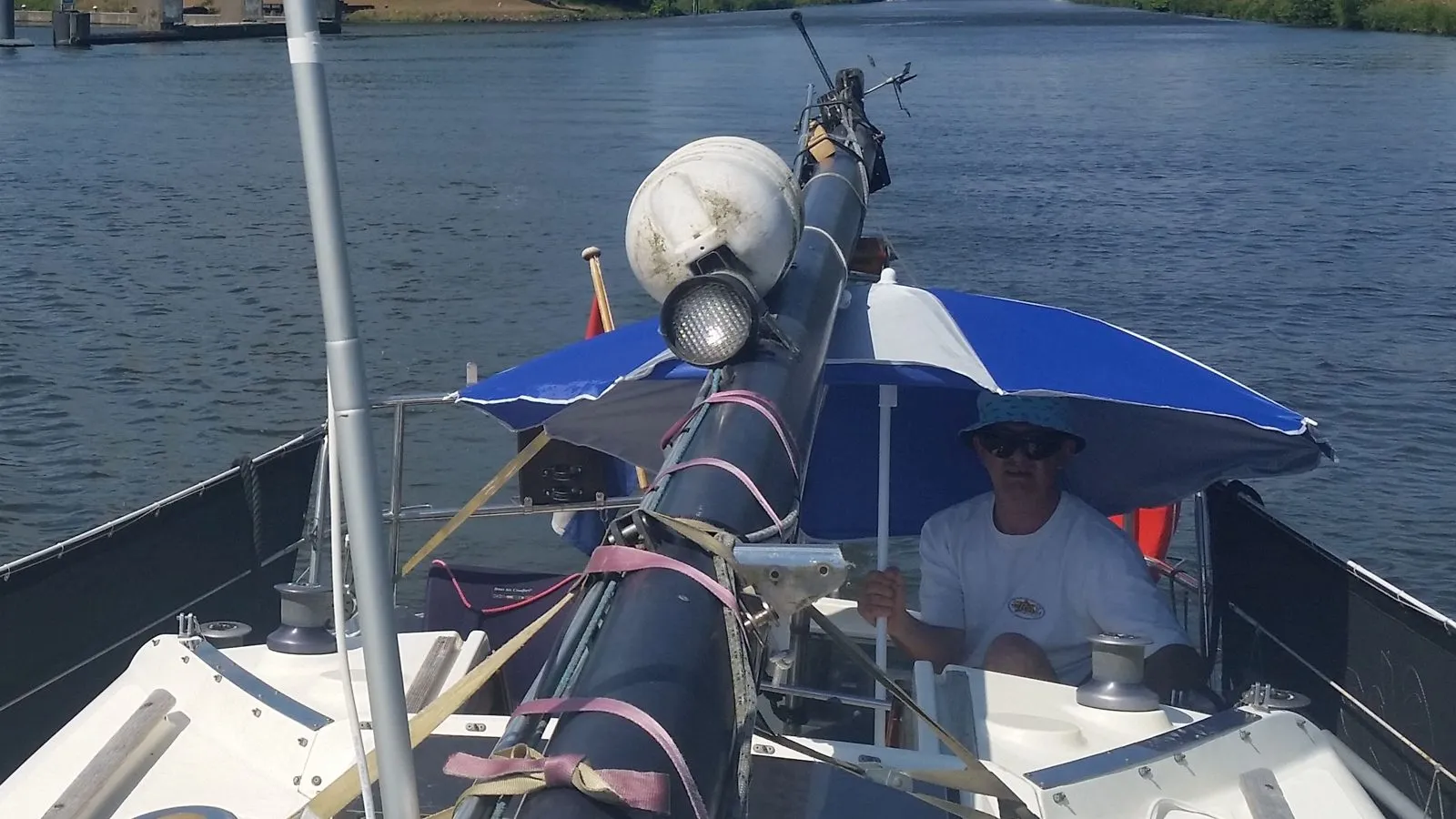
On the way we opened our parasol again and, hiding in its shade and sipping a can of beer each, chugged up the canal. Of course we didn’t quite fit the picture, because anyone who peeked under the parasol would have seen, instead of two refined ladies, just a couple of stubbly, beer-swilling paratroopers…
Arriving in Liège, at the fork of the Meuse and the Albert Canal, at the foot of a lighthouse, instead of Comrade Lenin it was Albert in his greatcoat who received us, with a stern look. At least that was our guess – I mean, in his place I’d be him… Not Lenin, that is. Well, you get it, I’m not sure who he is – he didn’t introduce himself – but who the heck else would be standing at the entrance of the Albert Canal…
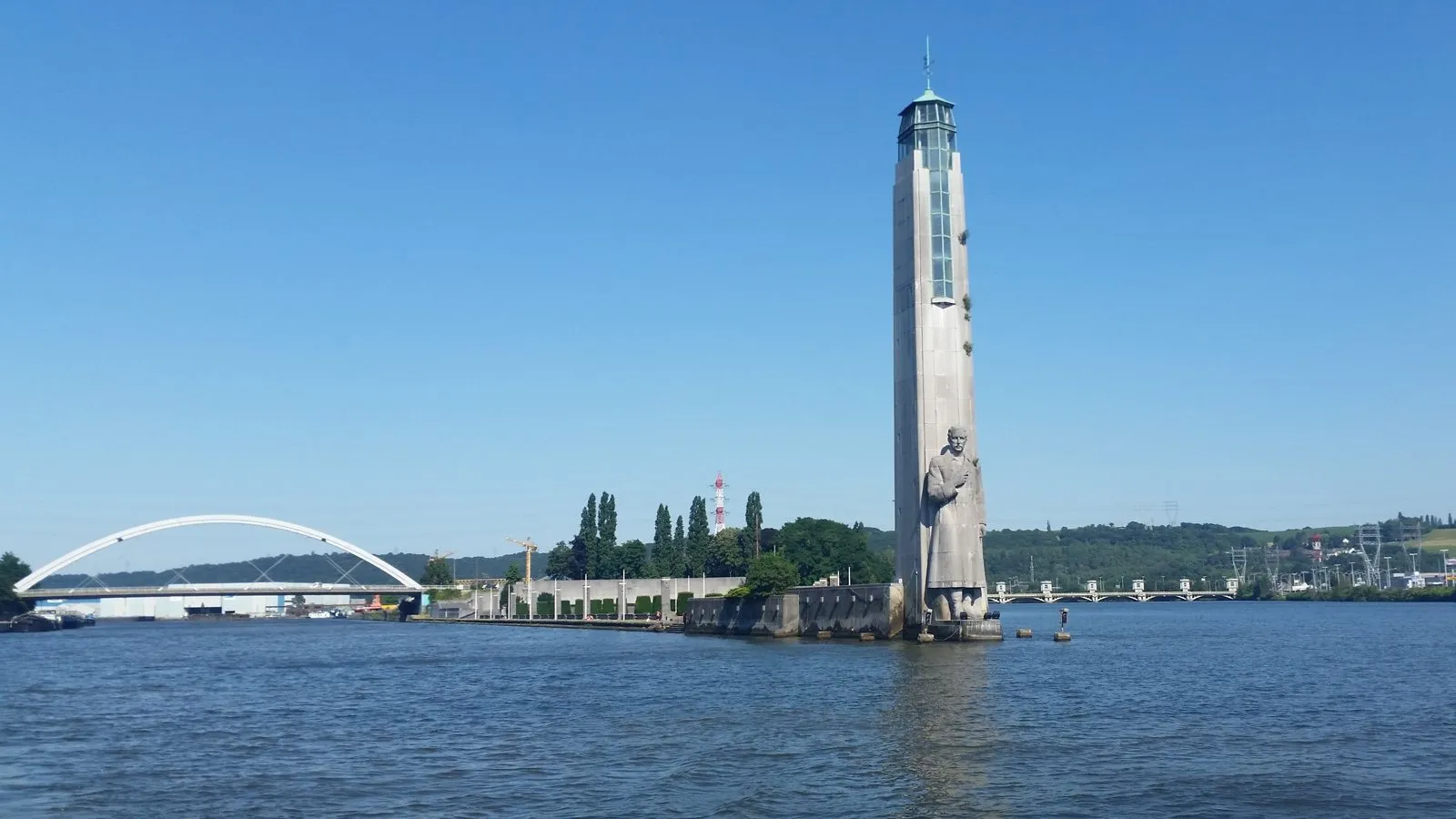
We scanned both banks with expert eyes, because we had to find a very multifunctional mooring for our boat. Ideally free and in the centre, with somewhere close by to stop and park a car, and if it had a hot shower too, then we wouldn’t even need fairy tales…
Because tomorrow morning the changeover car arrives: Bazsi’s brother is bringing out his wife and two little daughters, and taking me home to Hungary. Bazsi will cruise the Belgian and French rivers and canals with his family for three weeks, all the way to Strasbourg. From there, with other volunteers or alone if need be, he’ll continue along the Rhine, the Main, the Main-Danube Canal and finally down the Danube all the way home to Faddombori, and then up the Sió canal to Lake Balaton. I made him promise to count on me for the Austrian stretch no matter what, because from the second half of August I’ll have a free week again and I’d really love to accompany him on that leg too…
But back to Liège. The inlet Bazsi had picked out – an old industrial harbour – met our expectations on the main parameters (fairy tales remained the stuff of dreams): it was free, with slightly dirty water, you could park a car next to the boat, not a soul apart from us was moored there, and on the map it was only 4–5 cm from the city centre.
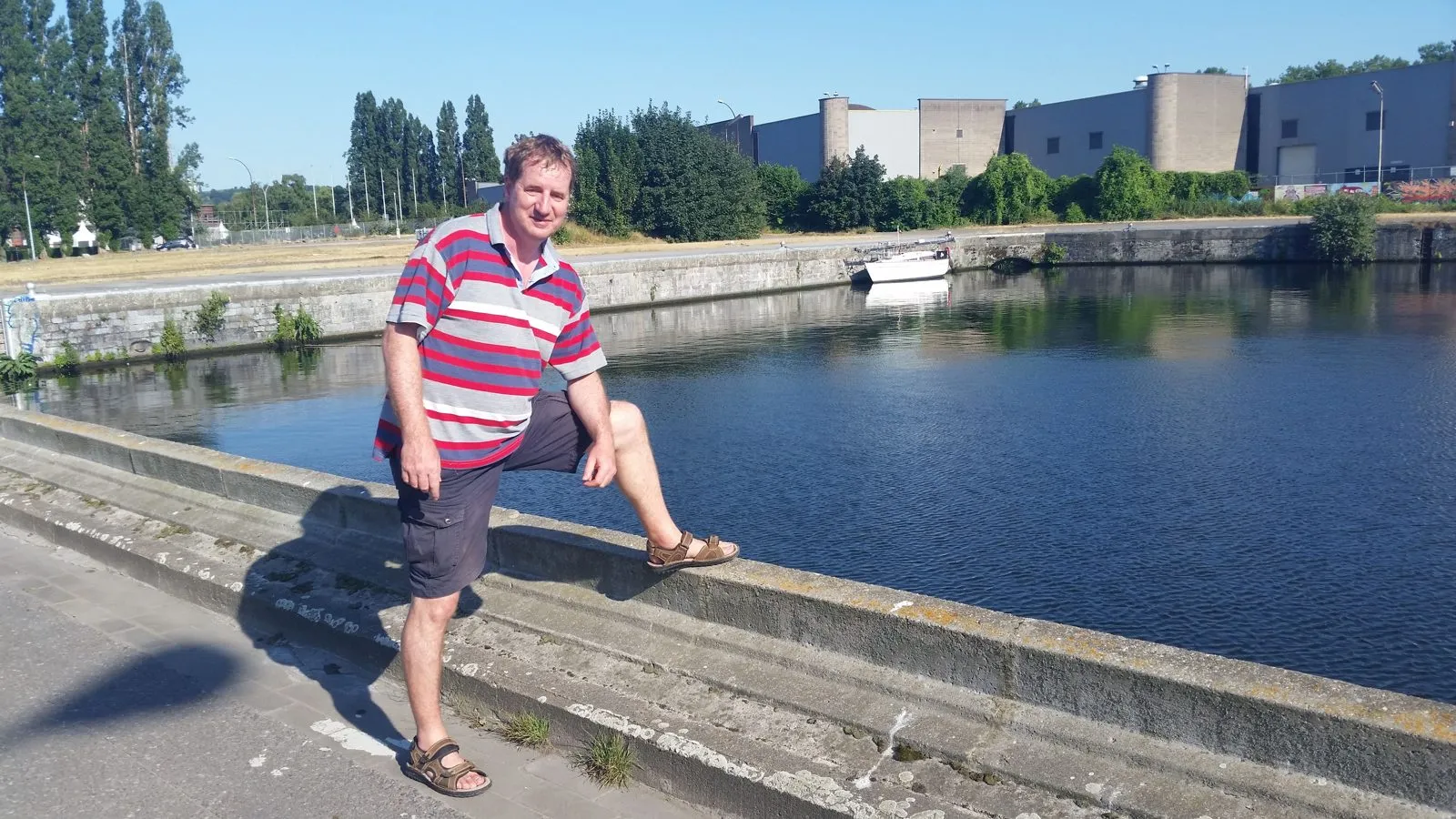
First we lugged the plastic jerrycans to the petrol station 500 metres away and filled them up, then we spruced ourselves up and set off on a sightseeing walk. I wasn’t bowled over by Liège – I didn’t even take any photos – it was big, the traffic was noisy, you hardly saw any white people or cosy pedestrian streets, and we’d walked our feet off by the time, in the very last street, we finally found a proper Chinese restaurant. Somehow that’s what we were craving.
Gesturing with hands and feet, we picked the pig-in-a-poke menu, which was a 50% success: I liked it, Bazsi less so, but we were almost full.
On the way back to the boat we walked along the opposite bank of the river, past ramshackle, rusty barges converted into houseboats. At least here there wasn’t that rolling flood of cars along the embankment like on the way there, on the other bank. In the end we’d walked about 10 km in total, and after collapsing into bed neither of us needed anyone to hum “Aludj el szépen kis Balázs” (the Hungarian lullaby “Sleep tight, little Balázs”).
Machine translation (AI, Claude) of Balázs’s Hungarian original. Read the original →
Saturday, 30 June 2018
Day 7, 0 km (350 km)
Waking up at dawn turned out rather surreal: it was still properly grey when I woke to a woman’s voice screaming on the bank. Sometimes pleading, sometimes hysterical. It took a little while before I could decide that this wasn’t a dream, but yes, something nasty was happening here and now, not far from us on the bank, in the old industrial harbour. What should I do? Call the Belgian police? But on what number? 112? What do I tell them, that someone’s shouting on the quay? But where? How do I explain it, do they even speak German? I can’t give a street or a house number, at most a river kilometre… Or should Bazsi and I climb off the boat onto the bank and approach them menacingly, phones in hand?
This doesn’t look like the kind of neighbourhood where thugs get scared and run off at the sight of one or two men in pyjamas…
Rather the other way round.
I couldn’t think of anything like a hoe handle within reach – we’d used everything to prop up the mast – and anyway, what if they were armed…?
These and similar thoughts lumbered through my head as I woke up. I look at Bazsi, I see he’s awake too: What is this? I ask him (stupid question, how would he know): I don’t know, he replied.
Then I’d better take a peek, so at least we know how many of them there are and what on earth is going on out there! I slid the top of the companionway open a crack, and in the dawn half-light I saw a dark blue Golf standing on the bank, and a fully dressed girl, who looked more very drunk than sleepy, trying to break free from a man’s grip so she could JUMP into the harbour water! She doesn’t manage, because sometimes she falls flat, drunk, after a two-step run-up, sometimes the man catches her and pulls her back to the car, trying to talk her round about something meanwhile, but he isn’t hurting her. I don’t understand what they’re saying.
Well, this is the point – or ALREADY the point – where immediate direct intervention didn’t seem warranted, except perhaps if the girl fell into the harbour.
So should we call the police now or not? What could have happened? But since the bank had gone quiet, I lay back down and fell asleep again.
When I woke up later, Bazsi told me that not long after, the police had turned up, the SWAT team had arrested the man – who put up no resistance – and taken him away together with the woman.
Probably someone from one of the distant blocks of flats had called the police, or the security guard at the entrance of the expo site under construction.
They were still processing the scene when we came out of the boat around 8 and started packing, but they didn’t even ask us what we’d seen or heard. From that I’d guess nothing too terrible had happened after all. Thankfully.
Then everyone left, and the area went quiet again. Bazsi and I started unloading onto the bank the things he won’t need for the rest of his trip and that just take up space – the headsail, the mainsail, the spinnaker, big holdalls, and so on – so we could take them home to Hungary in the car.
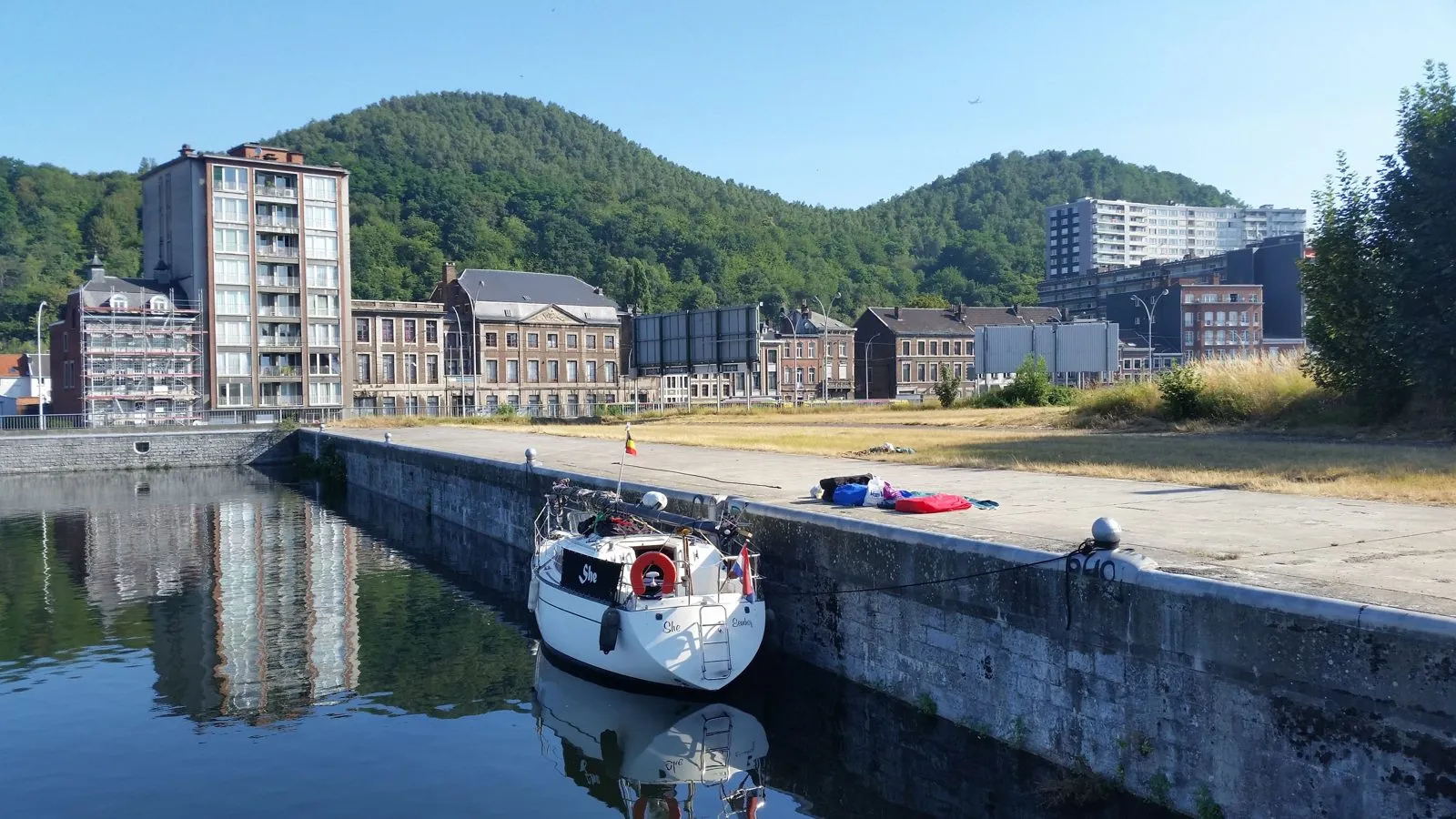
With tears in my eyes I packed up my clobber too and put it out with the rest of the stuff, then we cleaned the boat, and since there was still time, we assembled the sunshade from Bazsi’s sunbed to rig up a little shade-giving bimini over the cockpit.
It was still morning, around 10–11, when a police tow truck came and carted off the only silent participant of the dawn events still left behind: the dark blue Golf.
Even though it wasn’t parked illegally. Aha, so its owner won’t be coming to fetch it any time soon… So he can’t have been busy organising children’s parties after all…
Those dawn events still occupy my mind when I think of them. I’m not proud that I didn’t really do anything, didn’t even try to call for help.
At that moment, there and then, I was short on civil courage – or, as we’d say in Debrecen, the city of the cívis burghers, cívis courage.
No matter how many excuses I list for myself – that it was almost still dark, in an abandoned, run-down industrial harbour, you’ve just woken up, you don’t know who they are or how many – whether they’re armed – and, well, by now it’s far more likely that they can run faster than you…
And it doesn’t necessarily spur you to action either, knowing from the media that of the people who step in to help, some become heroes and some become martyrs. This wasn’t a place where you’d feel at home…
Still, maybe I should have tried calling the police, or at least gone out and shouted something at them in Hungarian. OK, by the time I’d made up my mind to do something and looked out at the bank, things were starting to settle down, but I could have dragged myself out of my half-sleep sooner.
But that’s life… One day a situation finds you, under these or those circumstances, and you have to decide. And whether you like it or not, you’re weighed in the balance.
It’s easy to say afterwards what would have been right – I know it now too.
But then and there… that’s all I had in me.
So that’s that. Next time, in the same situation, even if I’m woken from a dream, I know what I’ll do…
Curtain.
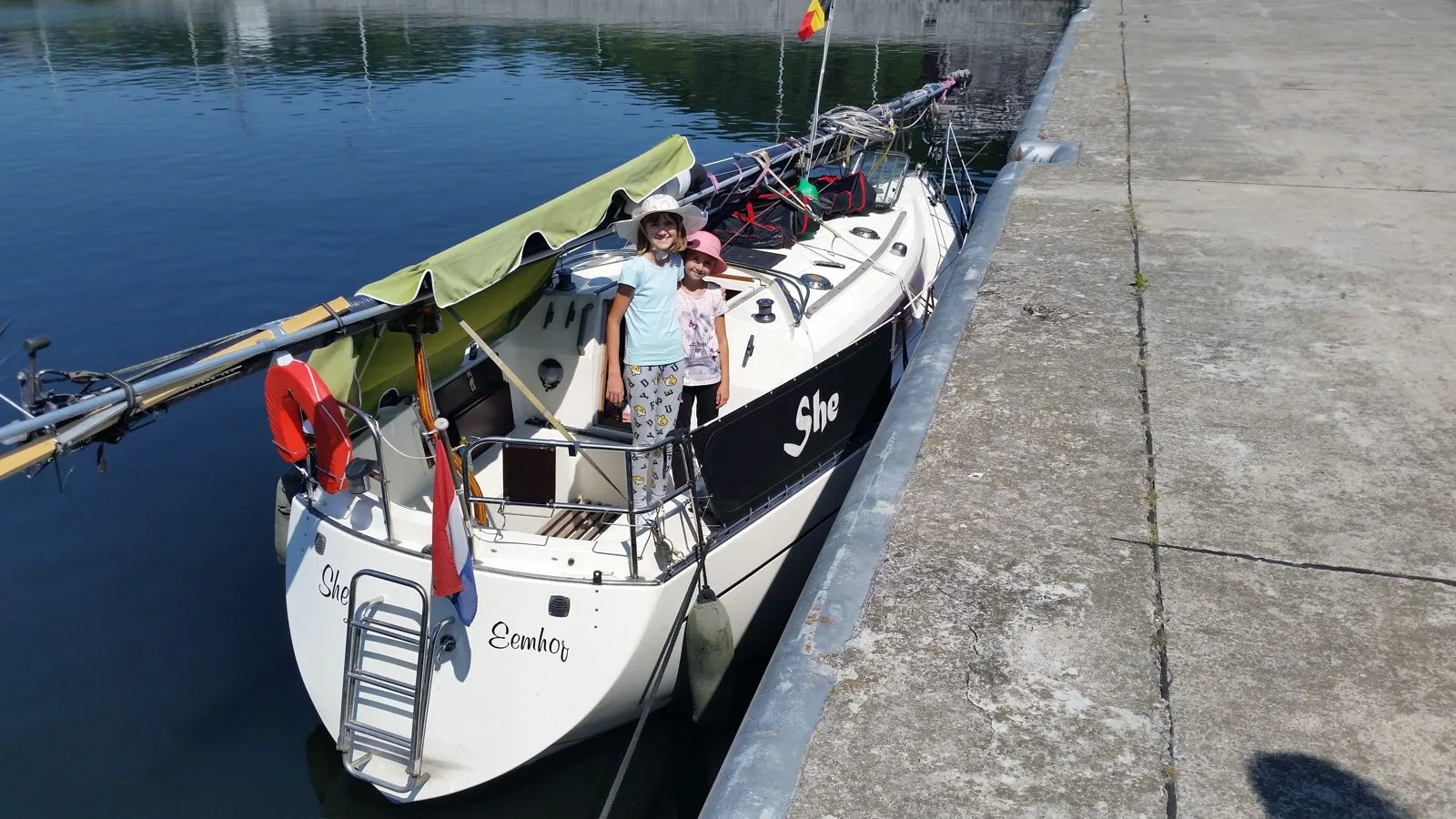
Soon the little gang arrived. With a bit of help over the phone they found us and parked next to the things laid out on the bank. The girls immediately took over the boat and moved in, while we loaded and unloaded and Bazsi and I posed for photos.
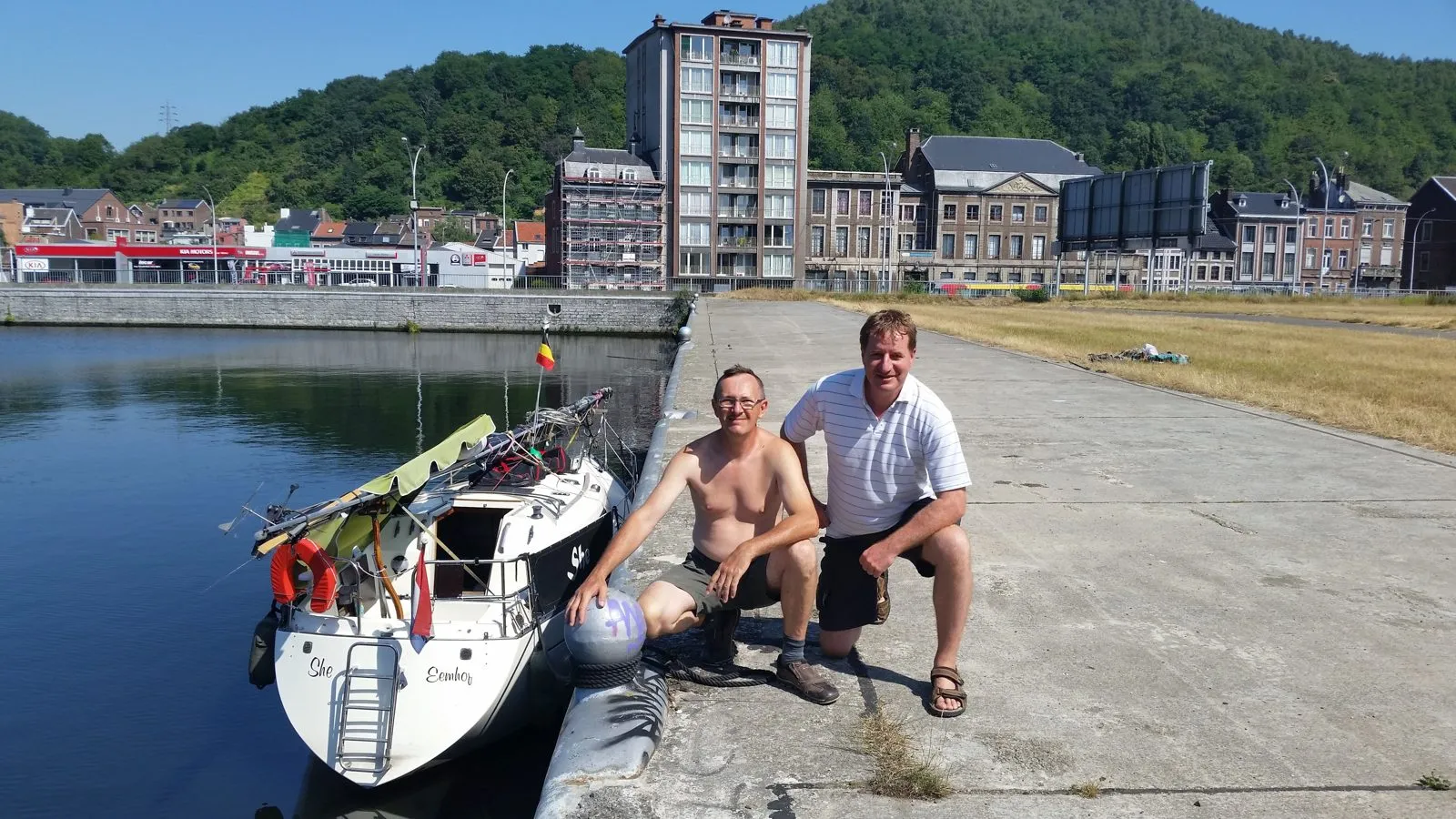
Then, in two trips, we drove into the city centre so they could also see whether it had got any prettier since yesterday.
It hadn’t. In my opinion.
In those few hours I managed to make such good friends with the two little misses, as if I’d spent the past week sailing with them.
We grabbed a bite, went back to the boat, said our goodbyes, one more photo together, Bazsi stayed behind with his wife and daughters, and we set off home towards Hungary.
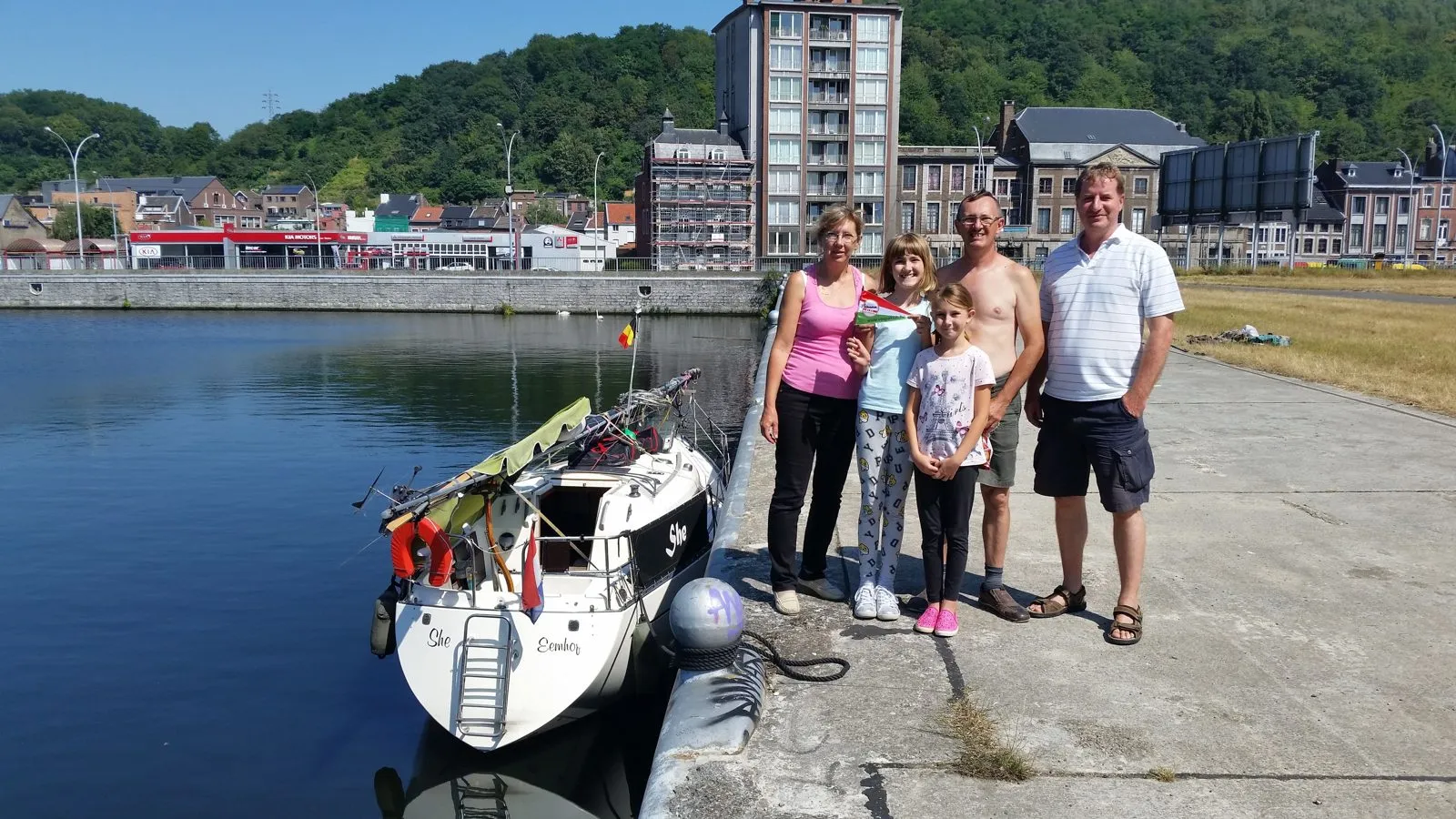
The next morning in Budaörs I found my car, left there a week earlier, safe and sound; it even started, and I drove home to Debreszan (that’s Debrecen, with a posh French twist).
Machine translation (AI, Claude) of Balázs’s Hungarian original. Read the original →